

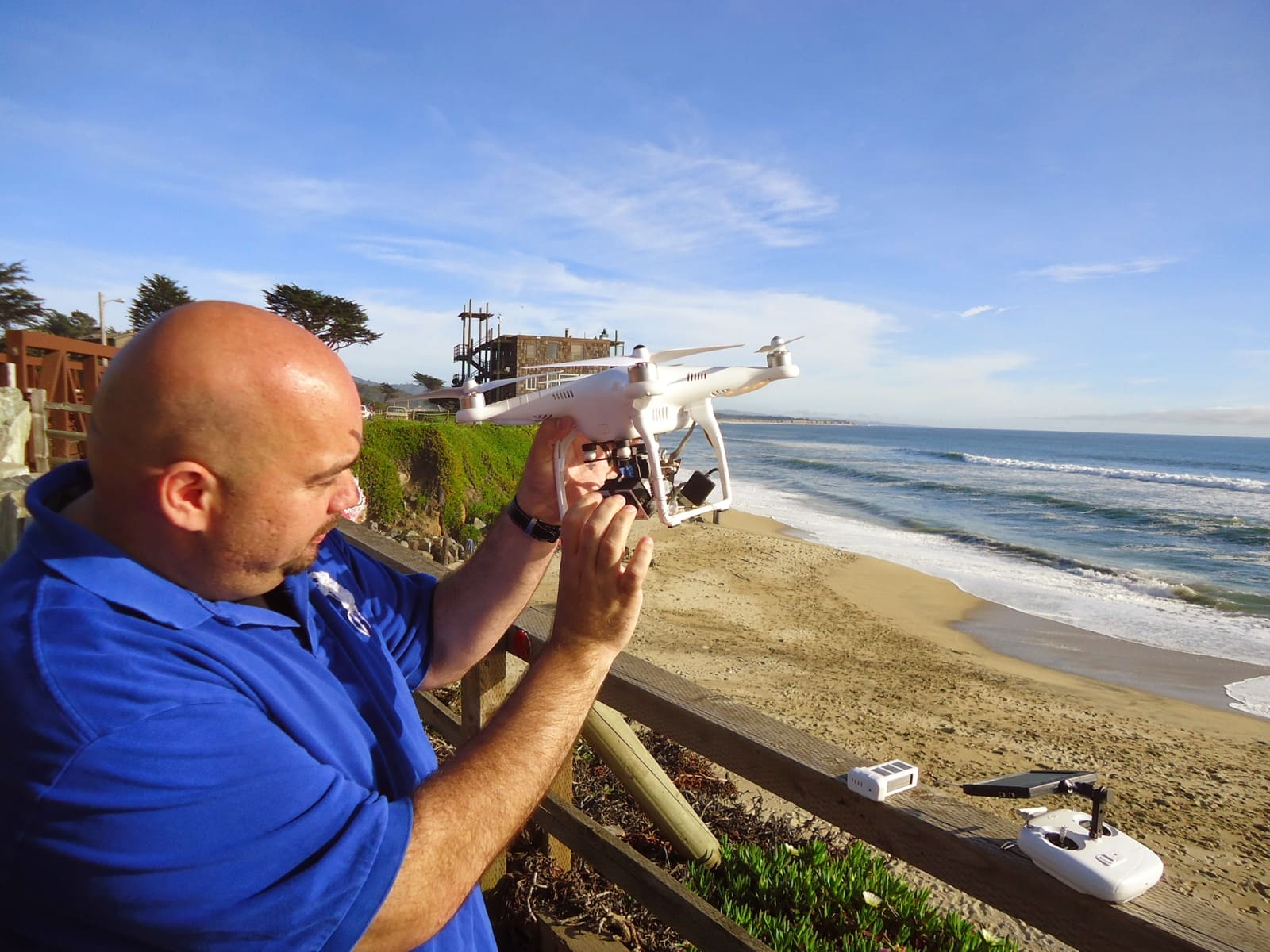
A stadium drone project needs a precise description before anyone can evaluate its insurance. Filming an empty facility for a property manager, inspecting a roof and proposing footage during a sporting event are different assignments. A venue name and the phrase commercial drone work are not enough to explain the operation being submitted.
This guide helps venue managers, production companies and drone businesses prepare an insurance review. It does not authorize a flight or provide a flight plan. Official restrictions, qualified operational review and venue permission remain separate from insurer acceptance, and an insurance certificate cannot replace any of those decisions.
Start With the Project Rather Than the Stadium Name
Write down the customer, purpose, exact location and requested dates. Explain whether the job concerns roof inspection, exterior promotional footage, construction documentation or another defined deliverable. A large sports complex can contain several buildings and separate controlled areas. Identify the area involved rather than assuming that the stadium’s public mailing address fully describes it.
Use a site reference the venue contact can recognize. The stadium bowl, a separate training building and a parking area may belong to the same complex but present different assignments. Identify the structure or area in the insurance summary and attach the relevant customer description where requested. A map can clarify the location without becoming a flight route or representing that the area is available for drone use. If another party controls part of the premises, identify that relationship rather than assuming the main venue manager speaks for every location.
Describe the conditions expected during the work. An empty building, employees preparing an event and an occupied venue present different facts for review. Provide the actual anticipated activity and identify uncertainty. Do not call a venue empty if contractors, staff or guests will be present, and do not replace an unresolved schedule with an optimistic assumption.
Identify who is asking for the insurance review. A drone operator seeking its own terms and a venue manager hiring an outside business have different interests. List the contracting entities, the party providing the aircraft and the person responsible for the proposed operation. This makes it easier to match the insurance question to the party whose interest is being evaluated.
Separate Flight Restrictions From Insurance Acceptance
The FAA’s stadiums and sporting events information explains that specified sporting events have drone restrictions and directs users to its Sporting Event Automated Monitoring System for event locations and active times. The system incorporates event updates, including delays and other schedule changes. Obtain current official information for the actual proposed place and time. This guide does not determine whether an event qualifies, calculate a restricted area or identify a route for operating within one.
Venue permission, an insurance quotation and an airspace decision answer different questions. Record each separately, including the scope and dates of any relevant decision. An agreement from the property manager does not establish that the flight is allowed, and insurer willingness to review a submission does not establish permission to operate over an event or people.
A stadium project can change while documents are being collected. If the customer shifts filming from an unoccupied preparation day to event day, the earlier description is no longer adequate. Return the revised proposal to the operational and insurance reviewers before accepting the change. Do not treat a previous certificate as an approval of activities that were never described.
Identify the Operator and Everyone Requesting Protection
Use the drone business’s legal name and identify the entity signing the service agreement. Add any production company, venue operator, event organizer or property owner whose role is relevant. These organizations can be different parties. A familiar team brand does not establish which entity hires the drone business or which entity is named in the insurance requirement.
Explain whether the venue has its own drone equipment, hires a contractor or combines both arrangements. If another business supplies pilots or aircraft, identify who directs the work and who holds the relevant documents. Do not assume that a contractor’s policy automatically protects the venue or that a venue’s general insurance protects the outside drone business.
When several parties request additional insured status or other evidence, collect their exact legal names and the complete requirement. Ask the authorized insurance party what is available for the actual arrangement. A list on a certificate request is not confirmation that every requested status has been issued or that every contractual promise has been satisfied.
Describe the Aircraft and the Deliverable
Provide the aircraft identity and equipment information requested by the insurer, including payload and values where relevant. Identify owned, rented and borrowed equipment accurately. A compact camera drone, a custom filming aircraft and a fleet used in a coordinated show should not be presented as interchangeable merely because they work at the same venue.
Explain what the operator is expected to deliver. A set of promotional photographs differs from inspection observations used in a maintenance decision. Describe the service without promising technical findings beyond the contract. A professional services allegation and an allegation of physical injury may raise different insurance questions; the submission should make the actual work understandable.
If the project is a drone light show, use a submission that describes that operation rather than this general venue checklist. BWI’s broader event drone insurance page remains the starting point for event coverage questions. This guide adds a stadium project review and does not replace the existing page or describe a special stadium product.
Include the boundaries of the deliverable in the submission. If the customer expects only images, say so; if it expects measurements, analysis or a professional conclusion, describe that responsibility accurately. The contract and the operator’s proposal should tell the same story. When they differ, ask the relevant parties to resolve the discrepancy before using either document as the basis for insurance review.
Write a Stadium Project Intake Record
Create one dated project summary that identifies the customer entity, facility reference, proposed dates, purpose and equipment supplier. Record the venue contact who supplied attendance and access information, and identify what remains provisional. This is a description for review, not an operational checklist. The responsible aviation personnel must independently establish whether the work can proceed and under what requirements.
For the insurance part, identify whether you are submitting an operator’s own activity, a venue’s contractor requirement or a production company’s request for protection. Keep the exact insurance exhibit with that question. If the facilities department orders a roof survey while a separate marketing company requests images, show which contract and deliverable belong to each party rather than combining both under stadium footage.
Include the proposed crew relationships without assigning duties the people have not accepted. Identify the drone business, any subcontracted pilot provider and the party hiring ground support where relevant. A venue credential or a name on the event staff list does not establish employment, insured status or authority to operate. Supply the actual arrangement requested for review and leave unresolved relationships marked as unresolved.
Keep Project Decisions Distinct
| Decision | Information to obtain | What it does not establish |
|---|---|---|
| Venue access | Authorized venue response | Permission under aviation rules |
| Operational feasibility | Current official and qualified review | Insurance acceptance |
| Insurance terms | Actual policy and endorsements | Permission to conduct a flight |
| Contract acceptance | Reviewed final agreement | Automatic payment after a loss |
Use this table to assign responsibility for decisions. It is not an operating checklist, a legal conclusion or evidence that a stadium drone project is permitted.
Review the Venue Contract Before Making Insurance Promises
Obtain the complete service agreement and its insurance schedule. Ask which version is final and who can approve amendments. A production coordinator’s email may omit an attached venue requirement, while a standard procurement form may describe work unrelated to the drone assignment. Send the actual proposed documents for review rather than selecting only the requirements that seem familiar.
Have appropriate advisers review indemnity, responsibility, cancellation and insurance provisions. Insurance availability does not establish that every contractual obligation is suitable for the operator. If a clause is unclear, identify the question and resolve it before signing. Avoid agreeing to provide any coverage required without knowing what the agreement actually requests.
Keep requested terms and issued terms distinguishable. Record the entity names, activity, location, dates and evidence accepted by the relevant parties. If a requested term is unavailable or remains under review, communicate that status accurately. Do not modify an insurance document to make it look as though an insurer has granted a condition it has not issued.
For example, a stadium procurement contact might accept an uploaded certificate while the facilities team later changes the building to be inspected. Retain both communications and send the changed project facts for the appropriate review. Procurement acceptance concerns the document request it addresses; it should not be read as an insurer’s acceptance of the new location or a technical decision that the revised work can be performed. Ask who will coordinate the updated requirement so the old packet is not reused simply because the supplier account already shows approved.
Compare Liability and Equipment Questions Separately
Ask how the actual policy addresses the proposed drone operation and which parties are protected. Review the applicable limits, deductibles or retentions, definitions, exclusions and endorsements. A headline limit does not explain every condition, and the fact that the operator has performed other commercial projects does not settle the terms for this particular venue assignment.
For equipment, identify the property, requested value and circumstances to be reviewed. Include rented cameras or other payloads if they are part of the job. Damage to a drone and liability for damage allegedly caused by it are separate subjects. Do not assume that a liability certificate also proves that the operator’s own aircraft or the customer’s borrowed equipment is insured.
Ask about relevant geographic and activity descriptions in the documents. If the project includes several venues, identify them instead of submitting only the first location. Record unresolved questions about the proposed work and obtain the authorized response. A successful review of one site should not be recorded as unrestricted acceptance of every later stadium assignment.
Coordinate With Venue Operations Without Providing a Flight Plan
Identify the venue contact who knows the current site schedule and can confirm access arrangements. The operator needs accurate information about other contractors, temporary structures and changes to the requested work. This article does not specify operating distances, aircraft positioning or crowd procedures. Those decisions belong with qualified operational personnel using current requirements and site information.
For insurance purposes, describe who controls access to the agreed work area and who communicates a change. If the venue cannot confirm whether the public will be present, label that fact unresolved. Do not submit a control as established because someone expects it to be available. The insurer should receive a description that matches the arrangement actually agreed.
Agree on a route for pausing the job when the description changes. For example, an area expected to be closed may be opened for an unrelated activity. The appropriate operational decision may require additional review or cancellation. Insurance correspondence should preserve that change without implying that buying additional insurance would make an otherwise impermissible flight acceptable.
Plan for Rescheduling and Changes in Scope
A venue may request a second visit because of weather, construction delays or a changed event calendar. Identify whether the original insurance evidence and submitted description still match the new dates and work. Ask for the required review before treating a rescheduled assignment as the same insured event. Record the accepted revision with the project documents.
Cancellation charges, lost production time and the cost of returning to the venue deserve their own contractual and insurance questions. Do not assume they are included simply because physical damage or liability is insured. Review the actual agreement and applicable forms, and avoid promising that an insurer will reimburse a customer whenever filming cannot proceed.
When the customer adds a new deliverable, compare it with the scope originally submitted. A roof survey added to a promotional filming job can introduce a different professional responsibility. A drone show added to an inspection contract changes the operation more substantially. Describe the new request accurately and seek the relevant decisions before accepting the additional work.
Keep the original and revised project summaries together with a clear version date. If a customer later asks why the job was postponed, the file should show which activity was proposed and which question remained unresolved at that time. Avoid retroactively changing the original description to match a later accepted version. Accurate versions help all reviewers work from the same facts.
Manage Certificates and Endorsements as Project Records
Create a document checklist with the request date, requesting party, document needed and status. Track certificates separately from any endorsements requested by the contract. This helps a production manager see what is still pending without interpreting a certificate as the whole insurance contract. Keep the issued policy information available to the people responsible for the insurance review.
Check names, dates, aircraft details where shown and the description against the accepted project summary. Refer discrepancies back to the issuing insurance party. A spelling error, wrong entity or outdated date should be corrected through the authorized process. Do not edit the document yourself or rely on an earlier project’s evidence because its format looks similar.
Give the project manager a short status record that shows requested, under review, issued and accepted evidence separately. Include the responsible contact and date beside each item. This makes a pending endorsement visible before a production deadline creates pressure to assume it is complete. The status record is an administrative aid only; it cannot grant insurance status or replace the insurer’s actual documents.
Use a Fictional Venue Change to Check the Handoffs
Consider a fictional operator hired to photograph an empty stadium’s exterior for a facilities department. Before the visit, the customer asks for footage during an occupied event instead. This example does not describe a permitted operation or an insured loss. It illustrates why a change in timing and audience conditions should reopen the relevant reviews.
The operator should identify the changed request rather than simply replacing the date on a certificate. The appropriate specialists must review operating restrictions and feasibility, while the insurance party reviews the revised activity and contract. The venue’s enthusiasm for the footage is not a substitute for either decision. Preserve the responses as separate records.
If the revised work cannot proceed, document the project outcome and handle any commercial issue under the agreement with appropriate advice. Do not tell the customer that a policy guarantees permission or that a larger limit would solve the restriction. The useful outcome is a clear decision about the actual request, including when the answer is that it cannot be accepted.
Keep a Stadium Project Review History
At renewal, describe the actual venue work performed and any planned changes in business activities. The phrase event filming may conceal a growing mix of inspections, productions and other services. Accurate records make the next submission more useful. No number of completed jobs establishes a guaranteed premium or automatic acceptance for a future project.
For a detailed production-incident discussion, use BWI’s separate film production drone accident guide and the actual policy reporting instructions. Keep this stadium intake record with the project history so a later reviewer can identify which site, attendance conditions, customer requirement and version were submitted. The record documents the proposal; it does not establish that the described activity was permitted or that every financial consequence is insured.
Drone Insurance for Stadium and Sports Venue Projects FAQs
Does a stadium’s permission allow the drone flight?
Venue permission addresses only its own scope. Current aviation restrictions and other applicable requirements require separate review. Insurance evidence does not authorize the operation.
Is an empty stadium automatically an ordinary drone job?
Do not assume that. Submit the exact location, timing, people present, activity and equipment. Qualified operational personnel and the insurance parties must review their respective questions.
Does an event policy cover every drone contractor?
No automatic conclusion follows from the policy title. Identify the contractor, the venue’s interest and the actual wording, and ask which documents address the proposed operation.
Can we reuse last season’s certificate?
Check the current policy, contract, dates and project description with the issuing insurance party. A prior certificate is not confirmation that the new assignment has been reviewed or that current evidence has been issued.
Can a higher insurance limit overcome a flight restriction?
No insurance limit establishes permission to fly. Resolve operating authority through the appropriate official process and qualified review, separately from the insurance discussion.
Get a Stadium Drone Project Insurance Review From BWI
Send BWI the operator’s legal name, project purpose, venue address, proposed dates, expected attendance conditions, aircraft and equipment details, and the complete insurance requirement. Explain what is confirmed and what remains proposed. Present any added inspection or production responsibilities clearly.
Request a drone insurance quote from BWI before committing to the proposed assignment. Availability, terms and pricing depend on the submission and insurer review. The issued documents govern coverage; operational permission and venue approval require their own decisions.
Continue Reading


