

Airport lighting maintenance contractor insurance should reflect the systems serviced, the electrical work performed and the responsibility accepted when the job is handed back to the airport. A damaged fixture, an allegation about a maintenance record and a customer's demand for delay costs are different questions. An airport certificate alone does not explain how the contractor's insurance responds to each one.
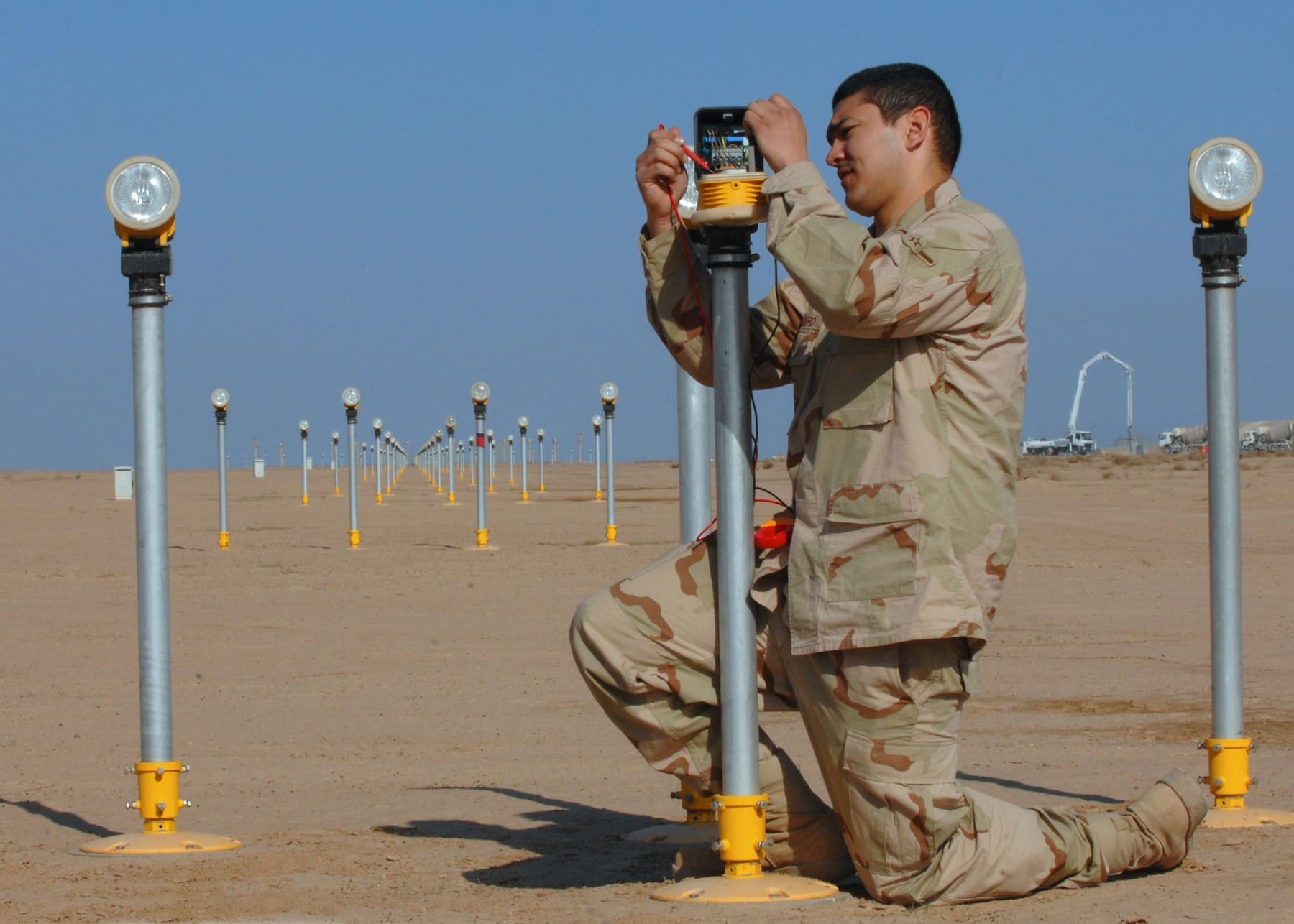
Prepare the work description before comparing premiums. Identify the equipment owner, the customer, the actual maintenance tasks and who decides that the affected facility can return to service. Give the broker the agreements and representative work records so the insurer can assess the business that exists, including specialist subcontractors and any advice supplied alongside physical maintenance.
This guide covers insurance preparation for the maintenance business. It gives no electrical isolation, testing, alignment, airfield movement or return to service procedure. Qualified airport and technical personnel must determine those requirements. BWI's commercial aviation insurance resources provide broader context; eligibility and available terms depend on the disclosed operation and underwriting review.
Identify the Lighting Systems and the Work Accepted
List the airport visual aid systems your company actually services and the tasks it sells. Replacing components, investigating faults, performing measurements, maintaining controls and advising on replacement projects can involve different responsibilities. Avoid a description that reduces every assignment to changing airport light bulbs when the contract includes substantially more.
State whether the firm works directly for the airport, through a facilities manager or as a subcontractor. Identify recurring maintenance agreements, individual repair calls and construction related assignments separately. A regular service contract may include record delivery or response commitments that do not appear in the invoice for a single visit.
The FAA lists AC 150/5340-26C Maintenance of Airport Visual Aid Facilities as active guidance. Its existence does not establish that a contractor, installed component or insurance policy has FAA approval. Qualified personnel must determine and apply the technical requirements relevant to the particular facility and assignment.
Disclose related activities explicitly. If the company also installs new systems, undertakes excavation, designs modifications or performs other electrical work, include them in the submission. An insurer's consideration of a maintenance scope is not confirmation that every adjacent construction or professional service has been accepted on the same terms.
Establish Ownership and the Airport Handoff
Identify who owns each system and who engages your company to work on it. Equipment at the same airport can have different ownership and responsibility arrangements. Supply the actual customer agreement rather than inferring responsibility from the location of a light or from a general description of the airport as your client.
Describe who supplies the work instruction, who accepts the completed documentation and who makes operational decisions. If the contractor's role ends at reporting defined work and findings, make that boundary clear. If staff also accept responsibility for a broader technical conclusion or ongoing monitoring service, disclose that role accurately.
The FAA's 2023 communication to airport sponsors addresses maintenance oversight of airport owned approach lighting and visual aids. It provides context for identifying the parties and records involved. It should not be used as a substitute for determining the obligations applicable to a particular airport or contractor.
Ask the appropriate legal and technical advisers to review handoff language before it becomes a commercial promise. Insurance evidence does not establish that the facility has been technically accepted, and a completed work order does not necessarily settle the customer's operational responsibilities. Keep those documents connected without treating them as interchangeable approvals.
Separate Physical Damage From Allegations About the Service
Ask how the proposed liability wording treats injury or damage involving the disclosed electrical and airport maintenance work. Describe the property involved and the task being performed. A claim about a fixture being serviced may raise different questions from damage to unrelated airport property, even when both occur during the same visit.
Review relevant exclusions, insured activity descriptions and contractual obligations in the actual offer. Do not assume every aviation liability form accepts electrical work, construction activity or damage involving property under the contractor's control. Give the insurer enough detail to answer the real question rather than relying on a broad policy title.
An allegation about an incorrect assessment or maintenance record may involve financial loss without damage caused by your crew. Ask separately whether professional liability should be considered for the actual advisory or reporting role. Global Aerospace's professional services overview explains that category distinction, without establishing acceptance of a particular lighting contractor or allegation.
Distinguish correcting your work, replacing a defective item and paying alleged resulting loss. The customer may seek all three, but their policy treatment can differ. Counsel should assess contractual remedies while the broker compares them with the proposed insurance, keeping retained business obligations visible instead of assuming every remedy is an insured claim.
Explain Electrical Tasks Without Treating Insurance as a Work Method
Describe the nature of the electrical activity, personnel roles and specialist support in ordinary factual terms. Include work at the contractor's premises and at the airport where applicable. Qualified personnel must establish the required competence, authorizations and safe work procedures; the insurance submission should report actual arrangements rather than invent credentials or assurances.
Tell the broker which tasks employees undertake and which are assigned to an outside electrical specialist or equipment manufacturer. A company can retain contractual responsibility for an integrated service even when another provider performs a technically demanding stage. The underwriter should see the division of work that the customer actually purchases.
Give representative agreements and any requested description of training or experience. Do not present a liability limit as evidence that a person is qualified to service a particular system. Likewise, a manufacturer's training record does not establish that every activity accepted in a customer agreement is included in the insurance offer.
If a customer requests a new technical task during a visit, preserve the changed scope through the appropriate process. Bring material changes back to the insurance adviser. A service call should not quietly become an accepted design, installation or performance guarantee merely because the staff and customer want to avoid another appointment.
Follow Component Custody From Removal Through Return
Describe what happens to customer components removed for assessment or repair. Identify who owns them, where they are stored and who sends them to an outside provider. The custody period can extend well beyond the time your crew spends at the airport, creating property questions a site certificate does not answer.
Keep customer owned items separate from stock purchased by the contractor and components held on exchange or consignment. Supply the relevant agreements and supported values when requested. An invoice may show a transaction amount without establishing ownership of a removed unit or responsibility for an item awaiting a warranty decision.
Ask about the applicable property and liability wording for the disclosed custody, transport and service arrangements. Liability for damage to a customer item and physical damage protection for your own inventory are different interests. Neither should be assumed accepted merely because tools and parts appear together in the same service vehicle.
Identify outside repair providers and the documents accompanying a returned component. Preserve the association between the item and the job to which it belongs. Qualified technical personnel determine suitability for the intended installation; the insurance preparation concerns accurate custody and responsibility, not an article's approval of a replacement part.
Describe Maintenance Records and Configuration Changes
Explain how work instructions, observations, parts used and completion records relate to the actual facility. Similar fixtures and repeated visits can make a vague job description unhelpful during a later inquiry. Describe the records the business actually keeps without claiming that a particular system guarantees correct maintenance or meets every applicable requirement.
Keep information supplied by the airport or equipment owner identifiable. If a diagram, asset identifier or prior maintenance description is revised, preserve the accepted change and its connection to the work. A later dispute may turn on whether the contractor acted on an earlier instruction or received a revised scope before completion.
If staff change software settings, update controls or provide a technical configuration service, disclose the work. Ask how professional liability and cyber or technology restrictions relate to those activities. An incorrect configuration allegation, accidental file deletion and unauthorized account access should not be treated as identical events with one assumed insurance response.
Retain appropriate source instructions, work records, versions and correspondence under an established policy. Qualified advisers should determine retention, confidentiality and access requirements. This guide sets no universal retention period. The useful insurance objective is a history that allows the parties to understand what the contractor did and what another party later changed.
Review Vehicles Tools and Temporary Equipment
Prepare a schedule of owned and rented tools, test equipment, vehicles and any temporary equipment used on site. Include supported values, ownership and responsibility periods. A liability certificate needed for airport access does not itself insure the company's test instruments or replace its commercial vehicle arrangements.
Give the commercial auto and aviation insurance advisers the same description of vehicle and equipment use. Ask how their actual definitions and exclusions allocate travel, airport activity and any mounted apparatus. The fact that a vehicle carries electrical tools or enters an airport does not establish a universal boundary between policies.
For rented access or lifting equipment, supply the agreement and dates of responsibility. Delivery, storage and return may occur outside the scheduled maintenance window. Ask about the accepted property interests and liability obligations rather than assuming the rental charge or a damage waiver addresses every duty your business has accepted.
Describe dependencies on specialist test instruments or manufacturer support if damage could interrupt work. Ask what triggers any proposed business income or extra expense coverage and how conditions apply. Customer scheduling changes and delayed parts should not be presented as automatically insured interruptions merely because the maintenance contract has firm response commitments.
Make Response Time and Warranty Promises Reviewable
Provide the full service agreement, including callout commitments, attendance times and any performance remedies. Distinguish an undertaking to respond from an undertaking to restore a system within a guaranteed period. Those promises can impose different commercial obligations even if the contractor expects to use the same crew for both.
Have counsel assess indemnity, warranties and liability for delay or loss of use. The insurance comparison should identify what the actual offer supports and what the business retains. A policy does not expand automatically because the company signs a customer's standard maintenance agreement or accepts a broader description in a purchase order.
Identify whether the contract includes ongoing observation, emergency availability or advice between visits. If staff answer technical questions by telephone or remotely access a control system, disclose those services. The professional role should not disappear from the application simply because the firm charges a recurring maintenance fee rather than a separate consulting rate.
When requirements cannot be met as written, keep the discrepancy visible for the appropriate commercial and legal discussion. Do not represent that a certificate satisfies a warranty or guarantees restoration. A clear decision about retained obligations is more useful than an unsupported statement that the whole agreement is covered.
Include Outside Specialists and Worker Relationships
List employees, temporary labor and specialist providers according to the actual working arrangements. Qualified advisers should determine worker classification and applicable employment insurance obligations. An airport liability certificate is not evidence that every workers compensation, employers liability or other staffing requirement has been addressed.
If another contractor performs testing, repair or a portion of an installation, identify who hires it and who accepts its deliverable. Supply representative agreements and requested insurance evidence. Ask how the proposed policy treats your firm's liability involving subcontracted work and whether that provider is itself an insured; those are separate questions.
Check that insurance documents relate to the company performing the work and the relevant dates. A certificate for a similarly named affiliate or an unrelated activity can make a project file look complete while leaving an important question unanswered. The presence of paperwork should not substitute for a response tied to the actual relationship.
At renewal, identify changes in outside providers and the technical work retained by your own staff. A shift from coordinating a manufacturer's visit to performing the work directly can materially change the description. Keep the submission current with the service the customer now buys, rather than copying an older account of the business.
Test a Fictional Component and Record Dispute
Imagine a contractor removing a lighting component, sending it to an outside specialist and later completing a maintenance record. The customer subsequently questions whether the record identifies the correct returned item and requests another visit plus reimbursement of outside review costs. This is a fictional administrative example, not a BWI claim or a technical finding about any lighting system.
The factual inquiry would need the work instruction, component identifiers, dispatch and receipt records, outside service documents and final customer delivery. Qualified technical and airport personnel would determine the implications through their appropriate processes. A possible record mismatch should not be presented as an established equipment defect or operational conclusion.
The insurance inquiry would examine the actual allegations, agreements and offered forms. Damage to customer property, correction of the contractor's own work and liability for alleged financial loss require distinct consideration. A customer's demand can combine these amounts without making every requested payment subject to the same policy provision.
Use the example when preparing the application to test whether offsite component custody and report completion are visible. If the firm undertakes those stages, include them. If another company contracts directly with the customer, explain that relationship accurately so the insurance account follows the actual service and responsibility.
Disclose Physical Work Beyond the Lighting Assembly
If an assignment involves opening pavement, working around buried services or restoring a disturbed area, describe those activities separately. Identify who performs them and who accepts restoration responsibility. A submission limited to servicing fixtures should not hide physical construction work that appears in the project agreement.
Ask about the relevant property damage and contractual questions using the actual offered wording. Restoring the location as part of the original job is different from liability for other alleged damage. Qualified project personnel must establish the applicable technical requirements; the insurance review should identify the undertaking rather than prescribe excavation or restoration methods.
Prepare a Useful Airport Lighting Insurance Submission
Gather the legal business names, work locations, system and task descriptions, representative agreements and airport insurance schedules. Include revenue information, staffing, outside providers, equipment values and relevant incident information requested by the insurer. Existing allegations need appropriate reporting rather than being concealed within a routine request for future insurance.
Compare offers based on the same declared service. Review insured activities, limits, deductibles, relevant exclusions and requested endorsements alongside the premium. Identify open conditions and the evidence required to establish accepted terms. An indication or a request for a certificate should not be treated as an issued policy or confirmed airport compliance.
For a new business or renewal discussion, use BWI's commercial aviation quote request or call 866 788 6291. Existing events and demands should follow the applicable policy reporting instructions. Bring the real maintenance scope and handoff responsibilities so the review addresses electrical work, records and customer property together.
Sources and further reading
Continue Reading


