

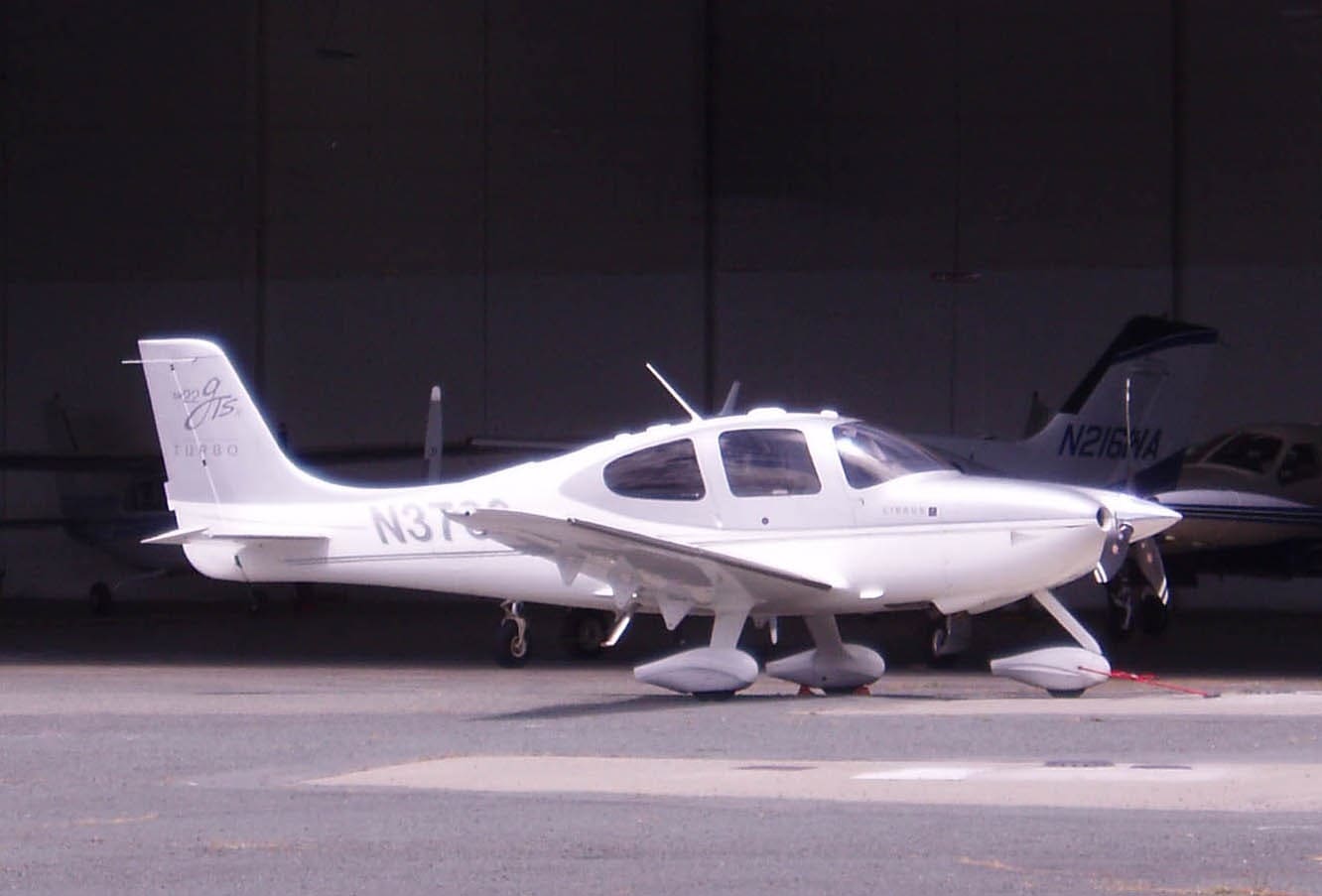
A Cirrus service business can have several customer aircraft in its care at once, with different owners, values and work schedules. The insurance review should reflect that combined exposure. A limit chosen only by looking at the most common SR20 in the shop may not address a busy week when an SR22T, a Vision Jet and other customer aircraft are present together.
Hangarkeepers liability is relevant to businesses responsible for aircraft belonging to others in their care, custody or control. BWI identifies repair shops and avionics shops among the operations that should consider this coverage. The actual policy still determines the protection offered, including limits, deductibles, conditions and exclusions. Custody does not mean every event automatically becomes a payable claim.
This guide helps Cirrus maintenance businesses organize the information behind that review. It focuses on customer aircraft, concentrations of value, movement between locations and the handover back to the owner. BWI’s broader maintenance-business guide addresses other shop exposures. Here, the objective is to make the aircraft-in-your-care discussion specific enough to support a meaningful quote comparison.
Identify when your business takes responsibility
Describe how an aircraft enters your care. A customer may deliver it directly to your hangar, leave it on a ramp for collection or arrange for another party to move it. Explain who holds the keys, controls access and authorizes movement. Do not assume that the start of a work order always identifies the precise beginning of responsibility.
Ask qualified counsel to review how your contracts address possession and responsibility, then discuss the insurance implications with BWI. Contractual obligations and policy protection need to be compared. The business should understand any promise it is making to the customer before assuming the proposed policy supports that promise.
Explain what happens when work stops but the aircraft remains on site. Waiting for payment, owner collection, additional authorization or a component can extend the period of custody. Include those ordinary delays in your operating description. A shop’s insurance submission should describe how the business actually works, not only the hours when a technician is actively performing maintenance.
Map every place customer aircraft can be held
List the main hangar, overflow storage, ramp positions and other locations where customer aircraft may be parked or worked on. State whether the business owns or leases each area and whether another organization shares control. Supply the address or airport information requested by the insurer. A general airport name may not fully describe a business using multiple facilities.
Explain movements between those locations and any work at a customer’s hangar. A mobile mechanic, temporary overflow arrangement or visit to another airport should be disclosed accurately. Ask how the proposed coverage treats activities away from the described premises. Do not assume that coverage associated with the main shop extends to every place an employee travels.
Update the submission when the location pattern changes. Adding a second hangar or using an outside parking area during renovations can change where aircraft accumulate. Ask what notification or insurer acceptance is required. A short-term business solution should not become an undocumented insurance assumption simply because it is expected to last only a few weeks.
List individual aircraft values and the highest combined exposure
Provide the aircraft types and values requested for underwriting. Include the most valuable aircraft the business accepts, not merely an average. State whether the operation services SR20, SR22, SR22T, SF50 Vision Jet or other aircraft. The exposure should reflect the actual mix and any planned expansion into higher-value work.
Then assess the highest combined value that could be exposed to one event at each location. Review scheduling records, work in progress and unusual delays. A quiet-day photograph can understate the concentration during a busy period. Explain how the estimate was developed and identify uncertainty rather than presenting a guess as a measured maximum.
Keep individual and combined values as separate figures. One helps discuss a limit relating to a single aircraft; the other supports discussion of an occurrence affecting several aircraft. The precise policy structure may vary. BWI can help you ask how proposed limits apply, but the business first needs a defensible description of the aircraft actually in its care.
Work through an illustrative concentration example
Consider a fictional shop holding four customer aircraft at one location: an SR20 valued at $550,000, an SR22 at $800,000, an SR22T at $1,100,000 and a Vision Jet at $3,200,000. These figures are invented for the example. They are not current market valuations, BWI quotes, recommended limits or evidence of what an insurer will accept.
| Fictional aircraft held at one location | Illustrative value in USD |
|---|---|
| SR20 | $550,000 |
| SR22 | $800,000 |
| SR22T | $1,100,000 |
| Vision Jet | $3,200,000 |
| Combined value | $5,650,000 |
The combined value is $5,650,000. The largest individual aircraft is $3,200,000. Those two numbers describe different aspects of the same operation. If the business tells its insurance team only that most jobs involve aircraft worth less than $1 million, the submission misses both the largest aircraft and the concentration of all four.
A hypothetical $3 million occurrence limit is $2.65 million below the full combined value in this example, before considering deductibles or other terms. That arithmetic does not establish a claim payment or the appropriate insurance limit. It shows why the insurer needs the combined exposure and why the business should ask how the offered structure would address a multi-aircraft event.
Use your own records to repeat the exercise. Group aircraft by the locations and circumstances relevant to the insurer’s questions. Ask whether limits are per aircraft, per occurrence, subject to an aggregate or restricted in another way. Record the answer from the proposal itself rather than assuming the largest number displayed is available in every situation.
Review deductibles separately from limits
Ask how a deductible is applied when one event affects multiple aircraft. A stated amount may apply per aircraft, per occurrence or according to another provision in the form. The difference can materially affect the amount retained by the business. Request a written explanation of the quoted structure and keep it with the comparison.
For illustration only, a $10,000 deductible applied separately to four aircraft would total $40,000, while a single $10,000 occurrence deductible would total $10,000 for that example. Those are arithmetic alternatives, not a description of an available policy. The actual form and circumstances must establish which treatment applies, if coverage responds at all.
Consider the business’s ability to fund its retained amounts alongside the premium. A lower quoted price does not explain the practical consequences of a higher or differently applied deductible. Ask BWI to compare the relevant terms using the same aircraft values and event assumptions. Keep the illustration clearly labeled so it is not mistaken for an insurer’s claim commitment.
Describe towing parking and ground handling
Tell BWI who moves customer aircraft and what work the business undertakes on the ground. Include employees, subcontractors and any arrangement allowing owners or other parties to move aircraft during the custody period. Describe the activities requested on the application accurately. A maintenance label alone may not communicate all the handling that happens around the shop.
Ask how the proposed policy addresses damage alleged to arise during towing, repositioning, ground runs or other handling. Identify any restrictions involving pilots, employees, equipment or premises. Do not assume a ground-related activity is included solely because it happens near the hangar. The proposal should be reviewed against the actual activity being performed.
Use a practical handover record when responsibility changes. Note who authorized a movement, where the aircraft went and which party took possession. This supports business administration and a later factual review; it does not guarantee a claim outcome. Accurate records are more useful than trying to reconstruct a busy day’s events after a dispute arises.
Keep in flight activity visible as a separate question
A shop may arrange a flight to investigate a discrepancy, check work or return an aircraft to its owner. Those activities need an explicit insurance discussion. Do not infer in-flight coverage from the word hangarkeepers or from an owner’s statement that the aircraft is insured. Describe the purpose, aircraft, pilots and parties involved before relying on an arrangement.
Ask how the proposed shop coverage treats the flight and how the owner’s policy should be reviewed. A pilot can be permitted by an owner without necessarily meeting the relevant insurance conditions. Conversely, insurance acceptance does not establish the pilot’s qualifications, the aircraft’s airworthiness or the operation’s regulatory compliance. Obtain the appropriate confirmations for each issue.
If the business does not conduct flights, state that accurately and identify any exceptions it expects. A single delivery or subcontracted test flight can matter even if flying is not a regular service. Review a proposed exception before it becomes routine. An outdated application should not remain the basis for coverage decisions after the operation changes.
Separate custody damage from completed maintenance allegations
An aircraft can leave your care and later become the subject of an allegation about work performed. That is a different exposure from damage while the aircraft is parked or moved at the shop. Ask BWI how products and completed operations liability is addressed. The custody discussion should not be treated as a complete review of liability after repairs.
The distinction is useful even when the same aircraft is involved. A hangar collision during service and an allegation that an installation later caused damage involve different facts. Identify which part of the proposed insurance program is intended to address each exposure and what exclusions or conditions apply. Do not collapse both questions into the statement that customer aircraft are covered.
Also separate the cost of correcting work from liability for resulting injury or damage. A workmanship dispute does not automatically establish an insured loss. Provide the actual allegation to the appropriate insurance contact if an issue arises. The business should avoid promising a customer that a particular policy will pay before the insurer has reviewed the circumstances.
Review detached components and customer property
Describe what happens when equipment is removed from an aircraft. Avionics, engines, interiors and other components may be stored, shipped or sent to subcontractors. Ask which coverage addresses those items, where it applies and how values are determined. Protection for an aircraft in custody should not be assumed to answer every question about property detached from it.
Identify high-value components on hand and customer property mixed with shop-owned inventory. Ask about applicable limits, valuation and off-premises or transit provisions. A general tools or contents limit may serve a different purpose from customer property protection. Keep the ownership of each category clear so the submission does not combine unlike exposures into one unsupported number.
When a component goes to another vendor, document the transfer and obtain the information relevant to your contractual and insurance review. The vendor’s certificate may be useful evidence, but it does not settle every responsibility. Discuss any requested endorsements or contractual promises before relying on them. Keep those questions separate from the technical decision about where the work should be performed.
Understand the role of the owner’s aircraft policy
Customers may assume their own hull insurance makes a shop’s coverage unimportant. The shop should not rely on that assumption. Owner insurance, shop liability, contractual responsibility and potential recovery rights need to be considered according to the actual policies and circumstances. Ask BWI to explain the relevant questions rather than deciding that one policy makes the other unnecessary.
If the owner requests a waiver or particular insured status, provide the actual request and contract language for review. A promise made by the shop can extend beyond what its insurer has agreed to provide. Ask which changes require an endorsement and obtain confirmation where applicable. Legal advisers should assess the business’s contractual obligations.
Do not tell customers that every loss will be handled by their insurer or yours. Establish a clear reporting process and refer coverage decisions to the appropriate review. This protects the accuracy of the conversation without preventing the shop from being helpful. A customer can be kept informed while the business avoids making unsupported commitments about payment.
Handle certificates and manufacturer or airport requirements
Collect the actual insurance requirements associated with leases, service agreements or manufacturer relationships. Identify the party requesting evidence, the relevant entity name, required limits and any requested endorsement. Do not assume an airport’s requirements match those of a customer or an aircraft manufacturer. Each document needs its own comparison with the offered terms.
A certificate generally provides evidence of insurance; it does not rewrite a policy. If the request calls for additional insured status or a waiver, ask BWI how that must be addressed. Check the final document against the requirement and record any exception. A certificate issued quickly is not proof that every contractual condition has been satisfied.
Use manufacturer terminology accurately. Cirrus identifies its authorized service network, while customers may search for certified service centers or repair shops. Verify the business’s own status independently of its insurance. Neither an insurance policy nor a certificate creates manufacturer authorization, and authorization alone does not establish a particular scope of insurance protection.
Assemble a submission that can be updated
Build a customer-aircraft schedule from current records. Include the requested types, individual values, peak combined exposure, locations, services, handling arrangements and flight activity. Add current policies, loss information and relevant contracts. Explain anticipated changes such as accepting Vision Jets or moving into a larger facility rather than waiting for renewal to disclose them.
Identify which facts come from measured records and which are estimates. If peak values are uncertain, explain the method and improve the records over time. An insurer can ask more meaningful questions when it knows the basis for a figure. An unexplained round number may look precise without describing the exposure reliably.
Assign responsibility for updates. The person scheduling maintenance may notice a new concentration of aircraft before the person handling insurance does. Establish how that information reaches BWI when a material change needs review. This is particularly useful when one owner manages several locations or when administrative work is shared between a shop manager and an outside office.
Frequently asked questions
Does hangarkeepers insurance cover every aircraft on the premises
Do not assume that it does. Review whose aircraft are contemplated, the business’s responsibility, locations, limits and other policy terms. Aircraft owned by the business can raise different questions from customer aircraft. Provide a clear description of both categories and ask BWI which policies or endorsements should be reviewed.
Should limits equal the combined value of all customer aircraft
Discuss individual and combined values with BWI and the proposed insurer. The appropriate decision depends on the operation, policy structure and available terms. The worked example shows why a concentration matters; it does not prescribe a universal limit. Review the actual offer and retained exposure before deciding what arrangement to accept.
Is hangarkeepers insurance the same as hangar building insurance
No. The building, shop contents and liability involving customer aircraft are different subjects for insurance review. Ownership and lease responsibilities also matter. BWI’s existing hangar resources explain the broader distinction. Make sure a proposal identifies which exposure each coverage addresses instead of relying on the shared word hangar.
Can one incident create several deductibles
The policy’s deductible provisions determine the answer. Ask how the quoted terms apply to an event involving several aircraft and obtain a clear explanation. Do not assume that one occurrence necessarily means one deductible, or that a stated per-aircraft amount will be capped at that figure for the whole event.
Does manufacturer authorization determine the coverage
Authorization describes a business relationship or capability that needs accurate verification. Insurance protection comes from the actual policy and endorsements. Disclose the shop’s services and current status, and review any contractual insurance requirements separately. Neither the manufacturer listing nor a certificate of insurance resolves every coverage question.
Discuss your Cirrus custody exposure with BWI
Bring BWI a picture of your busiest credible operating period: aircraft types and values, locations, movements, services and responsibilities. Include contracts, the current policy and any plans to accept additional models or perform flights. Those facts help the team discuss customer-aircraft custody in the context of your actual maintenance business.
Start through BWI’s hangarkeepers insurance quote request or call 800-666-4359. Ask about available limits, deductible structures, location provisions and the other terms relevant to your submission. Obtain written confirmation of the coverage and effective dates before relying on it. A well-documented review gives your business a clearer basis for protecting the aircraft entrusted to its care.
Sources and related resources
BWI hangarkeepers liability insurance
BWI maintenance business insurance
Continue Reading


