

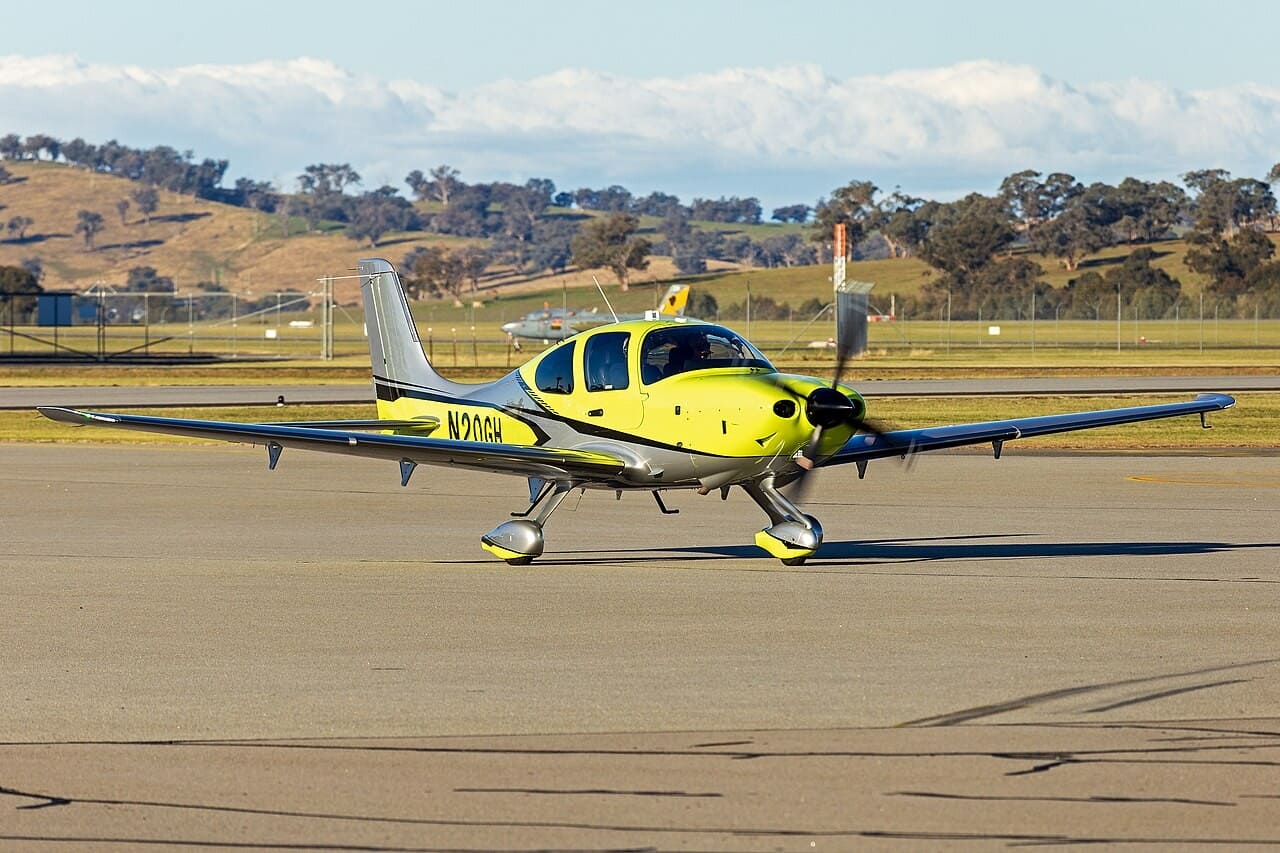
Cirrus SR22T G7 GTS N20GH taxiing at Wagga Wagga Airport in June 2024. G7 aircraft context; no G7 Plus equipment, customer delivery or BWI customer status is represented. Photo Robert Myers, CC BY-SA 3.0 au. Resized without cropping; derivative under the same license. Source file: Cirrus Design Corp (N20GH) Cirrus SR22T G7 GTS taxiing at Wagga Wagga Airport.jpg from Wikimedia Commons. Photo source License
Your new Cirrus delivery date should be supported by an insurance plan that matches the aircraft, the people flying it and the sequence of ownership and training. For an SR20, SR22 or SR22T described as G7 or G7 Plus, a useful submission goes beyond the generation name. It identifies the actual aircraft, installed equipment, insured value, ownership entity and planned first flights.
Begin the conversation while the delivery arrangements are still being organized. That gives you time to resolve a pilot condition, correct an entity name or obtain a lender endorsement before it becomes a closing problem. BWI can discuss the proposed aircraft and insurance options with you. A delivery reservation, training appointment or quote request does not establish that coverage has begun.
This guide is for buyers arranging insurance around a G7 or G7 Plus delivery. It explains what to prepare, how to discuss newer safety equipment and how to compare proposals without assuming every generation has identical equipment or insurance terms. The practical objective is a documented arrangement for the aircraft you will actually take home.
Confirm the aircraft rather than relying on a generation label
Write down the model, model year, serial number and registration when available. Ask the delivery team for the equipment information needed to describe the aircraft accurately. Use G7 Plus or G7+ consistently where that is the relevant description, but keep the aircraft records as the foundation. An advertisement or a configuration image is not a substitute for identifying the individual aircraft.
This matters when comparing a newly built aircraft with an earlier G7 offered for sale. Similar names can obscure differences in installed systems, equipment and value. Tell BWI which aircraft you are considering and supply an updated description if you change the purchase. A quote discussed for one aircraft should not silently become the assumed coverage for another.
State whether the aircraft is an SR20, SR22 or SR22T. An insurance discussion for the broader SR Series still needs the exact model and operating plan. If the buyer is comparing models, request a clear description of which assumptions belong to each proposal. Keeping separate records prevents a pilot requirement or value from one option being carried into the other by mistake.
Describe Safe Return accurately in the submission
Cirrus describes Safe Return Emergency Autoland as part of the current SR Series G7 Plus. Garmin’s announcement identifies its integration into new SR20, SR22 and SR22T aircraft. That manufacturer information supports an equipment discussion; it does not establish a universal insurance discount, remove a pilot condition or prove the equipment installed in an individual used aircraft.
Give BWI the aircraft’s actual equipment information and ask whether the proposed insurer wants additional documentation. Avoid reducing the submission to the statement that the aircraft has autoland. The aircraft, pilot, training, use, limits and underwriting terms remain part of the review. A safety feature should be described accurately without being assigned an invented premium percentage.
Use the appropriate aircraft documents and qualified instruction to learn the system itself. This insurance guide does not explain when to activate a system or how to operate it. Insurance acceptance, aircraft operating limitations and pilot proficiency need their respective reviews. Confirmation in one area should not be used as permission to bypass the others.
Establish the legal owner before closing
Identify the person or entity taking title and explain any other parties involved in operating or using the aircraft. An individual, family LLC and operating company can require different discussions about named insureds and related interests. Send the actual proposed legal name. A familiar trade name or the purchaser’s surname may not match the documents being signed.
If the entity has not yet been formed, tell BWI what remains pending. Ask how the timing affects the submission and what final information will be needed. Do not assume a policy discussed in an individual’s name automatically follows a later transfer to an LLC. Any ownership change should be reviewed against the actual policy and the effective dates required.
Explain who will administer the insurance. An assistant, accountant or family-office employee may coordinate documents without being the person authorized to make every decision. Establish who can request binding or changes and who receives confirmations. Clear administration helps the delivery team, lender and pilots work from the same current information.
Submit a realistic pilot and training plan
List everyone expected to fly the aircraft during the delivery period, not only the long-term owner-pilot. An instructor, ferry pilot, spouse or professional pilot may participate at different stages. Provide the information requested for each person and distinguish the intended roles. Owner permission and insurance acceptance should be checked separately.
Describe training already completed and training still planned. Include the relevant experience and recent flying requested on the application. If the proposed insurer imposes a training condition, obtain the actual requirement and ask how completion is documented. A factory delivery program or instructor recommendation should not be assumed to satisfy an insurer condition unless that acceptance is confirmed.
For a buyer moving from another Cirrus generation, explain the transition rather than assuming prior Cirrus time answers every question. BWI’s existing training resources can support that conversation, but your actual quote must identify the accepted terms. If a second pilot will begin learning later, disclose that intention and ask when a further review will be required.
Separate training bookings from accepted insurance conditions
A course reservation provides a date on a calendar. It does not show that the course is complete, that every requested pilot is accepted or that flight coverage is in force. Keep the training schedule alongside a list of insurance conditions so the two can be coordinated without confusing their purposes.
Record each unresolved condition in plain language. Identify the document needed, the person providing it and the event it affects. For example, an insurer may need a pilot record before confirming proposed terms; the owner should know whether that item affects binding, a particular pilot or a planned flight. Ask BWI to clarify any ambiguous requirement.
When new information arrives, ask for confirmation of its effect. Sending a certificate or training completion document is a step in the process, not proof that every restriction has been removed. Keep the written response with the proposal and policy records. The pilot arranging departure should receive the current confirmation rather than an older quote email.
Build a delivery timeline with separate decision points
| Delivery milestone | Insurance detail to confirm |
|---|---|
| Aircraft selected | Exact model, equipment, value and identifying details |
| Ownership finalized | Legal owner and other interests requiring review |
| Training scheduled | Accepted pilots and outstanding insurer conditions |
| Closing arranged | Required effective time and lender evidence |
| Departure planned | Permitted pilots, use and written coverage confirmation |
Map the anticipated closing, transfer of risk, insurance effective time, training period and departure. Give BWI any purchase-contract language that affects the timing of insurance. Qualified advisers should review contractual responsibility where necessary. A date written on a purchase schedule does not, by itself, establish which party bears a particular risk or what insurance is active.
Identify movements before and after closing. A seller demonstration, training flight, repositioning flight and the owner’s trip home may involve different pilots or responsibilities. Describe what is actually proposed instead of treating delivery as a single event. If the sequence changes, tell BWI before assuming the earlier arrangement still fits.
Keep a short confirmation record for the final decision. It should identify the aircraft, policy effective dates and times as applicable, accepted pilots, outstanding conditions and relevant endorsements. That record should refer to the actual policy documents. A convenient checklist helps coordination, but it cannot replace the terms or create coverage that has not been arranged.
Review hull value using the completed aircraft specification
Provide purchase information, the selected equipment and the proposed insured value. Ask how the offered policy addresses valuation for a total loss and adjustment of a partial loss. Do not assume the purchase price, amount financed and policy valuation are interchangeable. The insurance discussion should identify the value being requested and the terms supporting it.
Options and equipment changes can continue during the buying process. If the final aircraft differs from the version initially quoted, update the submission. Describe what has actually been installed, what remains planned and what documents support the information. A configuration estimate should not be represented as the final delivered specification.
Ask about deductibles separately from the insured amount. A proposal can look familiar at the headline level while differing in the amount the owner retains after a covered loss. Compare the quoted deductible structure and conditions, and ask for clarification where necessary. The question is how the actual offer fits your aircraft and finances, not whether its summary resembles another owner’s policy.
Give the lender the correct insurance evidence
Obtain the lender’s actual insurance requirements early enough to review them. These may concern the insured amount, entity names, requested interests, limits or evidence needed before funding. Forward the wording rather than paraphrasing it from a phone conversation. BWI can discuss the insurance requirements and identify items needing insurer agreement.
Check the lender’s exact name and the aircraft identification against the proposed documents. A minor-looking spelling or entity mismatch can create avoidable follow-up at closing. Ask which endorsement or evidence satisfies each relevant requirement. A certificate should not be treated as a substitute for any policy change the lender actually requires.
If financing changes, update the insurance team. A different lender, changed ownership entity or revised closing date can affect the documents already prepared. Do not assume the delivery team communicates every change to BWI on your behalf. Choose one person to track the open items and obtain confirmation that the final information has been received.
Choose liability terms around your actual use
Discuss the passengers and travel contemplated for the aircraft. Family trips, employee transportation and other business use should be described accurately. If an arrangement involves shared use, reimbursement or another party’s access, bring it into the submission. The phrase personal aircraft should not conceal activities that need individual review.
Compare liability limits with passenger limitations, exclusions and defense provisions. Ask BWI to explain the actual structures available for your submitted risk. Do not assume a newer aircraft, a particular safety system or a favorable training record automatically makes a requested limit available. The insurer’s proposal should answer what is being offered.
If broader personal or business liability insurance is part of your planning, ask the appropriate advisers how those policies interact with aviation. An umbrella policy should not be assumed to cover an aircraft exposure merely because it has a large limit. Coordinate the review while keeping each policy’s scope and exclusions visible.
Consider the first weeks after delivery
The aircraft’s first destination may be a home airport, another training location or a facility installing equipment. Explain the expected locations and changes in use. A submission prepared around one home base should be updated if that plan changes materially. Ask what notification the policy requires rather than deciding that a short stay cannot matter.
If the aircraft will remain on the ground for a period, discuss that plan before requesting any coverage reduction. Ask what activities remain contemplated, what restrictions apply and what must happen before flight. Ground-only arrangements should never be interpreted as flight permission. The savings discussion needs to include the practical effect on the delivery schedule.
Review who may fly after the initial instructor leaves. An owner’s first independent trip, a spouse’s later participation and a substitute instructor can each prompt a pilot question. Keep the final pilot conditions accessible to the people coordinating flights. An informal assurance that someone is experienced does not establish compliance with the policy.
Upgrading from an aircraft you already insure
Tell BWI whether you are selling an existing aircraft, keeping both temporarily or adding the new Cirrus to a broader ownership arrangement. Include the expected dates and pilots for each aircraft. An overlap period can involve separate delivery, training and sale events that should be described clearly rather than treated as a simple replacement on a list.
Do not assume the existing aircraft’s insurance transfers automatically to the new G7 or G7 Plus. Ask how any acquisition or replacement provision applies, including its conditions and notice requirements, or arrange specific terms before relying on it. Written confirmation of the actual arrangement is more useful than a general memory of what a prior policy allowed.
Wait for advice on the timing of any cancellation. The old aircraft may still be owned, flown or exposed to other risks while a sale is being completed. Closing dates can move independently of the new purchase. Coordinate the insurance instructions with the actual ownership and operating facts so an administrative shortcut does not leave an unintended gap.
Compare quotes on the same delivery facts
Use the same aircraft description, insured value, pilot information, intended use and requested limits when comparing proposals. Then record the differences in what each insurer offers. A premium comparison can be misleading if one quote assumes a different pilot, value or training condition. Ask BWI to explain those differences before choosing on price alone.
Identify what is still conditional. A proposal awaiting final aircraft information should not be presented as identical to one based on complete records. Ask what can change, what evidence is outstanding and how long the offer remains available. The answer should be tied to the actual quote rather than a general expectation about insurance processing times.
The useful comparison is the total arrangement you would accept: premium, limits, deductibles, pilot conditions, use and endorsements. There is no universal G7 Plus premium that applies to every buyer. Prepare a complete submission and request current terms. That approach gives you an actionable delivery plan rather than an attractive number based on someone else’s aircraft.
Frequently asked questions
Does G7 Plus equipment guarantee cheaper insurance
No fixed reduction should be assumed. Supply the actual equipment description and ask BWI about the insurer response to your submission. Aircraft value, pilots, use, requested limits and offered conditions also matter. Manufacturer descriptions explain features; they do not establish a premium or amend a policy.
Can I use a quote prepared for a G7 on a different G7 Plus
Give BWI the new aircraft details and request an updated review. A change in aircraft can also change value, equipment, delivery timing and the facts supporting the proposal. Do not rely on an earlier indication without confirmation that the actual aircraft and operating plan have been accepted.
Does delivery training automatically approve every pilot
No. Ask which pilots are permitted and what training or documentation is required under the proposed policy. A course may support the submission without resolving every pilot condition. Confirm the position for an instructor, spouse, ferry pilot or other person expected to fly during or after delivery.
When should insurance start for a new Cirrus
Coordinate the required effective time with the actual purchase, transfer of risk and operating arrangements. Provide the contract and delivery timeline to the relevant advisers and BWI. Obtain written confirmation of coverage before relying on it. There is no single date that can be prescribed for every delivery without those facts.
Arrange your Cirrus delivery insurance with BWI
Bring BWI the aircraft specification, proposed owner name, pilot information, training schedule and delivery timeline. Include financing requirements and any aircraft you will continue to own during the transition. Explain the real sequence of flights and responsibilities so the submission supports your plans from closing through the first weeks of ownership.
Start through BWI’s Cirrus insurance page or call 800-666-4359. Ask the team to discuss available terms and outstanding conditions for your SR20, SR22 or SR22T. Keep the actual policy and written confirmations with the delivery records. A carefully prepared insurance review helps you make decisions with the details in front of you.
Sources and related resources
Continue Reading


