
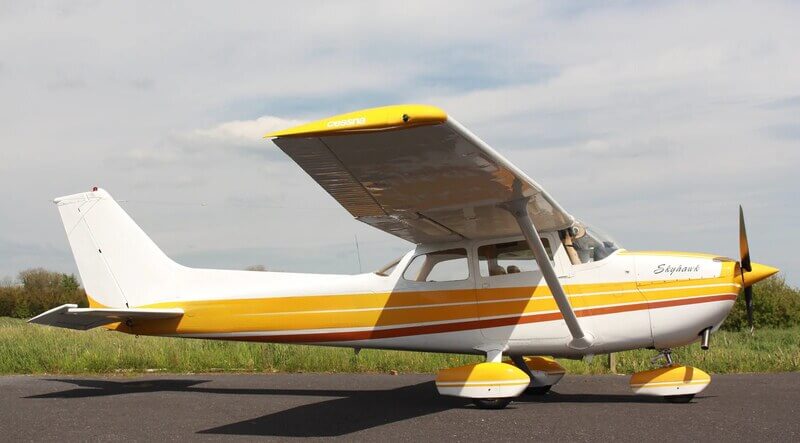
One of the most common questions we hear from Cessna 172 owners is:
“My friend owns the same airplane I do. Why is his insurance premium lower than mine?”
It’s a fair question.
In many cases, two Skyhawk owners may fly similar aircraft, operate from similar airports, and even live in the same state.
Yet their insurance premiums can differ by hundreds or even thousands of dollars per year.
The reason is simple.
Insurance companies are not insuring airplanes.
They’re insuring risk.
And every pilot represents a different level of risk.
At BWI Aviation Insurance, we’ve helped thousands of Cessna owners secure coverage for their aircraft and have reviewed countless Skyhawk insurance renewals over the years.
One thing becomes very clear.
The airplane itself is only part of the equation.
Understanding what insurance companies actually evaluate can help explain why some owners pay more than others—and more importantly, what you can do to improve your own insurance profile.
The Airplane Is Only One Piece Of The Puzzle
Many aircraft owners assume insurance companies start by evaluating the airplane.
That’s partially true.
But it’s not where most underwriting decisions are made.
Insurance companies usually begin with the pilot.
They want to know:
- Who is flying the aircraft?
- How much experience do they have?
- How often do they fly?
- Have they had claims?
- What training have they completed?
- How is the aircraft being used?
Two identical Skyhawks can receive dramatically different insurance pricing simply because the pilots are different.
Total Flight Time Matters
One of the first numbers underwriters review is total flight time.
Insurance companies know that pilots with more experience have generally encountered:
- More weather situations
- More operational challenges
- More emergency decision-making opportunities
- More aircraft system issues
A pilot with:
- 2,500 hours total time
is generally viewed differently than a pilot with:
- 250 hours total time
Experience alone does not guarantee lower premiums.
However, it often creates underwriting confidence.
And confidence usually leads to stronger carrier competition.
Time In Make And Model Often Matters Even More
For many Skyhawk owners, time in make and model can be more important than total flight time.
Consider these two pilots.
Pilot A:
- 1,500 hours total time
- 800 hours in Cessna 172s
Pilot B:
- 4,000 hours total time
- 10 hours in a Cessna 172
Many underwriters will prefer Pilot A.
Why?
Because aircraft-specific experience matters.
Insurance companies know pilots become more proficient as they gain experience within a particular aircraft type.
A pilot who knows the systems, performance, limitations, and handling characteristics of a Skyhawk generally represents less risk.
Get Your Cessna 172 Aircraft Insurance Quote With BWI Today>>
Instrument Ratings Can Make A Significant Difference
The Cessna 172 remains one of the most common aircraft used for:
- Instrument training
- Cross-country transportation
- Personal travel
- Business flying
Insurance companies recognize this.
As a result, they place substantial value on instrument ratings.
An instrument-rated pilot demonstrates:
- Additional training
- Better weather decision making
- Greater proficiency
- Commitment to aviation safety
This often translates into stronger underwriting outcomes.
For many pilots, earning an instrument rating is one of the most effective ways to improve long-term insurability.
Claims History Is One Of The Biggest Factors
Nothing influences insurance pricing more consistently than claims history.
Insurance companies pay close attention to:
- Previous claims
- Loss severity
- Claim frequency
- Recent losses
Pilots with clean records often receive:
- More carrier options
- Better pricing
- Greater underwriting flexibility
A single claim does not automatically create problems.
However, claims frequently trigger additional underwriting review.
Insurance companies view prior losses as one of the strongest indicators of future risk.
Recent Flight Activity Is Extremely Important
Many pilots focus on lifetime experience.
Insurance companies often focus on recent experience.
Why?
Because flying skills are perishable.
A pilot who flew:
- 100 hours last year
is often viewed differently than a pilot who flew:
- 10 hours last year
Even if the second pilot has more total time.
Insurance companies want to see active pilots.
Pilots who fly consistently tend to maintain stronger proficiency and situational awareness.
Aircraft Value Has Become A Major Driver
Many Cessna 172 owners have seen aircraft values increase dramatically over the last several years.
Consider the difference between:
- A basic 172M insured for $60,000
- A clean 172N insured for $125,000
- A modernized 172P insured for $225,000
- A newer 172S insured for $450,000+
The insurance company’s exposure changes significantly.
As exposure increases, premiums often increase as well.
This is one reason two owners flying similar aircraft may receive very different premiums.
Avionics Can Affect Insurance
Modern avionics upgrades frequently increase aircraft value.
Popular upgrades include:
- Garmin GTN navigators
- Garmin G3X Touch displays
- Garmin GI 275 instruments
- Garmin autopilots
- ADS-B equipment
- Engine monitoring systems
While these upgrades often improve safety, they also increase hull value.
That increased value can influence premium calculations.
However, many underwriters view modern avionics favorably because they improve situational awareness and risk management.
How The Aircraft Is Used Matters
Insurance companies also evaluate operational exposure.
For example:
Flying primarily from a large paved airport may create a different underwriting profile than:
- Mountain operations
- Backcountry operations
- Grass strip operations
- Flight instruction
- Aircraft rental
- Frequent IFR travel
Different environments create different exposures.
Underwriters want to understand those risks.
Training Makes A Huge Difference
One of the easiest ways to improve your insurance profile is through training.
Insurance companies consistently reward pilots who participate in:
- Flight reviews
- Recurrent training
- FAAST events
- Safety seminars
- Simulator training
- Transition training
Training creates confidence.
Confidence creates competition.
Competition often creates better pricing.
Why Some Owners Pay Hundreds Or Thousands Less
When people compare premiums, they often compare airplanes.
Insurance companies compare risk.
The owner paying less typically has some combination of:
- More experience
- More time in type
- Instrument rating
- Better training history
- More recent flight activity
- Cleaner claims record
- Lower-risk operating profile
The airplane may be identical.
The risk profile is not.
Why The Current Market Is Helping Skyhawk Owners
The good news is that today’s aviation insurance market remains favorable.
Competition among aviation insurance companies has increased significantly compared to several years ago.
Insurance companies continue to show strong interest in qualified owner-flown Cessna aircraft.
For many pilots, that competition creates opportunities to improve coverage and reduce long-term insurance costs.
Why Thousands Of Cessna Owners Trust BWI
BWI Aviation Insurance has helped thousands of Cessna owners insure their aircraft.
Whether you fly a 172M, 172N, 172P, 172R, or 172S, our team understands the underwriting factors that influence pricing and carrier appetite.
We work with leading aviation insurance carriers and help aircraft owners compare options based on their specific aircraft, experience level, and mission profile.
Final Thoughts
If you’ve ever wondered why another Cessna 172 owner pays less for insurance, the answer is rarely the airplane.
The answer is usually the overall risk profile.
Insurance companies evaluate dozens of factors including:
- Experience
- Training
- Claims history
- Aircraft value
- Recent flight activity
- Operational exposure
- Instrument proficiency
The good news is that many of those factors are within your control.
By understanding how underwriters evaluate risk, you can improve your insurance profile, increase carrier interest, and potentially secure better coverage and pricing for years to come.
bwifly.com / 800-666-4359
Continue Reading