
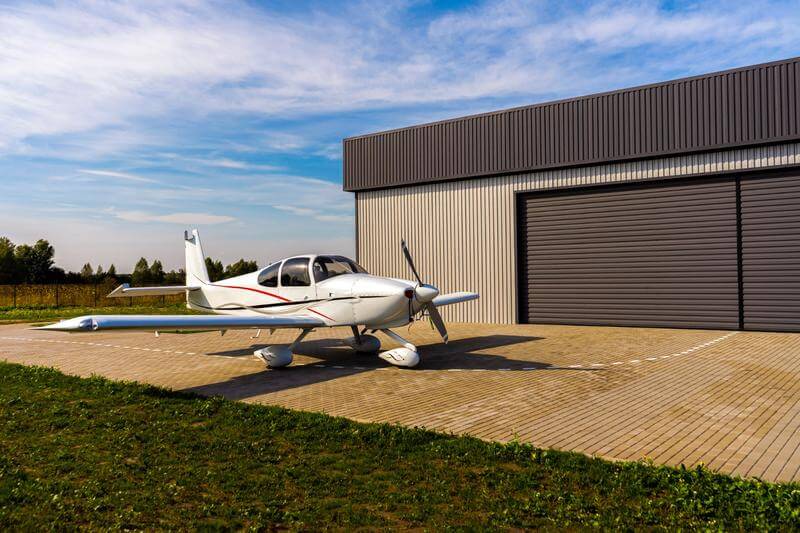
If you own or lease an aircraft hangar, it’s more than just a place to store your plane, it’s a high-value structure housing your aircraft, tools, equipment, and personal property.
But what happens if a storm, fire, or accident damages your hangar or the valuable contents inside? That’s where aircraft hangar insurance comes in.
At BWI Aviation Insurance, we’ve spent over 45 years helping hangar owners, FBOs, and private pilots protect their property. This guide explains what hangar insurance covers, how much it costs, and how to make sure your coverage matches your exposure.
Get Your Aircraft Hanger Insurance Quote Today >>
1. What Is Aircraft Hangar Insurance?
Aircraft hangar insurance is a property insurance policy that protects the physical structure of your hangar and its contents against damage or loss from covered events like fire, theft, wind, or hail.
It can apply to:
– Privately owned hangars (individual pilots or aircraft owners)
– Leased hangars at airports or private airparks
– Commercial hangars (FBOs, MROs, flight schools, or corporate operations)
Depending on your needs, policies can be written for the building only, building and contents, or full business operations.
2. What Does Aircraft Hangar Insurance Cover?
| Coverage Type | Description | Who It Applies To |
| Hangar Building Coverage | Covers damage to the structure from fire, wind, hail, or vandalism. | All owners and lessees |
| Hangar Contents Coverage | Protects equipment, tools, parts, furniture, and stored items. | All owners and tenants |
| Aircraft Not Owned by You | Covers aircraft stored or maintained by your business. | FBOs, MROs, flight schools |
| Business Interruption | Reimburses lost income during hangar repairs after covered damage. | FBOs and commercial users |
| General Liability | Covers injury or property damage to others on hangar premises. | All |
| Products & Completed Operations Liability | Covers maintenance or service work claims. | MROs and repair facilities |
| Pollution Liability | Covers cleanup from fuel or oil spills. | Businesses or hangars with fuel storage |
3. Why Hangar Insurance Is Essential
Even if your aircraft is fully insured, your hangar itself, and everything inside, may not be covered.
A hangar policy protects you from:
- Structural damage (fire, wind, hail, collapse).
- Theft or vandalism.
- Equipment loss (tools, avionics, machinery).
- Liability exposure (injuries or property damage to others).
Many airports and municipalities also require hangar insurance as part of lease agreements.
4. How Much Does Aircraft Hangar Insurance Cost?
| Type of Hangar | Structure Value | Typical Annual Premium | Notes |
| Private T-Hangar (Single Aircraft) | $100,000 – $250,000 | $700 – $1,800 | Covers structure and basic contents |
| Corporate / Shared Hangar | $250,000 – $500,000 | $1,500 – $3,500 | Additional liability for guests or partners |
| Commercial FBO or MRO Hangar | $500,000 – $2,000,000+ | $4,000 – $10,000+ | Includes business liability and operations coverage |
| Municipal / Multi-Tenant Facility | $1,000,000 – $5,000,000+ | Custom quoted | Complex risk profile, multiple aircraft stored |
Most private hangar owners pay $1,000–$2,000 per year for full coverage.
5. What Factors Affect Hangar Insurance Rates?
- Hangar Location & Airport Elevation – Storm, flood, or wind risk.
- Construction Type & Age – Steel hangars cost less to insure than wood structures.
- Occupancy & Use – Private storage has lower exposure than commercial operations.
- Security & Fire Protection – Sprinklers and alarms reduce risk.
- Stored Property Value – More valuable contents increase premiums.
- Liability Limits – Higher limits mean higher cost but better protection.
- Claim History – Previous property or liability claims can increase premiums.
6. Common Claims on Hangar Insurance Policies
- Wind and hail damage to roof panels and doors.
- Vehicle collisions with hangar doors.
- Electrical fires from equipment malfunctions.
- Water intrusion damaging contents or flooring.
- Theft or vandalism of stored property.
- Injury claims from visitors or maintenance staff.
7. Real-World Example
A private hangar owner in Texas had a 2,800 sq. ft. steel structure valued at $240,000. During a severe hailstorm, both doors and part of the roof were damaged. Repair costs totaled $42,000. Because the owner had a comprehensive BWI hangar policy, the insurer covered 100% of the repairs (minus the $1,000 deductible).
8. Additional Coverages to Consider
- Business Auto Liability – For hangar-owned tugs, fuel trucks, or ground vehicles.
- Workers’ Compensation – Required if you employ maintenance or office staff.
- Tenant’s Legal Liability – Covers damage to rented hangars or leased space.
- Pollution Cleanup – For hangars with fuel storage or maintenance activity.
- Loss of Use – Reimburses rent for temporary storage after a claim.
9. How to Get an Aircraft Hangar Insurance Quote
- Visit www.bwifly.com.
- Select ‘Hangar Insurance’ under aviation property coverage.
- Provide your hangar location, value, and use type.
- Receive multiple quotes from top aviation underwriters.
- Bind coverage and receive proof of insurance within 24 hours.
10. Why Choose BWI for Hangar Insurance
- 45+ years specializing exclusively in aviation insurance.
- 10,000+ active customers nationwide.
- 800+ five-star reviews.
- Access to every major aviation underwriter (AIG, Global Aerospace, Old Republic, Starr, and more).
- Fast quotes and same-day coverage options.
- Dedicated account managers with aviation expertise.
11. The Bottom Line
Your hangar protects one of your most valuable assets, your aircraft, and it deserves protection of its own. Aircraft hangar insurance ensures you’re financially secure in the event of fire, storm, or liability claims.
At BWI Aviation Insurance, we make it simple to get the right coverage quickly and affordably.
Protect your hangar, your aircraft, and your peace of mind. Get your hangar insurance quote today at www.bwifly.com.
Continue Reading