

A company servicing aircraft life rafts and life vests needs an insurance review built around the equipment entrusted to it and the work delivered to customers. A raft damaged at the workshop, a missing customer vest and a later allegation about a completed service present different questions. Supplying a temporary replacement or arranging outside work adds responsibilities that a general repair description can miss.
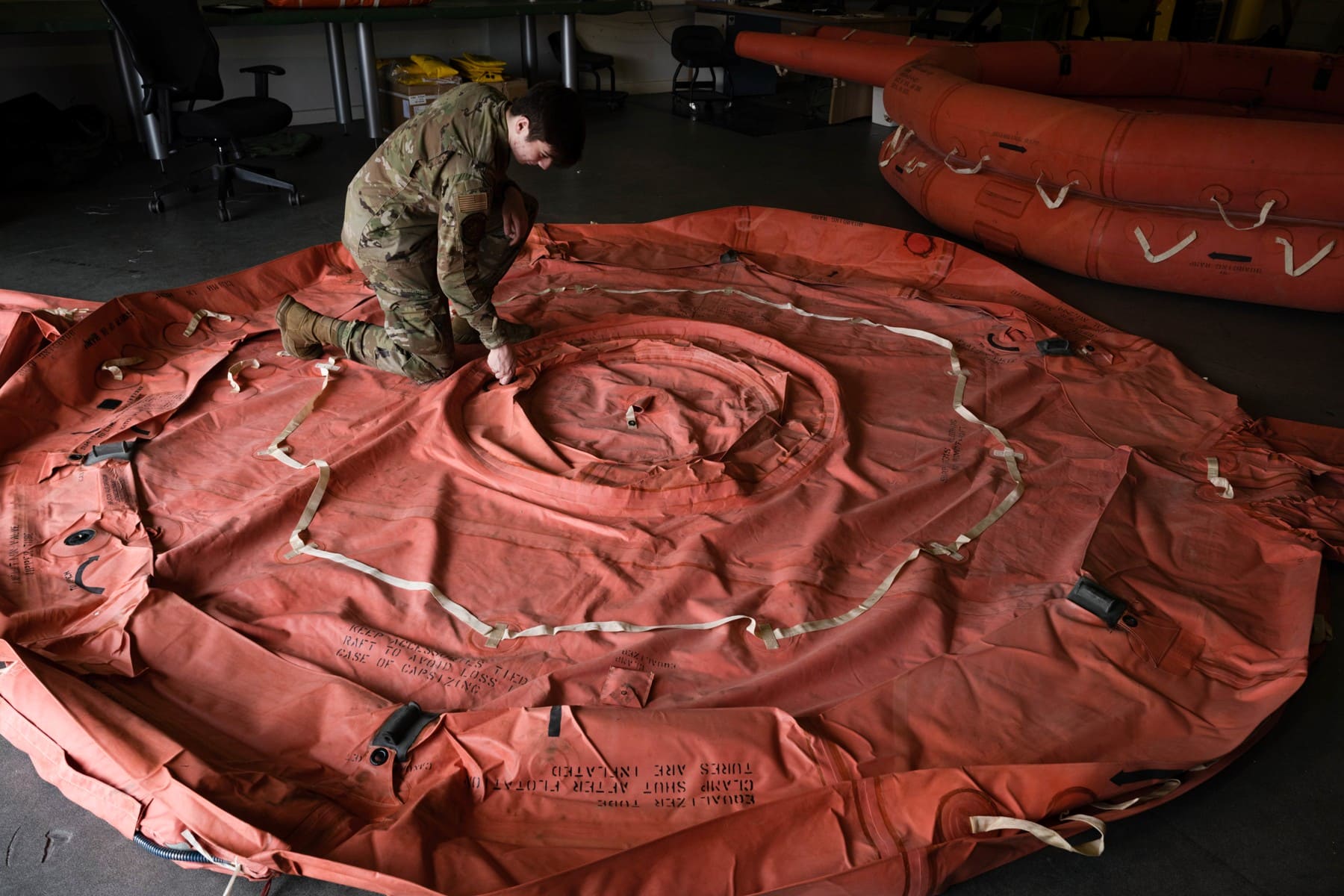
The most useful submission follows one actual order from collection through inspection, any authorized work, documentation and return. Identify each item, its owner, the accepted task and the business responsible at every stage. Then ask how proposed protection addresses customer property, completed operations, supplied products and the shop's own assets. A certificate naming an aviation business does not settle all those interests.
This guide is for commercial service providers preparing an insurance discussion. It gives no inspection, inflation, repair, packing, testing or maintenance interval instructions. Qualified personnel must establish the applicable requirements for the equipment and service. BWI's commercial aviation insurance information provides broader context; eligibility and terms for a specialist survival equipment business need confirmation.
Describe the Equipment and Services You Actually Accept
List the equipment categories your business handles, distinguishing aircraft life rafts, life vests and any associated articles or survival supplies. Explain whether you inspect, maintain, repair, repack, distribute, rent or simply coordinate another provider's work. A company can have several roles without every role receiving identical treatment under its insurance.
Identify the aircraft-related customers and intended applications. Marine equipment work, military contracts and civil aviation equipment should not be blended into one vague survival products description. Give the underwriter enough context to understand what customers expect and where your service sits within their own maintenance or operational arrangements.
State the scope you can document today. Do not describe every model produced by a manufacturer as an accepted capability merely because your staff have experience with one of its products. If the business plans to add a model, procedure, location or customer sector, distinguish that expansion from established activity.
Explain services that remain with the customer or another provider. Removing equipment from an aircraft, transporting it, performing the workshop task and reinstalling it can involve different parties. The application should identify what your business undertakes, including stages arranged through subcontractors, rather than assuming the customer understands the boundaries from the final invoice.
Keep Service Authority Separate From Insurance Acceptance
The technical authority to undertake a task and an insurer's agreement to accept the exposure answer different questions. Provide accurate certification, authorization and capability information when requested. An insurance policy does not authorize maintenance, while a technical credential does not establish that a particular allegation will be covered.
14 CFR 43.13 sets performance rules for maintenance within its scope, including the use of specified current methods or other methods acceptable to the FAA. Qualified personnel must determine how the provision applies to the actual work. This guide does not select a procedure or decide an item's serviceability.
For a certificated repair station, 14 CFR 145.201 addresses privileges and limitations tied to ratings and operations specifications. Explain the status that applies to your business rather than treating the phrase repair station as unlimited authority over all survival equipment.
If your customer requests a particular release document, manufacturer authorization or evidence of capabilities, route that request to the qualified personnel who can verify it. Keep the insurance contact informed about the accepted service. Do not substitute a certificate of insurance for technical documentation or imply that either document expands the other.
Track Customer Ownership Through Every Workshop Stage
Prepare an intake record connecting the customer, equipment identity, order and condition as received. A sealed container, associated accessories and separate articles can create more than one property interest. Describe the records you actually maintain so an insurance reviewer understands what comes into the business and how it is later identified.
Keep customer instructions and verified findings distinct. If identification is incomplete, a seal is already disturbed or an accessory is absent, record the uncertainty through the appropriate process. Do not turn an assumption into an established fact just to complete a field in the workshop system.
Explain who can authorize additional work, replacement or disposal. A request for a defined inspection should not be treated as open authority to substitute equipment or undertake unrelated repair. Changes can affect both the contractual responsibility and the factual service description supplied to the insurer.
Include property held while a customer decides what to do next. An item awaiting approval or collection remains a custody exposure even when no technician is actively working on it. Tell the broker about that holding period, the storage location and any accumulation of equipment belonging to several customers.
Compare Customer Property With Equipment Owned by the Shop
Ask which protection is intended to address equipment belonging to others while in your possession. Review the insured interests, custody wording, locations, valuation, limits, deductibles and relevant exclusions. Do not assume a policy concerned with whole customer aircraft automatically addresses detached survival equipment on a workshop bench.
Support the values with available customer and equipment records. The maximum concentration can be materially different from one typical order. A fleet customer may send several items together, or return delays can leave completed and incoming orders at the premises at the same time. Explain how the peak estimate was developed.
Prepare a separate schedule for the company's own tools, test equipment, stock, office systems and improvements to rented premises. Identify employee-owned, borrowed and leased property where relevant. A landlord's building policy does not establish protection for all those interests, and customer property limits should not be assumed to include your own assets.
If a property incident could interrupt the workshop, review any business income or extra expense proposal separately. Ask what must happen to trigger protection and how waiting periods, limits and valuation apply. A missed turnaround promise or unavailable spare unit is not automatically an insured interruption simply because the business loses revenue.
Examine Liability After the Equipment Leaves
A later complaint may concern the service performed even when there was no visible damage at collection. Describe completed operations and products involvement in the insurance submission. Identify whether the business returns the customer's item, supplies a replacement, sells components or distributes equipment serviced by someone else.
Review allegations about resulting injury or damage separately from repeating your work or replacing the article itself. A customer may ask for several remedies in one demand. The actual insuring agreements and exclusions determine how each expense is treated; an aviation liability label is not an unconditional service warranty.
Explain any selection advice or technical recommendation provided alongside the workshop task. Processing the customer's specified order differs from accepting responsibility for choosing equipment suitable for a particular operation. If you offer both services, the submission should disclose them rather than allowing the advisory role to disappear within a product sale.
Ask how defense costs, limits, aggregates and retained amounts work under the offered forms. Consider how allegations involving multiple units or customers would be evaluated without predicting a universal result. Related-claim or occurrence provisions can require a policy-specific explanation when several completed orders become part of the same concern.
Include Temporary Replacements and Rental Equipment
Tell the insurance reviewer if your company supplies a loan raft or vest while customer equipment is away. Identify whether it belongs to your business, a supplier or another customer. A temporary arrangement still involves an item in use elsewhere and contractual responsibilities for its condition, return and loss.
Provide the rental or loan agreement and describe who selects the item, who verifies suitability and who performs any installation or handoff. An equipment rental promise should not be hidden inside an application that describes only workshop inspection. The underwriter needs to understand the service the customer actually receives.
Ask separately about physical loss to equipment you supply and liability arising from that supply. Those are different interests. Review any geographic, use, customer, valuation or other restrictions in the proposed terms. Do not tell a customer the item is fully insured without identifying what protection and whose interest that statement describes.
Maintain distinct identities for the customer's original item and the replacement. An exchange should not overwrite the original intake history. When the customer returns one unit and receives another, preserve the supporting records so a later review can establish which article was where, under whose control and under which agreement.
Make Transport and Outside Specialists Visible
Describe collection and return arrangements. Your own delivery vehicle, customer collection and a commercial carrier can create different property and liability questions. Identify who arranges packaging, who contracts with the carrier and which party accepts responsibility at the handoff. Paying freight does not establish that the equipment is insured for the interests you need.
If an article or associated item has a transport classification or special handling requirement, qualified personnel must determine the applicable rules. PHMSA's hazardous materials outreach resources are an official starting point. This guide does not decide a shipment's classification, packaging, marking or eligibility for an exception.
For work sent to another specialist, explain who engages that business and whose name appears on the final documentation. Identify whether you incorporate outside findings into your own service or arrange a direct customer relationship. Your responsibility and the specialist's insured status are separate questions to review.
Obtain the agreements and insurance evidence required for the relationship. A subcontractor's certificate does not automatically make your company an insured or eliminate allegations against your own work. If the specialist or carrier changes, update the relevant records and consider whether the new arrangement changes the operation described to your insurer.
Review Turnaround Promises and Customer Contracts
A customer may need equipment returned before an aircraft's next assignment. Record the service commitment and identify what happens if findings require more work. Have counsel assess turnaround guarantees, replacement obligations and downtime clauses before they become standard promises in quotations or online ordering terms.
The broker should receive the complete agreement and insurance schedule. Ask what the proposed insurance supports and where the contract requires more. An accepted liability limit does not mean every penalty, refund, replacement cost or consequential-loss obligation in the customer's agreement is insured.
Review requests for additional insured status, waivers or other endorsements using the actual parties and coverage part. A certificate holder designation and supported insured status are not the same thing. Confirm accepted wording before telling a customer the requirement has been met, and keep outstanding items clearly identified.
For recurring fleet accounts, review whether the agreement covers all work, only specified equipment or separate orders. A master contract and purchase order can assign different responsibilities. Preserve both so the insurance discussion is based on the terms the business actually accepts rather than an isolated page showing the requested limit.
Use a Fictional Return Mix Up to Test the Submission
Imagine a workshop receiving two similar raft assemblies from different customers during the same week. One customer also borrows a temporary unit. A later complaint alleges that the returned documentation identifies a different item and demands that the business pay to review several related orders. This is a fictional administrative example, not a BWI claim or a technical finding.
The factual review would need intake identifiers, work instructions, records of authorized tasks, outside-provider documents, replacement equipment records and the return history. It would distinguish the actual items from the paperwork describing them. The cause and extent of the problem should not be assumed merely because two articles look similar.
The coverage review would examine the actual allegation, policies and contracts. Physically damaged customer property, a documentation error, the expense of reviewing other orders and an alleged downstream loss are different questions. Do not promise that one policy section pays every requested cost because they arise from a single customer complaint.
Use this example at the quote stage to check whether your submission includes batch handling, temporary equipment and documents delivered to customers. It should identify the real activities without claiming that a particular record system eliminates disputes or guarantees a claim outcome. The aim is an accurate operation description that an underwriter can evaluate.
Resolve Customer Collection and Outstanding Instructions
Before an order is collected, identify who may receive it and which documents accompany the actual equipment. If a customer asks another business to collect several items, record that handoff without assuming the collecting business becomes responsible for every earlier service. An invoice recipient, equipment owner and authorized collector can be different parties.
If the customer leaves an item behind, follow the applicable agreement and obtain appropriate guidance before treating it as abandoned. Storage fees, disposal rights and the insurance treatment of property still held require separate consideration. Do not remove a valuable customer item from the exposure schedule merely because its original collection date has passed.
Plan Notice and Continuity Before a Concern Arises
Identify who receives a complaint and who can locate service and insurance records. Follow the applicable policy's notification process when an incident, demand or reportable circumstance arises. A business should not wait for a lawsuit merely because the customer has not yet assigned a final dollar amount to the allegation.
Preserve original records and relevant items as instructed by the appropriate technical, legal and claim contacts. Keep established findings separate from preliminary explanations. Do not silently replace a document or commit to reimbursement before obtaining appropriate guidance about the actual complaint and obligations.
Necessary safety or regulatory decisions remain with qualified responsible parties. Insurance coordination should be organized alongside that work, not presented as permission to delay a required action. An insurer's coverage assessment and the technical assessment of an article answer different questions and may require different records.
When changing insurers, selling the business or discontinuing a service, review prior-work treatment and relevant triggers and dates. A completed order can remain relevant to an allegation made later. Keep historical policy forms and endorsements accessible rather than assuming the current declarations tell the whole insurance history.
Prepare a Consistent Specialist Insurance Submission
Gather legal entity and location details, service capabilities, customer sectors, requested activity figures, representative agreements and current insurance. Add the maximum customer property concentration and separate schedules for owned, borrowed and supplied equipment. Explain transport and outside specialists in the same submission so the proposed program follows the actual order.
Provide truthful information about staff roles, qualifications, experience and complaints as the application requests. Distinguish a new company's projections from established trading results. Discuss workforce protection separately with appropriate advisers rather than assuming aviation liability replaces workers compensation or resolves a contractor's legal status.
Compare alternatives against the same services and values. Record customer property, completed operations, supplied products, loan equipment, transport, premises and relevant data exposures, identifying the intended policy for each. Note material exclusions and open underwriting conditions beside the premium so a lower figure is not mistaken for equivalent protection.
Start a commercial aviation quote review with BWI or call 866 788 6291. Describe the life raft and life vest operation in full and ask whether suitable specialist options can be considered. Confirm the final accepted services, endorsements and effective dates in the issued documents before relying on coverage.
Sources and further reading
Continue Reading


