

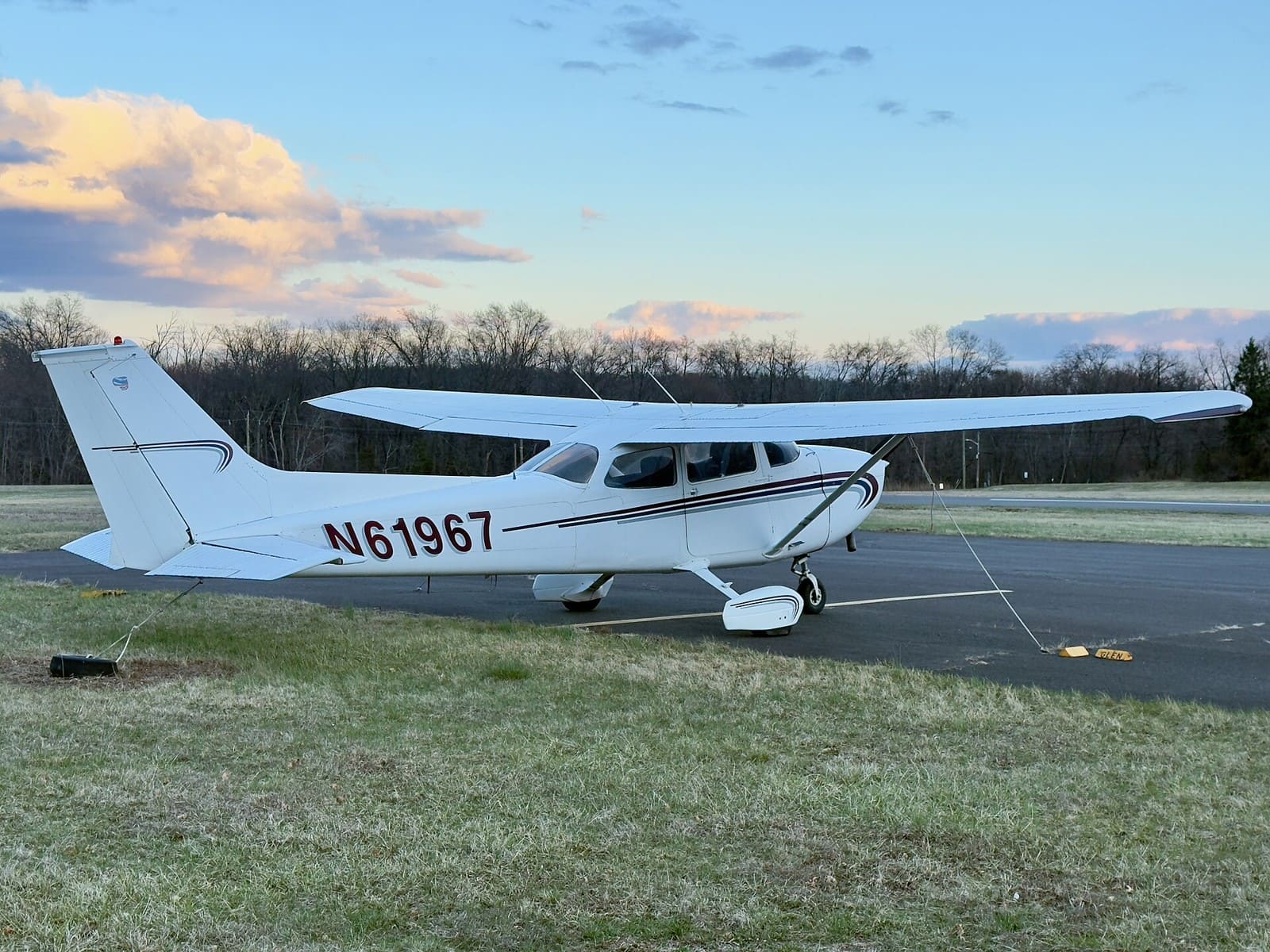
Before bidding on a salvage auction airplane, ask the insurance reviewer to consider the property in its current damaged condition and the activities you actually plan. A registration number or photograph taken before the damage is not a description of the present purchase. Identify what the lot contains, when your financial interest begins and how it will move into your custody.
This guide helps a prospective buyer organize that discussion before bidding or accepting delivery. It does not value the aircraft, approve repairs, resolve title or determine whether it can return to flight. Those decisions require qualified technical, legal and other professional review, separate from an insurer’s willingness to consider the risk.
Identify What the Auction Lot Includes
Obtain the complete lot description and sale terms. Determine whether the offering is described as an aircraft, an airframe, components or another collection of property. List the included engine, propeller, avionics, loose parts and records as the seller represents them. A photograph of an assembled airplane should not be treated as an inventory of everything the buyer will receive.
Use the exact identifying information available and note discrepancies between the listing, records and property. Ask the seller and the appropriate qualified advisers to resolve those discrepancies. Do not substitute a tail number for a complete identity review or assume that a familiar model name establishes the configuration and condition of a damaged aircraft.
If items will be excluded, removed or sold separately, make that clear in the insurance submission. A requested value for a complete aircraft can be misleading when the actual purchase excludes major components. Keep the accepted sale description and the proposed insurance description consistent, while leaving technical and ownership conclusions to the responsible professionals.
Separate an Auction Label From an Official Status
The word salvage in a listing does not resolve every question about the aircraft’s records, identity, condition or future use. Ask qualified advisers to evaluate those subjects using the actual documents. Do not infer a uniform aviation status from a label used in a sale process or transfer terminology from automobile salvage transactions without appropriate review.
The FAA publishes Order 8100.19A on destroyed and scrapped aircraft as guidance for its personnel. It is an official resource to identify for a qualified review, not a finding about a particular auction lot. This article does not apply its provisions, determine eligibility or provide instructions for restoring an aircraft identity.
Ask for the appropriate aviation review before building a financial plan around an assumed return to service. Insurance interest in the property, ownership documentation and operational eligibility are separate questions. A successful bid, a bill of sale or an insurance quotation should not be presented as proof that the aircraft is airworthy or can be certificated for the buyer’s intended use.
Document Present Condition and Known Uncertainty
Provide current photographs, the available damage description and any relevant inspection records requested by the insurance reviewer. Distinguish seller statements from findings made by a professional acting for the buyer. If access is limited or a component cannot be inspected before bidding, identify that limitation rather than describing the property as fully evaluated.
Explain whether the aircraft is assembled, partially disassembled, stored outdoors or held at a recovery or repair location. Describe missing components and the location of loose items. The insurer needs the present arrangement, not only a description of the event that damaged the aircraft. A prior loss summary may omit subsequent handling, exposure or removal of equipment.
Keep known damage separate from questions still requiring investigation. Do not describe an aircraft as repairable, economically viable or ready for a ferry flight based on a listing. Those conclusions require the relevant professional decisions. An insurance application should accurately communicate uncertainty rather than remove it to make the proposed purchase look simpler.
Review Ownership and Records Before Assuming a Clean Handover
Identify the seller, buyer and entity that will own the property after the transaction. Have appropriate advisers review the sale documents, ownership interests and any title questions. An auction platform’s role in collecting bids does not by itself establish that every ownership or lien concern has been resolved. Obtain the records needed for the actual transaction.
The FAA’s information on requesting aircraft records identifies registration records and airworthiness documents held by the Aircraft Registration Branch. These records serve a different purpose from the aircraft’s maintenance logbooks or a physical inspection. Ask the relevant specialists which records are needed and what remains unavailable. A request for official records does not complete a title examination or establish the aircraft’s present condition.
List the logbooks and other records included in the sale and how they will be delivered. Identify originals, copies and missing periods accurately. Do not promise that a registration search supplies a complete maintenance history or that an available file proves the condition of every component. Keep each source’s purpose and limitations visible in the purchase review.
Separate the Auction Purchase Questions
| Subject | Evidence to obtain | Decision kept separate |
|---|---|---|
| Property identity | Lot inventory and identifying records | Technical eligibility |
| Ownership | Reviewed transaction and title records | Aircraft condition |
| Removal | Handling agreement and destination | Insurance acceptance |
| Proposed insurance | Issued terms for declared property | Repair and flight approval |
This comparison is a review aid, not a determination about an aircraft or a statement that a salvage lot can be insured.
Ask About Insurance Before the Bid Becomes a Commitment
Send the proposed purchase description to the appropriate insurance party while there is time to review it. Explain the auction deadline and any limits on inspection or access. Ask what can be evaluated with the available information and what remains conditional. An initial willingness to consider the submission should not be treated as an issued policy or a guarantee of later terms.
Provide the intended immediate use: storage, transport, parts retention, restoration or another stated plan. If the future goal is flight, describe that as a future goal rather than the present operation. The review may need to proceed in stages as condition, ownership and work plans become clearer. Do not presume that one quotation addresses every stage.
Have the sale terms reviewed for when payment, ownership, risk of loss, removal and storage obligations arise. Those are transaction specific questions. The insurance effective date should be discussed using the actual accepted arrangement, without inventing a universal rule that protection begins at the hammer fall, payment, pickup or registration.
Before the auction deadline, ask for a short status response tied to the exact lot and buyer. Does the insurance contact still need documents, have a conditional proposal, or have authority to confirm an accepted arrangement? Record any outstanding requirement, the activity being considered and the requested start date. Send a material change in the lot description back for review. An email saying that the submission is being reviewed is not confirmation that the buyer can rely on insurance after making the bid. The sale decision must reflect what is actually confirmed at that point.
Prepare a Requested Value That Matches the Property
Explain the amount being requested and its basis. The winning bid, buyer fees, transport budget, projected repair cost and hoped for finished value are different figures. Identify them separately rather than adding everything together and assuming that the result is the proper insurance amount. Ask the authorized insurance parties how the proposed property and valuation should be presented.
If a qualified appraisal or condition evaluation is available, provide it where requested and identify its scope and date. A document evaluating a future restored aircraft may not describe the property in its present damaged state. Do not use an estimate of eventual sale value as proof of the current insured value or of any amount payable after another loss.
As components are removed or work is completed, review whether the submitted description and value remain accurate. A project can change substantially between purchase and storage or between storage and restoration. Keep the records supporting requested changes, and obtain the appropriate insurance response rather than treating internal spending as an automatic increase in coverage.
For a practical comparison, keep the airframe, included engine, loose propeller and retained avionics identifiable in the purchase file. Beside each item, record whether it is included in the lot, its known location and the basis for the requested amount. Keep buyer fees, transport charges and a possible future restoration budget on separate lines. This does not set an insured value or recommend adding those costs to a schedule. It lets the insurance reviewer see what the buyer owns now, which amount describes that property and which spending still depends on later decisions.
Plan Removal and Transport as Their Own Stages
Identify who will collect the property, the deadline for removal and the destination. Include proposed loading, unloading and temporary storage arrangements in the submission where relevant. A damaged aircraft may require specialist handling; qualified providers should determine the appropriate methods. This guide does not supply lifting, disassembly or transport procedures.
Obtain the actual transport and handling agreements for professional review. Ask about responsibilities and the insurance evidence required for the parties involved. A contractor carrying insurance does not establish that it addresses the buyer’s entire interest, every stage of movement or every amount at risk. Review the relevant documents rather than relying on a verbal assurance.
Plan for a delayed collection or unavailable destination before the deadline arrives. Identify who can agree to continued storage and how the insurance parties will be informed of a changed location or date. Do not assume that an auction seller’s courtesy extension also extends insurance or that the original quotation automatically includes an unplanned stop.
If the wings travel on one vehicle and the engine remains with a storage provider, describe those arrangements expressly. Record when each provider receives and releases each item, and retain the condition record for that handover. A single delivery date can conceal different custody periods and locations for the parts of one purchase. If the destination or carrier changes, supply the revised facts before relying on a response addressing the earlier route. The purpose is accurate insurance review of the intended handling; specialists must decide how the property can be moved safely.
Describe Storage and Work at the Destination
Provide the destination address and actual storage arrangement. Explain whether the aircraft will be inside, outside or divided between locations, and who has custody. Identify loose components and records stored separately. A generic statement that the airplane will be in a hangar may leave the reviewer unaware of an engine kept elsewhere or property still awaiting transport.
If restoration work is planned, identify its proposed scope and the businesses or people involved. Insurance review does not approve the technical plan or establish that a repair will return the aircraft to an acceptable condition. Send material changes for review before relying on the earlier description, especially when a storage purchase becomes an active work project.
When active work is planned, read BWI’s guide to aircraft insurance during disassembled restoration. Describe the actual work, component locations and people responsible when requesting the next review. Keep the initial purchase and storage arrangement identifiable so later decisions are based on the project’s current stage rather than the original auction description.
Keep Seller Claim Questions Separate From Buyer Insurance
The seller’s earlier insurance claim may explain why the property is being offered, but it does not establish the buyer’s new coverage. Obtain the sale documents and relevant information available through the appropriate process. Do not assume that a previous total loss payment determines what the buyer can insure, the value to request or the terms an insurer will offer.
BWI’s published salvage questions after a total loss offer concerns an existing owner’s claim decisions. A prospective auction buyer has a different task: evaluating the property, transaction and future insurance interest. Keep those subjects distinct so a claim settlement discussion is not misused as purchase advice.
Ask the appropriate advisers about any continuing restrictions, third party interests or records relevant to the sale. Do not infer that every issue has ended because an insurer or auction business is involved. This guide does not decide ownership, salvage rights or the effect of a prior settlement on the particular transaction.
Compare the Offered Insurance Documents
Review the property description, insured entity, locations, requested amounts and effective period against the purchase plan. Ask how the actual wording addresses the declared condition and activities. Read the relevant definitions, conditions, exclusions and endorsements together. A policy title such as ground coverage does not explain every event or interest by itself.
Identify any conditions that must be satisfied before the proposed arrangement can begin or change. Keep a requested feature separate from an accepted term, and ask the issuing party to resolve discrepancies. A draft certificate, unpaid quotation or pending application should not be filed as if it were final issued evidence.
Compare proposals using the same description of the lot and intended stages. A quotation for stationary storage is not directly comparable with one addressing a different set of activities. Record the material differences before selecting terms. Price and availability depend on the actual submission; a bargain purchase does not guarantee inexpensive insurance or an acceptable future flying risk.
Use a Fictional Auction Lot to Test the Purchase File
Consider a fictional buyer evaluating a damaged airplane offered with an engine but without some avionics and logbook periods. The buyer intends to move the property to a workshop and decide later whether to restore it. This example is not a real BWI transaction and does not establish that the aircraft is repairable, insurable or eligible for flight.
A useful submission would identify the included property, available records, current condition, inspection limitations, proposed removal and destination. It would describe restoration as undecided rather than assume a completed flying aircraft. Qualified advisers would evaluate the technical and ownership questions while the insurance parties considered the declared property and immediate activities.
If the buyer later decides to proceed with restoration, the next review would use the actual work plan and updated information. The first insurance response would remain tied to its original scope. The purpose of the exercise is to expose decisions still open before the bid, rather than create confidence from incomplete information or a projected finished value.
Use a Prebid Decision Record
Before committing, record the purchase questions as confirmed, unresolved or outside the proposed scope. Include the source and date of each answer. Keep technical findings, legal advice, seller representations and insurance responses identifiable. This lets the buyer see whether a decision is supported by the right professional rather than by a general statement from someone handling another part of the transaction.
Identify the consequences of missing information with the appropriate advisers. An inaccessible component or uncertain record may affect the buyer’s decision even when an insurance party can consider limited terms. Insurance availability should not be used as proof that the overall purchase is financially sensible. The buyer must evaluate the transaction with qualified advice.
After a successful purchase, preserve the accepted sale description and handover records alongside the issued insurance documents. Update the file when custody, location, condition or intended activity changes. This creates a useful starting point for later reviews without rewriting the uncertainty that existed when the purchase was made.
Aircraft Insurance Before Buying a Salvage Auction Airplane FAQs
Can a salvage auction aircraft be insured?
Ask for a review using the actual property, condition, ownership, location and intended activities. Availability and terms depend on insurer review. This guide does not establish acceptance or future flying coverage.
Does a registration number mean the aircraft can fly again?
No such conclusion should be drawn from the number alone. Qualified aviation professionals must evaluate the actual aircraft and records. A purchase or insurance quotation is not an airworthiness decision.
Should I insure the winning bid or the finished value?
Present the actual figures and their basis separately and ask how the proposed valuation should be handled. The purchase amount and a projected restored value are different subjects; neither automatically establishes the insured amount.
Does the seller’s insurer protect me after the sale?
Do not assume that. Review the actual transaction, effective dates and insurance documents with the appropriate professionals. A seller’s prior claim does not establish the buyer’s insurance arrangement.
Is this the same as keeping salvage after my own claim?
No. This guide concerns a prospective buyer evaluating an auction purchase. An existing owner considering salvage after a claim should use the separate claim guidance and obtain advice on the actual settlement documents.
Discuss a Proposed Salvage Aircraft Purchase With BWI
Before bidding, give BWI the available lot description, current condition records, included components, requested value basis, sale timing, removal plan and storage destination. Explain whether restoration is planned or still undecided. Identify missing information so the review can address its actual limits.
Request an aircraft insurance review from BWI for the property and activities you intend to insure. Availability and terms depend on the submission and insurer decision. The issued documents govern coverage, while technical eligibility, ownership and purchase decisions require their own qualified review.
Continue Reading


