
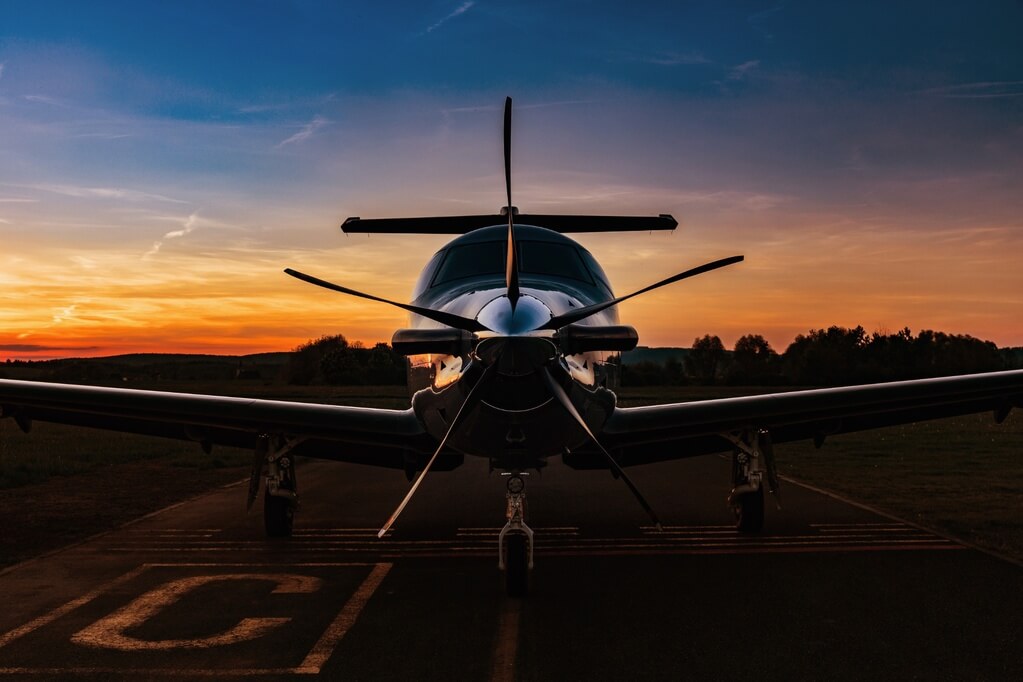
If your aircraft is used for business, charter, or revenue operations, your risks — and your insurance needs — are far different from those of a private owner.
From corporate jets and flight schools to charter operators and aerial service providers, commercial aviation businesses rely on their aircraft every day. A single uninsured incident could ground your operations and cost hundreds of thousands of dollars.
That’s why having the right commercial aircraft insurance isn’t just smart — it’s essential.
Since 1977, BWI Aviation Insurance has helped businesses across the U.S. secure the protection they need. With nearly 50 years of aviation-only experience, access to every major underwriter, and 800+ five-star reviews, BWI is one of the nation’s most trusted partners for commercial aviation insurance.
This guide breaks down what commercial aircraft insurance covers, who needs it, how premiums are calculated, and how to ensure your business is fully protected.
What Is Commercial Aircraft Insurance?
Commercial aircraft insurance covers aircraft used for business or revenue-generating operations.
This includes:
– Charter or air taxi operations (FAA Part 135)
– Corporate flight departments (Part 91)
– Flight schools and instruction (Part 141)
– Aerial photography or surveying
– Cargo and freight services
– Aerial firefighting or agricultural spraying
The goal is simple: protect the aircraft, the business, and everyone on board.
Unlike private or pleasure-use insurance, commercial policies carry higher liability limits, broader coverage options, and stricter compliance requirements.
Why Businesses Need Commercial Aircraft Insurance
Operating any aircraft for business introduces unique risks:
– Carrying paying passengers increases liability exposure.
– Employing multiple pilots or instructors creates human factor risks.
– Operating high-value jets or fleets requires precise financial protection.
– FAA regulations (Part 135) require proof of insurance to maintain certification.
Without the right policy, even a minor incident can lead to:
– Loss of aircraft use and revenue.
– Legal and medical liabilities.
– FAA non-compliance or certification suspension.
– Reputational damage to your company.
With the right broker and coverage, you protect not just your airplane — but your entire operation.
Core Coverages in a Commercial Aircraft Policy
A commercial aviation insurance policy typically includes multiple layers of protection:
1. Hull Coverage (Physical Damage)
Protects your aircraft from damage or total loss, whether it’s parked, taxiing, or in flight.
Coverage options:
– Ground Not in Motion – damage while parked.
– Ground in Motion – covers taxi incidents.
– In-Flight – full coverage during all operations.
Policies are written on an Agreed Value basis, so the insurer pays a fixed amount if the aircraft is a total loss.
2. Liability Coverage
Covers bodily injury or property damage caused by your aircraft.
Commercial operations carry higher risk, so higher limits are standard:
– $1M / $100K per passenger (minimum for small piston aircraft)
– $5M–$25M smooth (for corporate and turbine aircraft)
– $50M+ (for larger fleets or international operations)
Liability coverage also includes:
– Legal defense and settlements.
– Third-party property damage.
– Passenger injury or death.
3. Passenger and Crew Medical
Covers medical expenses for passengers and employees following an incident.
Typical limits: $25,000–$250,000 per person.
4. Business Interruption / Loss of Use
Reimburses lost income if your aircraft is grounded following a covered loss.
Essential for charter and training operations that depend on daily flight schedules.
5. Hangar and Premises Liability
Covers accidents or damage occurring in hangars, maintenance areas, or offices.
Example:
A student slips in your flight school hangar, or a tow vehicle damages another aircraft — this coverage responds.
6. Non-Owned or Rented Aircraft
Protects your company and pilots when using leased or borrowed aircraft for commercial purposes.
7. Optional Endorsements
Depending on your operation, you can add:
– Cargo coverage
– War risk protection
– Pollution or environmental liability
– Pilot training waivers
– Foreign operations endorsements
Who Needs Commercial Aircraft Insurance?
You likely need a commercial policy if you:
– Operate aircraft for hire (charter, air taxi, aerial services).
– Employ multiple pilots or instructors.
– Rent or lease aircraft to others.
– Use aircraft for business travel carrying non-employees.
– Operate under Part 135, 141, or 145.
Even corporate flight departments (Part 91) typically carry commercial-grade insurance because of high aircraft values and passenger exposure.
Get Your Commercial Aircraft Insurance Quote Today>>
How Much Does Commercial Aircraft Insurance Cost?
Commercial premiums vary widely depending on aircraft type, pilot experience, and operation size.
Operation Type | Aircraft | Hull Value | Annual Premium | Liability Limit
Flight School | Cessna 172 Fleet | $500,000 | $6,000–$12,000 | $1M / $100K per passenger
Charter (Part 135) | King Air 200 | $2,000,000 | $15,000–$25,000 | $5M smooth
Corporate Jet | Citation CJ2 | $5,000,000 | $20,000–$40,000 | $10M smooth
Agricultural | Air Tractor | $900,000 | $8,000–$15,000 | $2M smooth
Aerial Photography | Cessna 182 | $200,000 | $2,500–$4,000 | $1M / $100K per passenger
Key Factors That Affect Premiums
1. Type of Operation – Charter, instruction, and fleet operations carry more exposure.
2. Pilot Experience – Total hours, recency, and training programs directly influence rates.
3. Aircraft Value – Higher hull values = higher premiums.
4. Geographic Location – Weather, storm risk, and traffic density impact cost.
5. Claims History – Past losses or violations increase premiums.
6. Training & Safety Programs – Operators with recurrent training and safety systems get discounts.
Regulatory Requirements (FAA & DOT)
Commercial operators under Part 135 are required to maintain minimum liability insurance and submit proof to the DOT (Form OST 6410).
Typical minimums include:
– $300,000 per passenger for small aircraft
– $500,000–$750,000 per passenger for larger aircraft
– $1M+ per occurrence minimum
BWI ensures all policies meet or exceed FAA and DOT standards — and helps you file certificates correctly.
Why Commercial Operators Choose BWI
BWI Aviation Insurance is one of the few brokers in the country with nearly 50 years of experience serving both private and commercial aviation operations.
Why businesses choose BWI:
– Access to every major underwriter in the U.S.
– Same-day quotes for piston and light turbine aircraft.
– Custom policies for fleets, training programs, and corporate departments.
– Fast, transparent claims handling.
– Dedicated account managers who understand business operations.
“BWI handled all of our flight school renewals across 12 aircraft with incredible speed and accuracy.” — Flight School Owner, Arizona
“They helped our charter department secure higher liability coverage while reducing our total premium.” — Charter Operator, Texas
BWI by the Numbers
– 10,000+ aircraft insured nationwide
– Nearly 50 years of aviation-only experience
– 800+ verified five-star reviews
– Offices in California and Alaska
– Same-day quotes and renewals
Conclusion
Whether you operate a single charter jet or a fleet of training aircraft, the right commercial aircraft insurance protects your assets, passengers, and business future.
With unmatched market access, industry expertise, and personalized service, BWI Aviation Insurance is the trusted partner for aviation businesses across the U.S.
Visit www.bwifly.com or call 800-666-4359 to get your commercial aircraft insurance quote today.
BWI Aviation Insurance — protecting pilots, aircraft, and peace of mind since 1977.
Continue Reading