

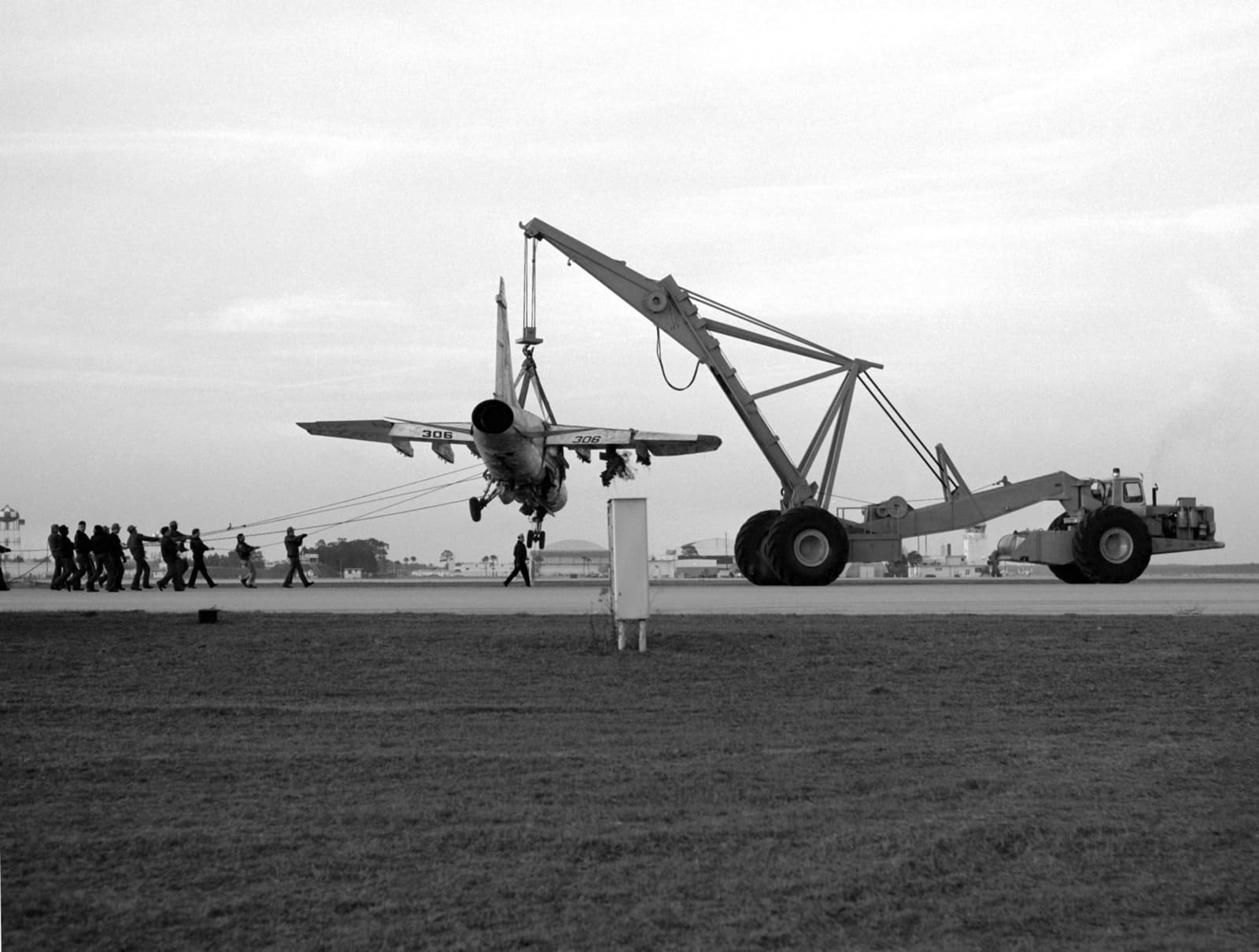
An aircraft recovery contractor needs an insurance review that follows its work from accepting an assignment through lifting, transport and delivery to the next custodian. Recovering a damaged airplane is a different service from ordinary ramp towing, and a customer's aircraft insurance does not by itself establish protection for the contractor's business.
Start by identifying the work your company accepts. A contractor supplying a crane and operator may have a narrower role than a business coordinating an entire recovery, arranging transport and storing the aircraft afterward. Explain the actual arrangement, including the services subcontracted to others, before asking for insurance evidence for a job.
This guide is for businesses preparing a recovery and lifting insurance submission. It does not provide emergency response, lifting, dismantling or wreckage handling instructions. Technical planning, site authority, investigative requirements and insurance acceptance need their appropriate reviews. Use BWI's airport liability information as background, then present the actual commercial operation for consideration.
Describe the Recovery Assignments You Accept
Distinguish disabled-aircraft removal, postaccident recovery, lifting for maintenance and transport of detached aircraft sections. The aircraft's condition and the purpose of movement can change the information needed. Do not describe every assignment simply as towing if the company also supplies lifting equipment or dismantles property for transport.
Explain where the work occurs. An airport apron, an off-airport field and a remote site can involve different access, equipment and outside-party arrangements. Include the territory requested in the application and disclose work outside the usual area before relying on an existing description.
Identify the contracting customer. It may be the owner, an operator, airport management, another recovery company or a party coordinating a claim. Record who is authorized to direct your business and what that person can approve. The person calling for help is not necessarily the owner or the party responsible for every invoice.
Provide realistic activity information and the aircraft categories involved. If your company has not yet performed a proposed service, identify it as planned and explain the intended start date. Do not describe a hoped-for capability as established experience or imply that a quotation grants technical permission to undertake it.
Separate Permission to Move From Insurance Acceptance
A recovery contract, an investigator's release and insurance instructions can address different decisions. Identify which permissions apply to the job before treating one document as approval for every action. Where authority is uncertain, obtain appropriate legal and investigative guidance rather than inferring consent from the urgency of an assignment.
NTSB's current aircraft reporting guidance addresses the aircraft operator's preservation responsibilities and explains that the investigator may release some or all wreckage for transport or recovery. It directs questions about moving wreckage to the assigned investigator or NTSB contact. That is investigative guidance, not an insurance payment authorization. [1]
For your submission, explain how the business identifies instructions and their scope. A permission to transport specified property should not silently become permission to dispose of it or perform destructive work. The people managing the assignment need access to the actual instructions rather than a paraphrase passed through several subcontractors.
Technical safety decisions remain with qualified personnel and the responsible authorities. An insurance review should not delay necessary emergency action or purport to authorize it. The commercial task is to describe the work accurately, document decisions and identify which insurance questions remain for the actual terms and circumstances.
Identify the Aircraft Property in Your Custody
Ask how the proposed program describes the property you handle. An intact but disabled aircraft, a damaged airframe, separated wings and boxed components may not be interchangeable under policy definitions. Identify the actual forms of property and services instead of assuming one familiar coverage label answers every situation.
Provide supported values and explain their basis. The value before an event, the current condition, anticipated repair cost and salvage estimate are different figures. A recovery contractor should not select a convenient number without knowing which interest the application asks it to describe.
Consider the largest aircraft and maximum concentration expected in custody. Several jobs may overlap in a storage yard or workshop. Describe accumulation and duration as well as an average recovery assignment. A contract for a single move does not explain property the business holds for weeks awaiting further instruction.
Keep ownership clear. The airframe, engines, equipment and loose items may involve different owners or financial interests. Possession is not proof that your company owns salvage or may sell components. Ask for the documents and qualified advice needed to establish the actual arrangements rather than deciding from appearance or location.
Review Lifting Work as an Activity of Its Own
List the cranes, lifting systems and other significant equipment used by the company. Identify ownership, rental arrangements, operators and maintenance responsibilities. Explain whether your business supplies equipment only, performs the lift or coordinates another specialist's work. Those roles need to be visible in both the contract and submission.
Ask how the actual liability proposal addresses the lifting operation and property being handled. Do not assume an ordinary vehicle description or a generic contractor classification establishes acceptance of work on aircraft. Request an answer tied to the activity, insured entity and relevant limitations.
Review the business's own equipment separately. Damage to a hired crane, an aircraft being lifted and unrelated property at the site involve different interests. A limit addressing liability to a customer should not be treated as replacement-cost protection for every machine used on the assignment.
Provide lease provisions governing damage, return, loss of use and insurance evidence. Have counsel assess the obligation and ask the insurance contact what proposed terms support it. A rental company permitting use of equipment does not establish that your business's policy insures every responsibility in the rental agreement.
Make Subcontractor Roles Specific
A recovery may involve a crane company, aircraft maintenance business, road carrier and storage provider. Identify who engages each business and which tasks remain with your company. Do not present a specialist's work as your own technical service or assume subcontracting removes all allegations against the company coordinating the assignment.
Explain who directs the work and who can change its scope. A request for an additional lift, another destination or a different transport configuration should reach the people responsible for the relevant contract and insurance review. A series of informal site requests can otherwise produce a job materially different from the original submission.
Review each provider's insurance evidence for its actual purpose. A certificate is not a complete policy or a guarantee that your company is protected. Ask about requested insured status, supporting endorsements, activities and effective dates as appropriate to the contract and actual placement.
Retain the legal identity and work agreement for the businesses actually used. A replacement subcontractor introduced after dispatch may have different equipment and responsibilities. Keep that change visible rather than relying on an old certificate belonging to a company that no longer participates in the assignment.
Follow the Transition From Site to Road Transport
Identify where recovery work ends and transport begins. Loading, temporary storage, road carriage and unloading may involve different businesses and contracts. A customer should be able to see which company has custody at each handoff and who is responsible for arranging any requested insurance review.
Ask what the actual proposals address for the aircraft or components in transit. A carrier's legal liability, declared value arrangement and property insurance for another party's interest should not be treated as the same thing. The carrier's acceptance of a load does not settle every coverage or contractual question.
Explain changes in route, destination and storage. Property initially destined for an owner's hangar may instead go to an examination facility or another contractor. Identify the revised locations and dates for the relevant review; an application describing one movement should not stand silently for a different plan.
Keep shipping records connected to the recovery inventory. The receiver should know what property was dispatched and what documented condition information accompanies it. This supports a factual handoff without implying that photographs alone establish cause, technical suitability or the extent of an insured loss.
Distinguish Recovery Charges From Alleged Damage
A contractor's invoice for its service is different from a claim alleging the contractor damaged property. Equipment hire, waiting time, additional labor and storage charges may be commercial costs under the contract. Ask about the particular interest rather than assuming the customer's insurance funds every expense associated with recovery.
If an insurer or claims representative requests an estimate, identify the work, assumptions and proposed changes clearly. Receiving an estimate is not necessarily acceptance of every charge. Obtain the instructions relevant to the actual assignment and avoid describing a pending request as an approved payment commitment.
For liability insurance, ask how the proposal treats allegations arising during the work, after delivery and from your own professional recommendations if any. Include technical advisory services only if the business actually provides them. Do not add a broad consultant label to make the company sound more capable than its documented role.
Separate the cost of correcting your own service, damage allegedly caused to other property and consequential financial demands. A large overall liability limit does not establish that every category has the same treatment. Request the relevant wording and identify exclusions, retentions, defense provisions and unresolved questions.
Include Storage and Evidence Access
If your business stores recovered property, explain the premises, expected duration and access arrangements. Describe indoor and outdoor storage, property concentration and any movement between locations. A service description ending at the accident site would omit an important part of a recovery company that regularly keeps aircraft afterward.
Identify who controls examination access and further handling instructions. A customer, investigator, insurer or legal adviser may have separate interests. Keep the relevant instructions with the property record and ask appropriate parties about any proposed change rather than assuming one examination ends every preservation concern.
Review storage charges and responsibility for approving extensions under the actual agreement. A request to preserve property and an agreement to pay for a particular storage period are different matters. Make those decisions explicit so the business does not later reconstruct payment expectations from informal conversations.
BWI's hangarkeepers information can provide broader context for aircraft in a business's care, but a recovery yard should be described on its own facts. Ask how the actual form treats the property, activity and location. Do not infer acceptance merely because an aircraft is parked behind a fence or inside a building.
Review Site and Environmental Responsibilities Separately
Describe premises access, landowner agreements and the obligations your business accepts at a recovery site. Damage to a surface, use of another company's access route and restoration promises can raise questions apart from the aircraft. Provide the actual contract instead of summarizing every obligation as standard site work.
Explain any fuel handling, cleanup or environmental service the company performs or arranges. Those tasks should not be hidden within a general recovery description. Qualified personnel and applicable authorities must determine the technical response; insurance does not grant the capability or permission to perform a cleanup activity.
Ask separately about environmental allegations, investigation expenses and contractual cleanup promises under the proposed arrangements. Do not assume airport liability, equipment insurance or an aircraft property policy automatically addresses all of them. If a specialist is engaged, identify its task and the responsibilities retained by your company.
For personnel, describe employees, temporary staff and contractors truthfully. Work at an unfamiliar site does not make worker protection a customer aircraft issue. Bring employment and workers compensation questions to the appropriate review alongside the aviation submission rather than assuming a customer's certificate protects everyone present.
Use a Fictional Recovery to Test the Submission
Consider a hypothetical contractor asked to remove a disabled airplane from an airport location. It hires a crane specialist, arranges a road carrier and holds the separated aircraft sections at its yard until an examination is scheduled. This example is not a BWI customer case, technical recovery plan or prediction of coverage.
The submission should identify the company's coordinating role, subcontractors, actual property and each custody handoff. It should explain the yard period and the limits of movement instructions. The customer aircraft policy, crane company's insurance and contractor's program must each be reviewed for their own interests; their limits should not simply be added together.
If the destination changes while the property is stored, the contractor records the new instruction and seeks the relevant review. If someone later alleges damage during handling, the company preserves the job records and follows the applicable reporting process. It distinguishes the allegation from confirmed findings and does not promise an insurance-funded settlement before the actual terms are assessed.
Prepare an Aircraft Recovery Insurance Submission
Give the insurance contact an understandable description of a representative assignment and its possible extensions. Identify planned services separately from established work. Include the current program and the contracts that govern the responsibilities being offered to customers.
- Legal entities, service territory, aircraft categories and activity figures.
- Recovery, lifting, dismantling, transport and storage roles actually performed.
- Equipment ownership, rental agreements and operators supplied by each business.
- Customer property values, expected concentrations, locations and custody periods.
- Subcontractor roles, customer agreements, access obligations and insurance requirements.
- Available loss information, current policies and the intended start date for changes.
Compare proposals using the same services and property description. Review insured entities, accepted activities, locations, limits, deductibles, relevant exclusions and defense treatment. Confirm effective timing and outstanding conditions. A quotation or certificate request should not be represented as completed acceptance of a new recovery operation.
Keep the Assignment Record Usable After Delivery
Close the job with a record of the property delivered, receiving business, date and any documented exceptions. Identify continuing storage, access or subcontractor obligations rather than marking every responsibility complete when the truck departs. Keep final instructions and changes with the original contract so another employee can understand what the business actually undertook.
At renewal, use completed assignments to check whether the application still describes the operation. Repeated yard storage, a new aircraft category or regular use of hired lifting equipment may reveal a substantive business change. Explain the facts before relying on last year's service description for next year's work.
Questions From Recovery Contractors
Does the aircraft owner insurance replace our liability program
Do not assume it does. The owner's property interest and your business's alleged responsibility involve different questions. Review your own activities, insured status and relevant contract alongside any customer insurance evidence. Identify the actual protection intended for each party.
Does an investigator release approve our recovery invoice
An investigative release and payment approval serve different purposes. Follow the specific instructions applying to the property and obtain the relevant commercial or claim authorization for proposed expenses. Do not present one decision as proof that every other party has accepted the cost or activity.
Must subcontracted crane work be disclosed
Describe it accurately, including your role in selection and coordination and the responsibilities retained under the customer agreement. Another company's equipment or policy does not automatically remove every allegation against your business. Give the reviewer the actual relationship and documents.
Request a Recovery Contractor Insurance Review
Request a commercial aviation insurance review from BWI with your recovery services, lifting arrangements, transport roles and storage responsibilities. Include representative contracts and explain work beyond the airport or usual territory. BWI can review the aviation submission and identify questions requiring the responsible equipment, vehicle, environmental or other specialist insurance contact. Availability depends on the actual operation, underwriting and offered terms.
Sources
Continue Reading


