

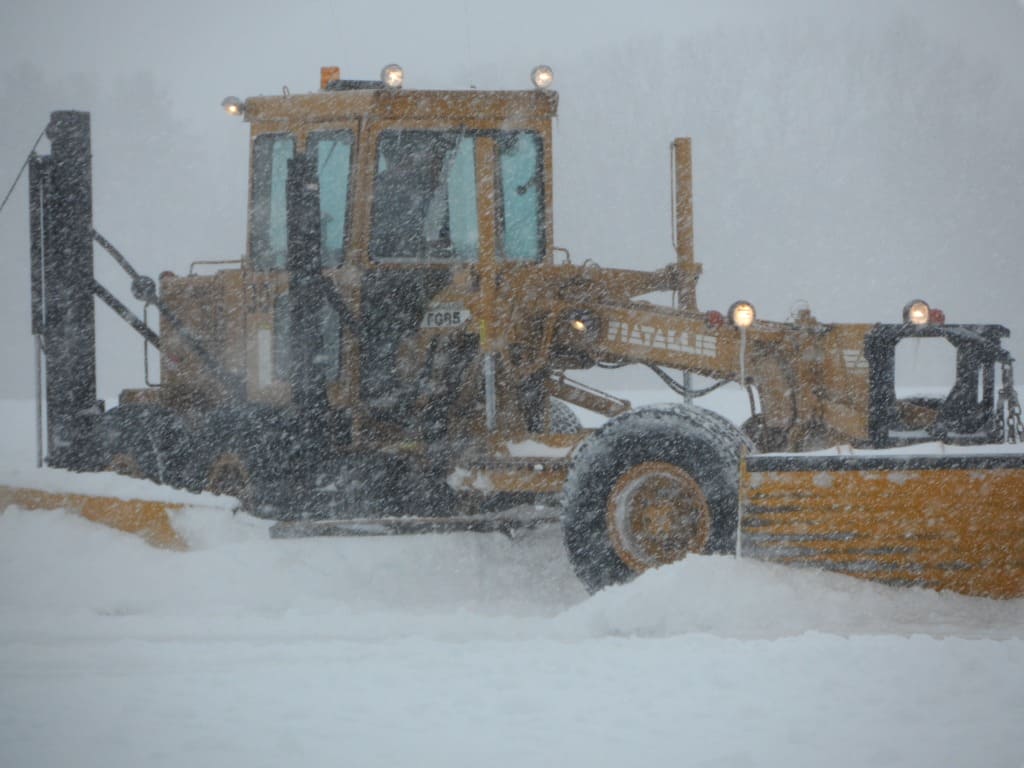
An airport snow and ice removal contractor should review insurance for the work it promises to perform, the equipment it supplies and the decisions that remain with the airport. Clearing a vehicle parking lot, servicing a tenant apron and working on airport movement areas are different assignments. A submission describing ordinary snow plowing may not explain the aviation exposure.
Begin before the winter contract is finalized. Collect the service areas, callout arrangements, equipment leases, customer requirements and material responsibilities. The review should distinguish accidental damage allegations from contractual performance charges, damage to your machines and the business costs of keeping crews available during a season with uncertain weather.
This guide is for contractors removing snow or ice from airport surfaces. Aircraft deicing is a separate service that must be disclosed if performed. The guide supplies no plowing, pavement treatment or runway assessment instructions. Use BWI's airport liability information as background and bring the actual winter service arrangement to the commercial insurance discussion.
Identify the Surfaces and Services in the Contract
List the areas served and who controls them. An airport authority, tenant, FBO and building owner may each contract for different portions of a site. Explain which entity hires your business and which areas fall outside the agreement. A map can help an underwriter understand the assignment without substituting for the airport's operational instructions.
Describe snow removal, hauling, sweeping, material application and any assessment or reporting service separately. A contractor may perform only one stage while the airport coordinates the rest. The company should not be described as responsible for all winter operations unless that is the actual role established through appropriate review.
Identify public-road work and nonaviation customers as well. A mixed snow removal business should disclose both rather than assume the airport service can be hidden within its larger road or property maintenance revenue. Give the activity breakdown requested and explain whether figures are actual or projected.
Distinguish established services from a new bid. A proposed airport assignment may require different equipment, staffing or contractual commitments from prior work. State the intended start date and unresolved details so a quotation based on one scope is not treated as acceptance of a later, broader contract.
Keep the Airport Winter Plan and Insurance Review Connected
FAA's active AC 150/5200-30D addresses guidance for airport operators on snow and ice control planning, condition assessment and reporting, and removal procedures. That context explains why the contractor should obtain the actual airport requirements. The advisory circular landing page does not approve a contractor, equipment arrangement or insurance program. [1]
Use qualified airport and technical personnel to determine the applicable operating instructions and responsibilities. Insurance does not grant airfield access, qualify a driver or authorize a surface to reopen. Do not present a certificate or quoted limit as proof that those separate decisions have been completed.
For underwriting, identify how your work interfaces with the airport's plan. Explain who dispatches crews, who receives completion information and who retains assessment or reporting responsibilities. The submission should describe the real handoff rather than imply that a contractor's invoice determines the airport's operational decisions.
If a tenant requests work beyond the agreed area or method, route the change through the appropriate airport, technical and insurance reviews. An urgent weather event does not turn every commercial request into an accepted addition to the business's insured activities. Describe the revised facts before relying on the old scope.
Explain Callouts Standby and Response Promises
A winter agreement may pay for availability, a defined response, individual events or another commercial arrangement. Explain how your company is engaged and which commitments it accepts. The insurance reviewer needs the actual obligations, not simply the annual contract amount or a description that crews work when it snows.
Have counsel evaluate response-time promises, service standards, indemnities and remedies for missed performance. A customer charge for failing to provide a contracted service can differ from liability for accidental injury or damage. Ask the insurance contact how the proposed wording relates to the specific obligation rather than assuming every penalty is insured.
Identify who can authorize extra shifts, additional equipment or hauling to another site. Keep the instruction connected to the correct customer and work area. A verbal request from someone nearby may not establish authority under the contract or acceptance of the new activity by an insurer.
Describe prolonged events and overlapping customer commitments. Several locations needing service at once can create different staffing and equipment dependencies from a routine event. Accurate disclosure should explain the business's actual arrangement without promising an insurer will reimburse ordinary capacity or scheduling difficulties.
Separate Damage to Aircraft From Other Property
Explain whether aircraft remain near the work and whether your company handles or moves them. Damage allegedly caused to a parked aircraft raises different questions from a damaged light fixture or a collision with another vehicle. Do not infer the answer from the presence of a general contractor liability limit.
Ask how the actual proposals treat aviation-related operations, aircraft property and relevant custody restrictions. If your employees do not accept custody of aircraft, describe that boundary accurately. Proximity to an aircraft does not by itself settle the legal relationship, and a customer asking staff to move one should prompt a separate review.
Keep pavement, markings, lighting, drains, buildings and other property interests visible in the service description. Identify customer agreements that allocate responsibility for damage or restoration. A promise to repair every affected surface may be broader than the liability addressed under an offered policy.
For customer property and your own equipment, use supported values and the categories requested. A customer's aircraft value, a machine replacement cost and an annual contract price serve different purposes. Do not combine them into an unsupported total amount described as the insurance needed for the job.
Review Plows Loaders and Specialized Equipment
Explain any machine whose unavailability would stop a contracted service. Ask separately about its physical damage, breakdown and any proposed interruption or extra expense protection; losing production time does not by itself establish the event required by the wording.
Prepare a schedule of equipment used at the airport, including owned, financed, leased and borrowed items. Explain the operator, normal location, public-road use and airport activity. A machine supplied with its own operator can create a different arrangement from equipment rented for your employees to use.
Ask the responsible vehicle and equipment insurance contacts how the proposed use is treated. Separately ask the aviation contact about the airport operations and allegations involving aircraft. Do not assume an aviation proposal replaces every vehicle arrangement, or that ordinary vehicle evidence settles all airport service questions.
Property damage to the machines themselves needs its own review. Include attachments, hired equipment and items stored away from the business premises. A liability limit protecting the business against allegations is not a replacement-cost schedule for a loader or specialized snow removal vehicle.
Provide equipment agreements, including responsibility for damage, downtime and return. Have counsel assess the promises and ask the insurance contact which terms support them. A rental company's permission to use a machine does not establish that your own program insures every obligation in its contract.
Describe Materials Storage and Application Roles
Identify who purchases, owns, stores and applies any materials used by your business. The airport may supply a product while the contractor supplies labor and equipment, or your company may provide the complete service. Those arrangements should not be treated as identical because the same vehicle performs the work.
Disclose the actual products and activities at the level requested by the application. Qualified technical personnel should determine suitable materials and procedures for the relevant surfaces and airport requirements. This article does not prescribe chemical selection, application amounts or handling instructions.
Ask separately about allegations involving supplied products, application services, environmental effects and the materials themselves. A broad snow removal description does not establish that products and pollution questions share the same wording or limit. Explain subcontract suppliers and any responsibility retained by the business.
For material stored at customer premises, identify the location, ownership and agreement. Ask how the relevant property and environmental interests are addressed. A customer providing a storage area does not automatically insure the contractor's stock or accept every responsibility associated with its use.
Make Snow Hauling and Disposal Locations Visible
If the company transports removed snow or other material, explain who loads it, who carries it and where it goes. A contract for clearing surfaces may not describe an added hauling operation or a separate site controlled by another business. Include those stages before relying on a proposal for removal alone.
Identify vehicles, road routes and receiving arrangements as requested. Responsibility during loading, transport and unloading can involve different parties and policies. Do not assume that paying a transport invoice establishes which entity is insured or how a carrier's liability relates to your own obligations.
Describe access and environmental commitments at the receiving site. The appropriate authorities and qualified professionals should assess applicable requirements. An insurance review does not authorize a location to receive material or determine the technical acceptability of a disposal arrangement.
If the destination changes during the season, identify the revised facts and any new agreement. Keeping the old location in the insurance file can conceal a material operating change. Ask what review or issued documentation is required before relying on the revised arrangement.
Include Seasonal Staff and Subcontracted Crews
Explain the actual staffing model and the businesses supplying personnel or equipment. An employee, temporary worker and independent company can have different relationships to the contract. Do not assume a casual label used in dispatch determines worker classification or the relevant insurance obligations.
Bring worker protection questions to the appropriate review alongside aviation liability. An airport certificate should not be presented as proof that every employee-related exposure is resolved. Identify jurisdictions and work arrangements accurately, with qualified guidance for the applicable requirements.
For subcontracted crews, record legal entities, assigned services and who directs changes. Review their agreements and insurance evidence separately. Another company's policy does not automatically eliminate allegations against your business for its own work, coordination or responsibilities retained under the airport contract.
Keep replacement crews and machines visible. A substitute provider introduced during a prolonged event may differ from the company listed in the original file. Update relevant records rather than relying on an old certificate or assuming that every subcontractor operates under identical terms.
Keep Event Records That Explain the Work Performed
Describe the records the business actually maintains for callouts, dispatch, service areas, material use, equipment and customer communication. Their insurance purpose is to establish the work and instruction history. This guide does not prescribe operational criteria or a technical standard for declaring a surface safe.
Connect changes and exceptions to the correct assignment. A customer request to return to one area should not be confused with completion of another. Record uncertainty honestly if an earlier instruction or time is unknown rather than reconstructing a precise history from assumptions.
If damage is reported, preserve the relevant job information and follow the actual insurance notice requirements. Identify observations and customer allegations separately. Reporting to airport management or a general contractor should not automatically be assumed to complete the required insurer notification.
Obtain appropriate guidance before agreeing to reimbursement or a settlement. The business can respond to operational needs through qualified people while the claim contact evaluates the specific allegation and proposed expenses. Acknowledgment of a report is not acceptance of every charge or a determination of coverage.
Review the Off Season and the Next Contract Separately
Equipment storage, maintenance and movement can continue after the last snow event. Describe those activities and locations rather than treating the service season as the only period in which the business has property or liability interests. Ask how the actual policy periods and conditions relate to the full operation.
At renewal, compare the next contract with the last submitted scope. Another apron, more equipment, material supply or a broader callout promise can change the review. A similar annual revenue figure does not establish that the services and responsibilities remain the same.
Read issued terms alongside the proposal comparison. Identify material changes in activities, locations, limits, deductibles, defense treatment and exclusions. Confirm that requested endorsements have actually been issued rather than leaving a customer obligation marked complete because a request was sent.
Use a Fictional Winter Assignment to Test the Program
Consider a hypothetical contractor hired to clear an FBO apron and an access road. The customer supplies materials, the contractor leases an additional loader and a separate carrier hauls removed snow. Later the customer asks for another area to be added. This is an illustration, not a technical service plan or a BWI customer case.
The submission should identify the separate areas, supplied material, hired machine and hauling arrangement. It should show who authorizes changes and what remains with the airport or customer. A proposal describing only a company pickup plowing a parking lot would not explain the actual assignment.
Before accepting the added area, ask for the relevant contract, operating and insurance reviews. If an allegation later arises, preserve the documented sequence and report it appropriately. Do not assume the customer policy, lessor's evidence or contractor's liability limit guarantees one response to every resulting cost.
Prepare a Winter Contractor Insurance Submission
Bring a service narrative and the documents that explain the real assignment. Identify proposed work separately from current services and state the intended start date. A useful submission allows the reviewer to understand the business without inferring critical responsibilities from a vehicle list alone.
- Legal entities, customers, airports, service areas and activity figures.
- Removal, hauling, material supply and reporting roles actually performed.
- Equipment schedules, operators, leases and public-road use.
- Material ownership, storage, receiving sites and specialist suppliers.
- Staffing, subcontractors, callout promises and customer insurance requirements.
- Current policies, available loss information and material seasonal changes.
Compare actual offers using the same operation. Review insured entities, accepted services, locations, limits, retentions, defense treatment and important restrictions. Confirm effective timing and outstanding conditions. A quote inquiry does not bind protection or authorize airport access.
Questions From Airport Winter Service Businesses
Is airport surface clearing the same as aircraft deicing
They are different services and should be described separately. Explain any actual work on aircraft in addition to pavement or surface services. Do not assume a proposal for one activity automatically accepts the other.
Does a seasonal contract require insurance only during snowfall
Review the full business, including equipment storage, maintenance and obligations continuing outside the service period. The actual policy dates and terms matter. Do not assume the absence of snow ends every relevant responsibility.
Are missed response charges automatically covered
No conclusion should be inferred from a liability limit. Provide the actual contract and alleged failure for review. Performance remedies, accidental damage liability and business expenses can involve different questions and policy treatment.
Request an Airport Winter Contractor Insurance Review
Request a commercial aviation insurance review from BWI with your airport service areas, winter contract, equipment, material responsibilities and hauling arrangements. Explain aircraft proximity and any services beyond surface clearing. BWI can review the aviation submission and identify questions for the responsible vehicle, equipment, environmental or other specialist insurance contact. Available terms depend on the actual operation and underwriting.
Sources
Continue Reading


