

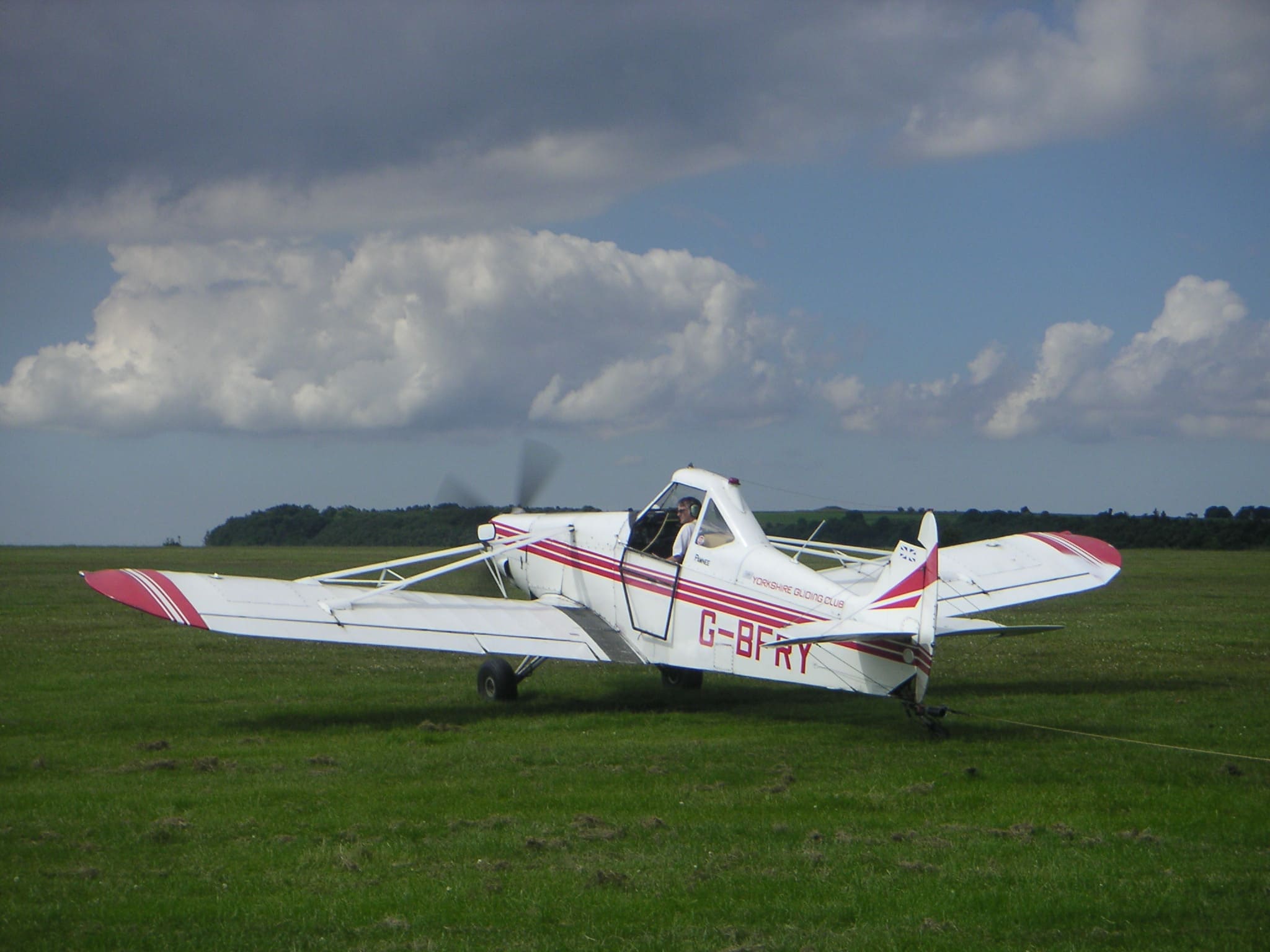
Glider towing aircraft insurance starts with the powered aircraft and the person or organization providing the tow. Tell BWI who owns the towplane, who operates it, which pilots will fly and how the towing arrangement works. Insurance purchased for a sailplane or for an individual glider renter should not be treated as confirmation of protection for the separate towing aircraft business. Describe the actual activity before relying on an existing policy or agreeing to supply tows for a club.
This guide is for towplane owners, soaring clubs operating powered towing aircraft and businesses considering glider towing work. It addresses insurance preparation, ownership, agreements, pilot review and responsibility for aircraft and other property. It does not prescribe aerotow procedures, aircraft performance, launch decisions or emergency actions. Those decisions need qualified aviation instruction and current operating guidance. The insurance discussion should follow the professionally established operation rather than replace it.
For the broader business discussion, see BWI commercial aviation insurance. Describe the specific operation and parties in your submission.
Start with the organization supplying the towplane
Identify the legal owner and the organization that provides the towing service. A club may own the airplane, rent it from a member or buy towing services from an independent operator. These arrangements can look similar to a visiting glider pilot while involving different property interests and contracts. State which arrangement actually applies, who collects payment and who has authority to explain the insurance requirements on behalf of each party.
If the airplane is owned by an individual but used by a club, explain that relationship directly. Do not assume that membership, permission to use the aircraft or a club invoice makes the organizations interchangeable under a policy. Supply the ownership documents and agreements requested for review. The submission should make it possible to distinguish the owner’s aircraft interests from the club’s activities and any separate operator’s responsibilities.
Explain towing activity and all other aircraft uses
Give a realistic account of the proposed towing activity, operating season, expected workload and locations. Explain whether the aircraft serves one club, visiting glider owners or several organizations. If the airplane also performs personal flying, instruction, advertising or other paid work, describe those uses separately. An application that mentions only a general business purpose may leave the insurer without the detail needed to evaluate the tow operation.
Include relevant travel and temporary assignments. A towplane based at the same field throughout the year presents a different description from one supplied to a seasonal gathering or another soaring site. Ask which details the insurer needs about the proposed assignment. If plans remain provisional, identify them as such rather than giving a firm answer that later staff may mistake for the final operation accepted by the insurer.
Establish pilot qualifications through the proper channels
Provide the intended tow pilots and the experience information requested in the insurance application. Make clear which person will fly which aircraft and whether substitutes may be used. Qualified aviation professionals should establish the applicable pilot privileges, endorsements, currency and training requirements for the real operation. An insurance response is not a determination that those operating requirements have been met or that a pilot is prepared to perform a particular tow.
The FAA’s Glider Flying Handbook includes a towing chapter, but reading an educational resource does not establish an individual pilot’s qualification or satisfy an insurer’s conditions. Ask how the policy identifies acceptable pilots and how any requirements must be documented. Keep the resulting response with the pilot information so a club scheduler does not rely on membership status or a previous season’s roster as the only evidence of acceptance.
Organize the towplane submission before requesting terms
The comparison below separates information about the towing airplane from information about the glider and the organizations using it. It is an insurance preparation record, not a launch checklist. Add the real aircraft identities, parties and operating dates. A precise record helps BWI understand whether the request concerns a single owner, a club aircraft program or a contractor supplying aircraft and pilots to other organizations.
Assign someone to maintain that record during the season. A new aircraft, replacement pilot or additional soaring site should be recognizable as a change to the original submission. Retain the actual insurance response and distinguish it from an unanswered inquiry. That prevents a useful discussion at renewal from turning into an unsupported assumption that every later combination of people, airplanes and locations was automatically reviewed.
| Towing program subject | Information for the insurance review |
|---|---|
| Organizations | Towplane owner operator and soaring club |
| Aircraft | Towplane identity value equipment and separate glider interests |
| Pilots | Proposed pilots experience and substitution process |
| Activity | Towing workload payments season and other aircraft uses |
| Agreements | Club contract lease site and evidence requirements |
| Changes | Replacement aircraft additional site or revised service |
Identify the towplane and its equipment accurately
Supply the aircraft make, model, registration, ownership and requested value. Describe relevant towing equipment and configuration information in the detail requested by the insurer. Qualified maintenance and aviation professionals should address aircraft suitability, installation approval and technical requirements. Giving an insurer an equipment list does not substitute for those decisions or establish that a particular aircraft is appropriate for the gliders proposed to be towed.
Separate an installed component from spare equipment stored in a club workshop, and identify who owns each. A replacement tow release awaiting installation, for example, is a different property fact from equipment documented as part of the airplane. Have qualified maintenance personnel establish its actual status. Ask how the policy defines insured aircraft and detached property without assigning an item to the hull value merely because it will eventually be fitted to the towplane.
Distinguish damage to the towplane from damage to a glider
The towplane owner has a property interest in the powered aircraft. The glider owner has a different property interest in the sailplane. An allegation involving damage to one aircraft does not by itself explain how the other owner’s policy will respond. Ask the relevant advisers to review the actual policies, insured parties and disclosed activity. Do not assume the towplane’s hull coverage is a promise to repair a glider being towed.
Likewise, the glider owner’s physical damage insurance should not be treated as protection for the towplane operator’s liability. Liability allegations, contractual obligations, exclusions and recovery rights may require separate examination. Describe who owns and controls each aircraft and provide the towing agreement. The useful insurance discussion identifies the separate questions before a shared launch arrangement creates a mistaken belief that everyone involved has a single common policy.
Review the club agreement and any towing contract
Obtain the actual agreement between the aircraft owner, towing operator and club. Identify responsibilities for supplying pilots, maintenance, storage, fuel, scheduling and insurance evidence. A short agreement can still contain meaningful financial promises. Have qualified counsel clarify obligations that are unclear, then give the insurance provisions to BWI. A policy response needs the real wording rather than a summary that the parties use a standard club arrangement.
If a club requests additional insured status or another policy change, provide its legal name, relationship and requested terms. Ask what can be addressed under the actual proposal and how the response would be documented. A certificate does not independently add coverage or amend an exclusion. Keep any unresolved requirement visible before the club relies on evidence prepared for a different aircraft, operator or period of service.
Describe payments reimbursements and volunteer arrangements
Explain how the service is financed, including tow charges, aircraft rental, expense reimbursement or donated aircraft use. Do not relabel the arrangement merely to fit an assumed insurance category. The insurer needs an accurate description of the financial and operating facts. Qualified aviation and legal advisers should establish the implications of compensation and other requirements for the actual arrangement; this article does not determine those privileges or exceptions.
Volunteer pilots and member-owned aircraft do not remove the need for a clear insurance submission. Identify whether a pilot acts for the aircraft owner, the club or an independent operator and explain the relevant agreement. If the arrangement changes from donated use to paid towing, return the difference for review. The policy discussion should follow the activity actually intended rather than a familiar label carried forward from an earlier season.
Include ground helpers and employment relationships
Describe who assists around the towplane and soaring operation, using the actual roles established by qualified personnel. People may be club volunteers, employees, contractors or members performing assigned tasks. Supply relevant organizational and employment information to the appropriate insurance advisers. A person appearing on a club membership list does not independently establish which policy addresses an injury or allegation associated with that person’s work.
Ask which policies and provisions may address the employer, organization and disclosed activities. Aircraft liability should not be assumed to replace all workplace or premises arrangements. If another organization supplies helpers, explain its role and any agreement. The purpose is to make responsibilities understandable without promising that a particular person is protected merely because they help with the same aircraft or stand within the same operating area.
Separate the aircraft program from the soaring site
A club’s use of a runway, hangar or other property can create questions beyond the towplane’s own insurance. Identify who owns or manages the field and give relevant leases or access agreements to the reviewers. Airport and operational permissions need to be established through their proper channels. An aircraft certificate is not evidence that every proposed ground activity or property arrangement has been authorized by the site owner.
If the club changes fields or supplies tows at a temporary location, describe the change before relying on the prior response. Aircraft storage, visitor access, local agreements and services supplied by others may differ. Ask what information is needed to review the actual proposal. Maintain the confirmed site arrangement with the insurance file so future volunteers can distinguish a general idea for a gathering from a reviewed, defined assignment.
Explain maintenance custody and aircraft downtime
Identify who maintains the towplane and who holds it when it is not available for flying. An owner-maintained private arrangement, a club workshop and a commercial maintenance provider can involve different relationships. Give relevant custody or service agreements to the insurance team. Do not assume that the presence of a maintenance business’s policy settles every question about the owner’s aircraft, storage or transport between locations.
When maintenance changes the season’s plan, identify any replacement airplane or contracted towing service separately. A need to keep the club operating does not establish automatic acceptance of a different aircraft. Ask how the proposed substitute should be reviewed and what evidence is needed. Keep the response connected to the correct aircraft and dates rather than treating an equipment change as a scheduling detail with no insurance significance.
Compare physical damage terms and liability provisions
For the towplane’s own damage, compare the same requested value, deductibles, aircraft configuration and disclosed towing use. Identify whether a response is a preliminary indication, a quotation subject to conditions or issued documents. Review liability parties, limits, definitions and exclusions separately. A higher liability limit is not a promise to pay every glider owner’s repair bill or every obligation in a club contract.
For example, a club may ask for evidence naming its legal entity while the aircraft owner is asking about damage to the powered airplane. Send both questions to the reviewer and identify the relevant interests. Resolve discrepancies against the actual proposal and issued documents. BWI’s specimen resources can help explain wording, but a specimen is not this towplane’s contract or confirmation of an available term.
Consider a fictional change in the club towing program
Imagine a fictional club, Valley Soaring Association, owning its regular towplane. From June 1 through June 30, that airplane will be in maintenance. Member Lee offers a separately owned aircraft, while Ridge Tow Services offers to supply its own aircraft and pilot. These invented parties illustrate two alternatives, not BWI customers or accepted arrangements. The club must describe which proposal it intends to pursue; the two offers are not interchangeable aircraft substitutions.
For Lee’s proposal, the record identifies Lee as owner, the club’s proposed operating role, intended pilots, payment arrangement and dates. For Ridge’s proposal, it identifies a separate service business and the duties Ridge accepts under its contract. The club gives qualified advisers both the actual agreement and any requested insurance provision. It does not describe a contractor’s airplane as club-owned merely because a club officer books its work.
A July gathering at a second field is then added. That event is a further proposal, separate from June maintenance cover. Evidence issued for the club’s original airplane remains evidence about that arrangement. The club records the insurer’s answer for each actual aircraft and relationship, preserves outstanding conditions and gives schedulers a clear distinction between confirmed documents and open requests. No towing method or insurance acceptance is prescribed by this example.
Maintain renewal records that reflect the real season
At renewal, reconcile the towplane schedule, pilot records and agreements with the season actually completed. Separate the club’s own aircraft hours from towing bought from another operator; explain the basis of any utilization figure requested rather than combining incompatible totals. Identify additional sites, changed ownership and paid assignments. An unchanged registration number does not establish that the organization, work or contract stayed the same.
Preserve factual records when an incident occurs
If an incident, damage report or potentially reportable concern arises, follow the policy’s requirements and seek guidance through the proper insurance channels. Retain relevant aircraft, pilot, agreement and correspondence records. Avoid guessing at fault or promising another aircraft owner a payment. An early discussion at the club should not decide the insurer’s response before the actual facts and issued wording have been reviewed.
Use an appropriate process for sharing sensitive information. The insurer’s claim inquiry, the aircraft maintenance assessment and the club’s internal record can have different purposes. Keep the account factual and distinguish observations from assumptions. A record of the operation as it was actually arranged is more useful than a later reconstruction based only on which organization usually supplied the towplane or which volunteer normally handled scheduling.
Frequently asked questions
Is glider insurance the same as towplane insurance
No. A sailplane and the powered airplane supplying the tow are separate aircraft interests. Describe ownership, operation and agreements for each. Ask how the relevant policies address the disclosed arrangement rather than assuming a glider owner’s policy protects the towplane owner or operator.
Can a club member use a personal airplane for towing
Have the proposed activity, aircraft, pilots and club arrangement reviewed before relying on it. Qualified professionals must establish operating requirements independently. Permission from the club or owner does not by itself explain whether the airplane’s policy accepts the towing activity or the related business relationships.
Does volunteering remove the insurance questions
No. Identify the actual organization, people, financial arrangements and aircraft use even when resources are donated. A volunteer label is not a complete policy description. If charges, reimbursement or responsibilities change, return those facts for review rather than assuming the original response remains sufficient.
Does a certificate insure damage to every glider being towed
A certificate does not independently expand the policy. Supply the actual requested terms and agreements, then review the insurer’s response using the issued documents. Damage to another aircraft, liability allegations and contractual promises need consideration under the relevant wording and facts.
Can a substitute pilot be approved after a booking is made
Ask how the particular policy handles pilot changes and any conditions before committing to the substitution. A booking or club roster does not establish acceptance. Retain the proposed pilot information and actual response so the person scheduling tows knows what has been confirmed.
What determines the price of a towplane insurance proposal
Request terms for the actual aircraft, pilots, use, values and organization. There is no reliable universal premium for every club towing arrangement. Compare proposals using the same facts and examine the conditions behind the price. A quote for a similar airplane used differently is not a dependable budget for your towing program.
Bring the towplane insurance review to BWI
Prepare the towplane identity and value, ownership and operating entities, proposed pilots, locations, seasonal activity and club agreements. Include payment arrangements, ground roles and any leased or replacement aircraft proposal. State which operational facts are established and which are still being considered so the insurance inquiry describes the real program.
Request a commercial aviation insurance review and quote from BWI before relying on a general aircraft description for glider towing. Compare the response with the final arrangement and issued documents, then return material changes for review. Clear records help the aircraft owner, operator and club keep their separate responsibilities visible throughout the soaring season.
Continue Reading


