
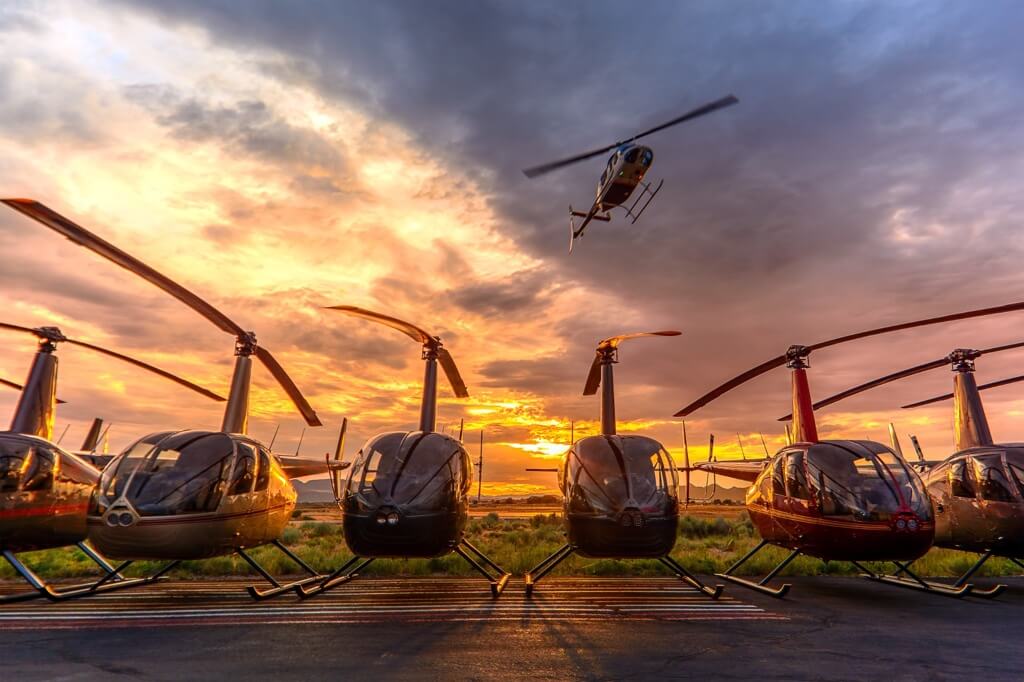
Robinson helicopters have transformed the helicopter industry.
For decades, Robinson has made helicopter ownership more accessible than any other manufacturer, creating opportunities for private owners, flight schools, commercial operators, agricultural businesses, photographers, utility companies, and sightseeing operators throughout the world.
Today, the Robinson family remains one of the most insured helicopter fleets in aviation.
Whether you own an R22, R44, or R66, understanding how insurance companies evaluate helicopters can help you make better decisions at renewal and potentially save thousands of dollars over the life of your aircraft ownership.
As part of BWI Aviation Insurance’s Q1 2026 Premium Intelligence Report, we analyzed 38 helicopter insurance renewals representing more than $277,352 in annual premium.
The results revealed a stable and improving helicopter insurance market.
Among the helicopter renewals analyzed:
- The weighted average premium movement was a decrease of 7.1%.
- Market conditions remain significantly more competitive than they were several years ago.
- Insurance companies continue to show strong interest in qualified Robinson owners and operators.
For Robinson owners approaching renewal, today’s market presents opportunities that many helicopter owners have not seen in years.
Why Helicopter Insurance Is Different
Insurance companies evaluate helicopters differently than fixed-wing aircraft.
While both involve aviation risk, helicopter operations often involve:
- Lower operating altitudes
- Off-airport landings
- Confined-area operations
- Commercial activity
- Utility work
- Training operations
As a result, underwriters frequently focus more heavily on pilot experience and mission profile than they do with many fixed-wing aircraft.
A Robinson helicopter used for private recreational flying presents a very different risk profile than one used for flight instruction or commercial utility work.
The aircraft may be identical.
The mission is not.
The Robinson Models Included In Our Analysis
Aircraft represented within our Robinson owner database include:
- R22
- R22 Alpha
- R22 Beta
- R22 Beta II
- R22 Mariner
- R44
- R44 Astro
- R44 Raven
- R44 Raven II
- R66
These aircraft span a wide range of operational missions.
Some are primarily used for training.
Others support business transportation, utility work, aerial photography, agricultural operations, or personal recreation.
Insurance companies evaluate each category differently.
R22 Insurance Trends
The Robinson R22 remains one of the most recognizable training helicopters in the world.
Thousands of helicopter pilots received their initial training in an R22.
Because of this, insurance companies have accumulated decades of claims and operational data on the aircraft.
The R22 is commonly used for:
- Flight instruction
- Private ownership
- Time building
- Recreational flying
Insurance companies often focus heavily on:
- Total helicopter time
- R22 time
- Instructor experience
- Recent flight activity
- Claims history
For lower-time helicopter pilots, the R22 frequently represents the first aircraft ownership opportunity.
As a result, pilot qualifications often play a larger role in pricing than the aircraft itself.
R44 Insurance Trends
The R44 has become one of the most popular civilian helicopters ever built.
Aircraft such as the:
- R44 Astro
- R44 Raven
- R44 Raven II
are used throughout the world for business, recreation, training, photography, tours, and utility operations.
Compared to the R22, the R44 generally carries:
- Higher aircraft values
- Greater passenger capacity
- More operational flexibility
Insurance companies often evaluate:
- Total rotorcraft time
- R44 time
- Commercial usage
- Passenger exposure
- Annual flight hours
Many R44 owners are surprised to learn that insurance pricing can vary dramatically depending on the intended use of the aircraft.
An R44 used for personal transportation is often viewed differently than an R44 supporting commercial sightseeing operations.
R66 Insurance Trends
The Robinson R66 represents a significant step up in capability.
With turbine power and increased performance, the R66 attracts owners who require greater payload, speed, and mission flexibility.
Insurance companies frequently evaluate:
- Turbine helicopter experience
- Total rotorcraft time
- Commercial exposure
- Recent flight activity
- Training history
Because many R66 aircraft carry values exceeding $1 million, hull value becomes a major factor in premium calculations.
However, pilot qualifications remain critically important.
A highly experienced R66 operator often receives significantly different underwriting treatment than a pilot transitioning into turbine helicopters for the first time.
Why Helicopter Pilot Experience Matters More Than Airplane Experience
One mistake many first-time helicopter buyers make is assuming their fixed-wing experience will automatically translate into favorable helicopter insurance outcomes.
While airplane experience is beneficial, insurance companies primarily focus on rotorcraft experience when evaluating helicopter risks.
Underwriters often review:
- Total helicopter time
- Time in make and model
- Instructor sign-offs
- Recent flight activity
- Annual training
A pilot with 5,000 airplane hours but only 50 helicopter hours may be viewed very differently than a pilot with 1,000 dedicated rotorcraft hours.
For Robinson owners, helicopter-specific experience remains one of the strongest underwriting factors.
Get Your Robinson Helicopter Insurance Quote With BWI Today>>
Aircraft Value Is A Major Driver Of Robinson Premiums
Like most aviation insurance categories, aircraft value plays a significant role in pricing.
Current market values vary considerably:
Many R22 aircraft may be insured between $125,000 and $350,000.
Many R44 aircraft fall between $350,000 and $750,000 depending on year and equipment.
Many R66 aircraft carry insured values approaching or exceeding $1 million.
As aircraft values increase, the insurance company’s financial exposure increases as well.
That exposure directly influences premium.
This is one reason why two owners with similar experience can receive dramatically different insurance quotes.
Robinson Claims Trends
Insurance companies pay close attention to claims frequency and severity.
Some of the most common claim categories throughout the helicopter industry include:
- Hard landings
- Tail rotor incidents
- Ground handling damage
- Hangar damage
- Dynamic rollover events
- Weather-related losses
Many of these claims occur on the ground or during low-altitude operations.
This is one reason why recurrent training remains so important.
Insurance companies consistently reward pilots who invest in ongoing education and proficiency.
The Importance Of Recurrent Training
Training has always played a major role in helicopter underwriting.
Insurance companies often look favorably upon:
- Factory training
- Recurrent training
- Annual flight reviews
- Safety courses
- Commercial proficiency programs
Pilots who actively pursue training often position themselves for better underwriting outcomes than those who simply maintain minimum requirements.
This is especially true for turbine helicopter operators.
Which Insurance Companies Are Writing Robinson Helicopters?
Several major aviation insurance carriers remain active in the Robinson market.
Across BWI’s broader Q1 2026 review, the most active carriers included:
- Global Aerospace
- AIG
- Old Republic
- Starr
- USSIC
- IAT
- AIM
- Beacon
Each carrier has different underwriting preferences.
Some carriers may be particularly competitive for private owners.
Others may focus more heavily on commercial operators or training environments.
This is one reason why obtaining multiple quotes remains important.
The market can vary substantially from one carrier to another.
How Robinson Owners Can Improve Their Insurance Profile
There are several ways owners can improve their long-term insurability.
Build helicopter-specific flight time.
Increase time in make and model.
Participate in annual recurrent training.
Maintain detailed logbooks.
Keep a clean claims history.
Fly consistently throughout the year.
Complete factory-approved training programs whenever possible.
Insurance companies consistently reward pilots who demonstrate professionalism and commitment to safety.
What We Expect For The Rest Of 2026
Based on our review of the helicopter market, conditions remain favorable for qualified Robinson owners.
The weighted average premium decrease of 7.1% suggests insurers continue to compete for desirable helicopter business.
While individual premiums will always depend on aircraft value, pilot qualifications, and operational exposure, today’s market is considerably more stable than many owners experienced during the hard market years.
For many operators, that stability creates opportunities to secure competitive pricing and improved coverage options.
Why Robinson Owners Trust BWI
BWI Aviation Insurance has helped helicopter owners across the country secure coverage for their aircraft.
Whether you own an R22, R44, or R66, our team understands the unique underwriting considerations associated with rotorcraft operations.
We work with leading aviation insurance carriers and help owners compare options based on their aircraft, experience level, and operational profile.
Final Thoughts
Robinson helicopters continue to play a critical role throughout aviation.
From flight training and business transportation to agricultural work and utility operations, the Robinson family remains one of the most versatile helicopter platforms in the world.
The good news for owners is that today’s insurance market remains competitive.
With premiums declining by a weighted average of 7.1% across the helicopter segment analyzed in BWI’s Q1 2026 Premium Intelligence Report, many operators are benefiting from increased competition among insurance carriers.
Whether you fly an R22, R44, or R66, understanding how insurers evaluate helicopter risks can help you secure better coverage, make more informed decisions, and protect one of your most valuable aviation assets.
bwifly.com / 800-666-4359
Continue Reading