
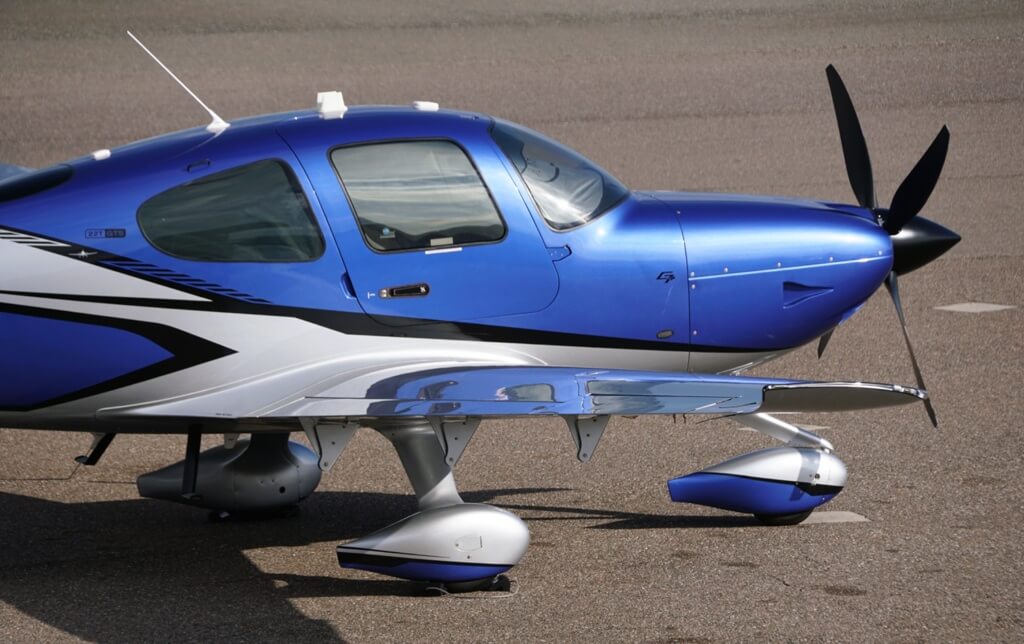
One of the most common questions we receive from Cirrus owners is simple:
“How much more does it cost to insure an SR22T compared to an SR22?”
The answer is not always straightforward.
While many pilots assume the turbocharged SR22T automatically carries significantly higher insurance costs, the reality is more nuanced. In many cases, pilot qualifications, aircraft value, claims history, and training matter more than the difference between the two models themselves.
At BWI Aviation Insurance, we work with thousands of Cirrus owners and review hundreds of Cirrus insurance policies every year. As part of our Q1 2026 Premium Intelligence Report, we analyzed 59 Cirrus insurance renewals representing more than $414,144 in premium.
The findings revealed something many owners may find surprising.
The overall Cirrus insurance market improved dramatically during the first quarter of 2026.
Among the 59 Cirrus renewals analyzed:
- 54 policies received premium decreases.
- Only 3 policies received premium increases.
- The weighted average premium movement was a decrease of 34.5%.
- The median premium movement was a decrease of 25.0%.
For many owners, the question is no longer whether rates are increasing. The question is how insurance companies are evaluating specific aircraft and pilot profiles in today’s market.
If you’re considering an SR22, already own an SR22T, or are evaluating a future upgrade, understanding how insurers view these aircraft can help you make a more informed decision.
Understanding The Difference Between The SR22 And SR22T
At first glance, the aircraft appear very similar.
Both are equipped with advanced avionics, composite construction, the Cirrus Airframe Parachute System (CAPS), and excellent cross-country performance.
However, the SR22T introduces several capabilities that insurers consider during the underwriting process.
The most obvious difference is turbocharging.
The SR22T can maintain power at higher altitudes and often operates on longer and more demanding cross-country missions.
This increased capability creates both opportunities and risks from an underwriting perspective.
Insurance companies know that many SR22T owners are highly experienced pilots. They also recognize that turbocharged aircraft are frequently flown farther, faster, and in more complex environments.
As a result, underwriters tend to take a closer look at pilot qualifications when evaluating SR22T applications.
How Aircraft Value Affects Insurance Costs
The largest insurance cost driver for most Cirrus owners is not the model itself.
It’s the insured value.
Today’s SR22 market spans a wide range of aircraft values.
Older SR22 aircraft may be insured for approximately $250,000 to $450,000.
Newer G5 and G6 aircraft often carry values ranging from $700,000 to over $1 million.
The same pattern exists within the SR22T market.
Many turbocharged aircraft are insured for values between $800,000 and $1.4 million or more.
From an insurance company’s perspective, a $1.3 million aircraft represents significantly more exposure than a $350,000 aircraft.
That additional exposure directly influences premium.
This is why two seemingly similar aircraft can produce dramatically different insurance costs.
The value of the aircraft often matters more than whether it is turbocharged.
How Insurance Companies View SR22 Pilots
The SR22 remains one of the most popular owner-flown aircraft in the world.
Insurance companies have decades of experience evaluating SR22 owners.
Many pilots entering the SR22 market come from aircraft such as:
- Cessna 172
- Cessna 182
- Beech Bonanza
- Piper Arrow
- Piper Saratoga
- Mooney M20 series
When evaluating an SR22 pilot, underwriters commonly review:
- Total flight time
- Instrument rating
- Time in make and model
- Claims history
- Training history
- Recent flight activity
Pilots who have accumulated significant Cirrus experience often receive favorable treatment from insurers.
A pilot with 1,500 hours total time and 500 hours in an SR22 typically represents a lower perceived risk than a pilot transitioning into the aircraft with minimal experience.
How Insurance Companies View SR22T Pilots
The underwriting process becomes slightly more detailed when reviewing SR22T risks.
Insurance companies frequently evaluate:
- Turbocharged aircraft experience
- High-altitude operations
- IFR proficiency
- Cross-country flying patterns
- Recurrent training participation
A common misconception is that insurers penalize turbocharged aircraft.
In reality, underwriters often care more about whether the pilot has the training and experience necessary to operate the aircraft safely.
A highly qualified SR22T owner may receive a more favorable underwriting outcome than a lower-time SR22 pilot.
Experience often outweighs equipment.
The Role Of Instrument Ratings
One of the strongest factors affecting both SR22 and SR22T insurance costs is the instrument rating.
Insurance companies consistently view instrument-rated pilots more favorably than non-instrument-rated pilots.
Why?
Because earning an instrument rating demonstrates:
- Additional training
- Better decision making
- Increased proficiency
- Greater commitment to safety
Many Cirrus aircraft are equipped with sophisticated avionics and are routinely used for serious cross-country travel.
Insurance companies understand that instrument-rated pilots are often better prepared to utilize those capabilities safely.
If you’re looking for one of the best ways to improve your insurance profile, obtaining an instrument rating remains near the top of the list.
Get Your Cirrus Aircraft Insurance Quote With BWI Today>>
The Importance Of Recurrent Training
Cirrus owners are fortunate to have access to some of the best training resources in general aviation.
Programs such as:
- Cirrus Embark
- CSIP instruction
- Factory transition training
- Annual recurrent training
- Simulator programs
are highly respected throughout the insurance industry.
Many carriers specifically ask about recurrent training during the underwriting process.
Owners who participate in ongoing training frequently position themselves for more favorable insurance outcomes.
This is especially true for SR22T owners and pilots operating aircraft with higher hull values.
Claims History Matters More Than Aircraft Model
Many owners spend significant time comparing aircraft specifications while overlooking one of the most important insurance factors.
Claims history.
Nothing influences insurance pricing more consistently than previous losses.
A pilot with a clean claims record often has access to more carrier options and better pricing.
Conversely, a pilot with recent claims may experience reduced carrier appetite regardless of whether they fly an SR22 or SR22T.
From an underwriting perspective, past performance remains one of the strongest predictors of future risk.
What We Are Seeing In The Current Market
Based on our review of Cirrus renewals during Q1 2026, the market remains highly competitive for qualified owners.
Many aircraft owners are receiving multiple quote options from carriers eager to write desirable business.
This increased competition is one of the primary reasons we observed such significant premium reductions across the Cirrus segment.
For owners approaching renewal, this creates an opportunity to reevaluate coverage and compare available options.
Market conditions can change quickly, but current trends remain favorable.
Which Aircraft Is More Expensive To Insure?
If all other factors are equal, the SR22T will generally cost more to insure than the SR22.
However, “all other factors equal” rarely exists in the real world.
Insurance companies evaluate dozens of variables simultaneously.
Two owners flying identical aircraft can receive very different premiums.
Likewise, an experienced SR22T pilot may receive a better underwriting outcome than a less qualified SR22 pilot.
The aircraft matters.
The pilot often matters more.
Should Insurance Influence Your Purchase Decision?
Insurance should absolutely be considered when purchasing an aircraft.
However, it should not be the only factor.
The mission of the aircraft remains the most important consideration.
If your flying requires the performance and flexibility of an SR22T, choosing a less capable aircraft solely to save insurance premium may not be the right decision.
Likewise, if an SR22 fully satisfies your mission profile, it may provide exceptional capability while reducing acquisition and operating costs.
The best approach is to obtain insurance quotes before finalizing a purchase.
Understanding the total cost of ownership helps eliminate surprises after closing.
Why Cirrus Owners Work With BWI
BWI Aviation Insurance has helped thousands of Cirrus owners secure coverage for their aircraft.
We understand the underwriting differences between the SR22, SR22T, and Vision Jet markets and work with the leading aviation insurance carriers to identify competitive options.
Whether you’re buying your first Cirrus, upgrading to an SR22T, or approaching renewal, our team can help you understand how insurers view your specific situation.
Final Thoughts
The good news for Cirrus owners is that the insurance market has improved significantly.
Our analysis of 59 Cirrus renewals during Q1 2026 showed a weighted average premium decrease of 34.5% and a median decrease of 25%.
That’s one of the strongest market improvements we observed among major aircraft categories.
While the SR22T will generally cost more to insure than an SR22 due to higher values and additional performance capabilities, pilot qualifications remain one of the most important factors affecting premium.
For both aircraft, experience, training, instrument proficiency, and claims history continue to drive underwriting decisions.
As a result, the best way to lower your insurance costs isn’t necessarily choosing a different aircraft.
It’s becoming a better risk.
bwifly.com / 800-666-4359
Continue Reading