
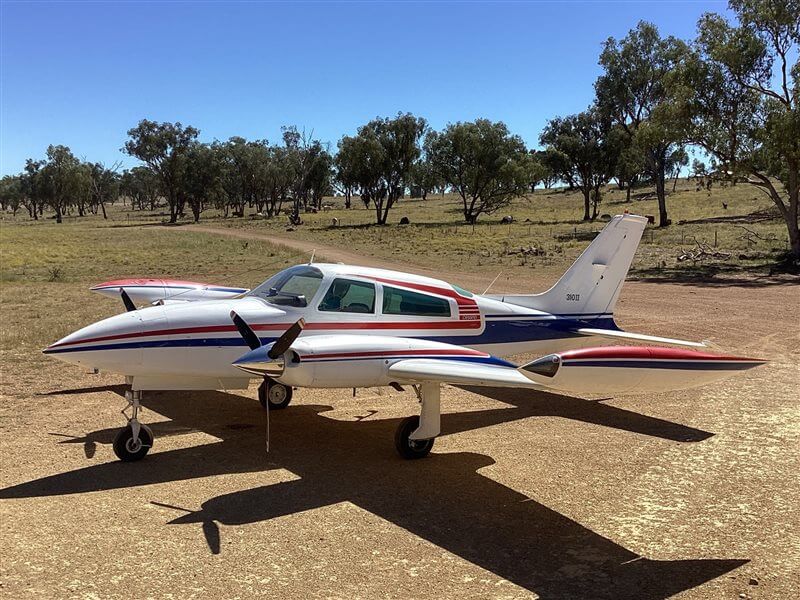
The Cessna 310 remains one of the most respected piston twins ever built.
Whether it’s a classic 310B or a later-model 310R, the aircraft continues to attract pilots looking for greater speed, redundancy, payload, and cross-country capability than most single-engine aircraft can provide.
That popularity creates something unique from an insurance perspective.
Because so many Cessna twins have been insured over the decades, insurance companies have a tremendous amount of historical claims and underwriting data available. As a result, the Cessna 310 market often serves as an excellent indicator of broader trends within owner-flown piston twin insurance.
The good news for qualified Cessna 310 owners is that current market conditions remain favorable.
Insurance companies continue to compete aggressively for experienced multi-engine pilots with strong training records and clean claims histories.
For pilots approaching renewal, understanding what insurers are looking for can help improve both coverage options and long-term insurance costs.
Get Your Aircraft Insurance Quote With BWI Today>>
Why The Cessna 310 Remains One Of The Most Insurable Piston Twins
Insurance companies generally like predictability.
The Cessna 310 provides exactly that.
For decades, the aircraft has established a strong operating history and developed one of the largest owner populations among piston twins.
The aircraft offers:
- Proven performance
- Strong parts support
- Extensive maintenance expertise
- Large pilot community
- Well-documented operating history
- Excellent training resources
These factors help make the aircraft attractive from an underwriting perspective.
The Cessna 310 Models Included In Today’s Market
The Cessna 310 family includes a surprisingly diverse group of aircraft.
Models commonly insured today include:
- 310
- 310A
- 310B
- 310C
- 310D
- 310E
- 310F
- 310G
- 310H
- 310I
- 310J
- 310K
- 310L
- 310M
- 310N
- 310P
- 310Q
- 310R
While these aircraft share the Cessna 310 designation, insurance companies do not necessarily evaluate them identically.
Factors such as aircraft value, avionics upgrades, pilot experience, and intended use can significantly influence underwriting decisions.
Insurance Trends For Early-Model Cessna 310 Aircraft
Many earlier-model Cessna 310 aircraft continue to fly regularly today.
These aircraft often serve as:
- Personal transportation aircraft
- Business aircraft
- IFR platforms
- Family travel aircraft
Because many of these airplanes are older, insured values vary significantly.
Some aircraft remain largely original.
Others have received substantial upgrades including:
- Garmin GTN navigators
- Garmin G500 TXi displays
- Garmin G600 systems
- Garmin autopilots
- Engine monitoring equipment
- ADS-B systems
These upgrades can significantly increase aircraft value.
As hull values rise, insurance premiums generally rise as well because the insurance company assumes greater financial exposure.
Insurance Trends For Later-Model 310Q And 310R Aircraft
The later-generation Cessna 310 models continue to command strong market values.
Aircraft in these categories frequently carry insured values ranging from:
- $200,000
- $350,000
- $500,000
- $700,000+
depending on condition, avionics, engines, and equipment.
Insurance companies generally view these aircraft favorably.
However, they still evaluate:
- Pilot experience
- Multi-engine time
- Claims history
- Instrument rating
- Recent flight activity
- Time in make and model
The aircraft itself is only part of the equation.
The pilot remains one of the most important underwriting factors.
Multi-Engine Experience Continues To Drive Underwriting Decisions
One of the most important insurance trends affecting Cessna 310 owners today involves multi-engine experience.
Insurance companies carefully evaluate:
- Total multi-engine time
- Recent multi-engine activity
- Cessna 310 experience
- Annual training
- Instrument proficiency
Consider the difference between:
Pilot A:
- 2,500 hours total time
- 1,000 hours multi-engine
Pilot B:
- 2,500 hours total time
- 30 hours multi-engine
The insurance company often views those risks very differently.
For many owners, multi-engine experience remains one of the most important factors influencing premiums.
Aircraft Value Continues To Drive Premium Changes
One of the biggest insurance trends today has little to do with pilot qualifications.
It involves aircraft value.
Consider the difference between:
- An older 310 insured for $175,000
- A modernized 310Q insured for $400,000
- A highly upgraded 310R insured for $750,000+
The insurance company’s exposure changes dramatically.
As hull values increase, premiums often increase even when the pilot profile remains identical.
This explains why two Cessna 310 owners can receive very different insurance quotes despite operating similar aircraft.
Why Instrument Ratings Matter
The Cessna 310 has become one of the most popular owner-flown IFR aircraft in general aviation.
Owners regularly use these aircraft for:
- Business travel
- Family transportation
- Long cross-country flights
- Weather-sensitive missions
- Multi-state travel
Because of this, insurance companies place significant value on instrument ratings.
An instrument-rated pilot often receives more favorable underwriting consideration than a non-instrument-rated pilot.
The rating demonstrates:
- Additional training
- Better decision making
- Greater proficiency
- Operational discipline
For many owners, obtaining an instrument rating remains one of the most effective ways to improve both safety and insurability.
Claims History Remains Critical
Nothing consistently impacts insurance pricing more than claims history.
Insurance companies carefully review prior losses when evaluating risk.
Pilots with clean records often benefit from:
- More carrier options
- Better pricing stability
- Increased underwriting flexibility
Recent claims can reduce carrier appetite regardless of aircraft type.
Whether you fly a 310C or a fully upgraded 310R, maintaining a clean claims history remains one of the most valuable long-term insurance strategies available.
Which Insurance Companies Are Most Active In The Cessna 310 Market?
Several major aviation insurance carriers continue to actively pursue piston twin business.
These include:
- Global Aerospace
- AIG
- Old Republic
- Starr
- USSIC
- IAT
- AIM
- Beacon
Each carrier evaluates risk differently.
One company may be highly competitive for a lower-time twin pilot.
Another may focus on experienced IFR operators.
A third may specialize in higher-value upgraded aircraft.
This is one reason why comparing multiple insurance options remains important.
How Cessna 310 Owners Can Improve Their Insurance Profile
There are several actions owners can take to improve underwriting outcomes.
- Maintain an instrument rating
- Build additional multi-engine time
- Participate in annual recurrent training
- Fly consistently throughout the year
- Keep accurate logbooks
- Complete transition training
- Maintain a clean claims history
- Review hull value annually
Insurance companies consistently reward pilots who demonstrate professionalism and commitment to safe operations.
Get Your Cessna 310 Insurance Quote With BWI>>
What We Expect For The Rest Of 2026
Based on our review of the broader piston twin insurance market, conditions remain healthy.
Insurance companies continue to show strong interest in qualified owner-flown twin-engine aircraft.
While individual renewals will vary based on aircraft value, pilot qualifications, multi-engine experience, and claims history, the market remains significantly more competitive than many owners experienced several years ago.
For many Cessna 310 owners, that competition creates opportunities to secure improved coverage and pricing at renewal.
Why Thousands Of Aircraft Owners Trust BWI
BWI Aviation Insurance has helped thousands of aircraft owners secure coverage for their aircraft.
Whether you fly a 310B, 310J, 310Q, or 310R, our team understands the underwriting considerations that influence pricing and carrier appetite.
We work with the leading aviation insurance carriers and help aircraft owners compare options based on their specific aircraft, experience level, and mission profile.
Final Thoughts
The Cessna 310 remains one of the most respected and insurable piston twins in general aviation.
Its performance, utility, redundancy, and broad owner base continue to make it attractive to both pilots and insurance companies.
While premiums are influenced by aircraft value, multi-engine experience, training, and claims history, today’s market remains favorable for qualified Cessna 310 owners.
Whether you’re flying a classic 310 or a fully upgraded 310R, understanding how insurance companies evaluate risk can help you secure the most competitive coverage available and protect one of your most valuable aviation assets.
bwifly.com / 800-666-4359
Continue Reading