

A drone pesticide business should verify financial responsibility requirements with the authority that regulates its actual service and license category. A standard drone certificate, an FAA permission and proof accepted for a pesticide license answer different questions. Before promising a start date, establish which documents are required, who must complete them and how their dates, aircraft and pesticide scope match the operation.
This guide provides a practical verification process for owners preparing an insurance submission or entering another state. Washington and Texas examples are limited to the official sources checked on October 23 2026. They illustrate why license type, aerial categories and insurance evidence require separate attention. Use the responsible authority's current instructions for your business rather than treating one state's example as a national rule or a determination that your proposed operation qualifies.
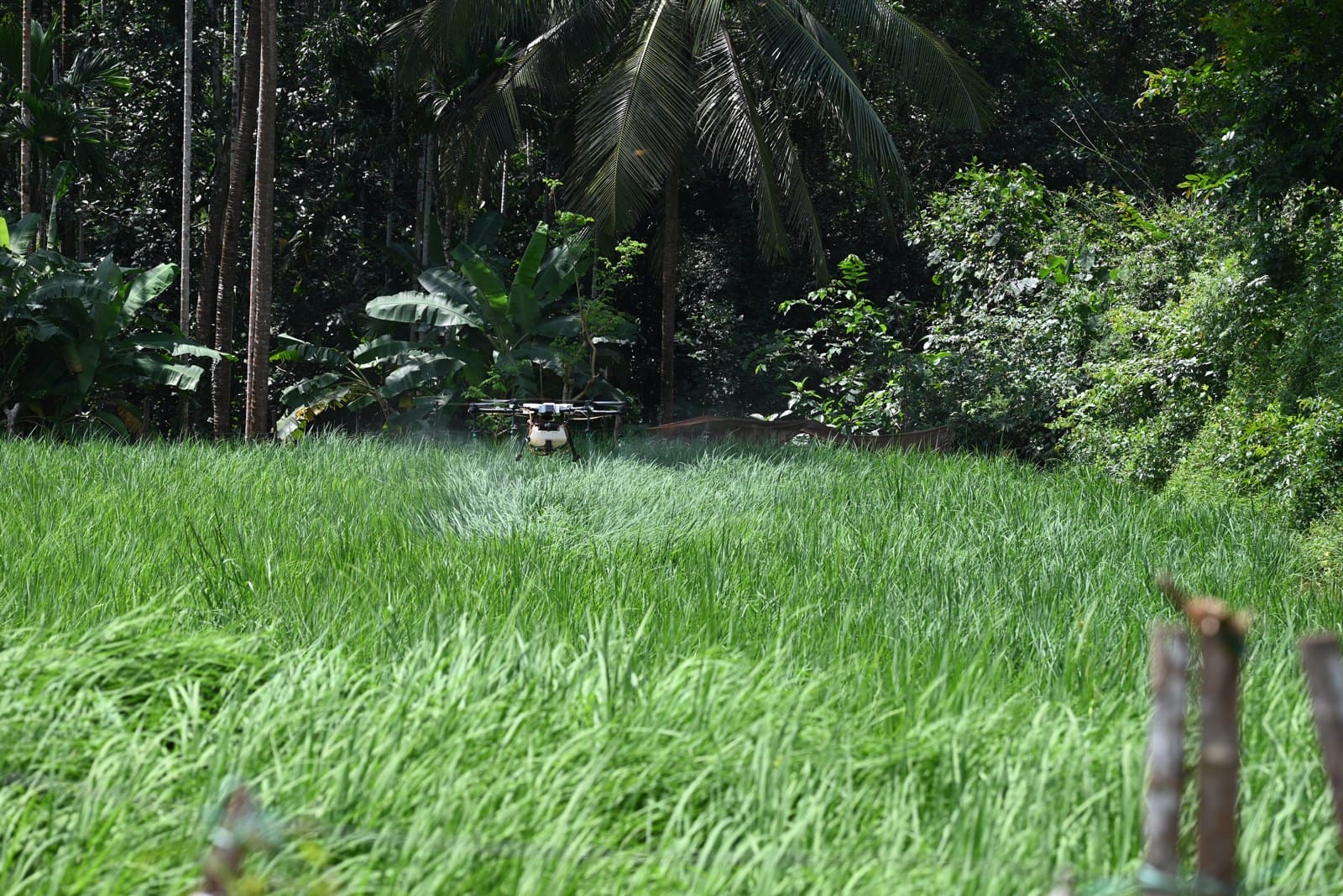
Start with the business activity and the jurisdiction
Write a short description of what the business plans to do and where it will work. Include whether it applies pesticides for customers, operates only on its own property or contracts with a public agency. Identify the products and sites using accurate information from the person responsible for the application. A state agency needs the actual activity to help identify the relevant licensing questions.
Separate the business address from the operating locations. A company based in one state may accept work across a border, employ pilots elsewhere or store equipment at a customer's site. Those facts should be described accurately. A license or insurance arrangement connected to the home address should not be assumed to resolve the requirements of every destination.
Create a record for each jurisdiction involved in the planned work. Note the relevant authority, the activity described and the questions still open. The record should show where the answer came from and when it was checked. Avoid copying a requirement into the file without its license category or geographic scope; those details determine whether the reference is useful.
Identify the pesticide license before selecting the evidence form
EPA explains that restricted use pesticide application is subject to certification requirements and that state, territorial and tribal rules can be stricter than the federal framework. That is a starting point for contacting the appropriate authority. It does not identify the complete requirements for a particular drone business or establish an insurance minimum for every operator.
Ask the authority which license and categories fit the described work. Provide the customer relationship, sites, materials and aircraft involvement. If your business performs agricultural, public health, landscape or structural services, identify each rather than assuming they belong in one category. Use the regulator's terminology after the category is established instead of selecting a familiar label first.
Keep the response and underlying source with the application record. If an answer is uncertain or depends on additional facts, mark it pending. An insurance agent should receive an accurate licensing description, and the regulator should receive accurate insurance evidence. Neither review benefits when a business guesses at a category to keep the application moving.
Treat aerial qualifications as an additional question
A pesticide credential and an aerial category can be separate elements of a state's requirements. Washington's category comparison, effective January 1 2026, expressly includes drones in Aerial Pest Control and states that the pest or site specific category is also required. This is a Washington category reference, not an instruction that the same category name or process applies elsewhere.
Give the appropriate authority the actual aircraft and service description. Ask how an existing credential is affected when the business changes from ground application to drones, adds a different site type or accepts a new material. Record any additional qualification, examination or application requirement as a separate item with an owner and status.
Keep aviation permissions in another part of the checklist. Use the current FAA dispensing guidance and qualified advisers for the actual operation. An aerial pesticide category does not independently grant federal aviation authority, and an FAA permission does not establish that all state pesticide requirements are met. Insurance acceptance remains another distinct review of the operation and offered terms.
Determine whether financial responsibility is required for the category
Once the license question is established, ask about the financial responsibility requirement and the accepted ways to demonstrate it. Request the current official instructions, including any relevant statute, rule, form and submission process. Identify which parts apply to the business rather than assuming that every pesticide license requires the same evidence.
Ask whether the authority accepts liability insurance, a surety bond or another specified option for the applicable category. These are different arrangements. Do not describe a bond as a policy that automatically pays every customer loss or assume that obtaining a bond replaces the operator's wider insurance review. The responsible advisers should explain the actual instrument and obligations.
Also distinguish a licensing minimum from a customer's contract. A grower or prime contractor may request different limits or wording. Record those requests separately and give both sets of requirements to BWI. Meeting one requirement should not be presented as proof that the other is satisfied, or that the business has addressed every loss it could face.
Use Washington as a clearly bounded insurance example
WSDA's Commercial Applicators page describes that license as a joint company and individual license for a business applying pesticides to another's land or property. It lists financial responsibility as part of the licensing process. Its insurance option specifies $50,000 public liability coverage, $50,000 property damage coverage and a deductible no greater than $5,000; it separately lists a surety bond option of at least $100,000.
The WSDA insurance certificate form, revised October 2024 and checked October 23 2026, states at least $50,000 per occurrence for bodily injury and $50,000 per occurrence for property damage. It describes pesticide application and drift onto property other than the treatment area, subject to the form's pesticide exclusions. The maximum deductible stated is $5,000. These figures are a Washington example for the stated category, not a recommended total insurance limit or a claim-payment promise.
The form includes aircraft or drone identifying fields and pesticide inclusion or exclusion choices. It must be completed by the commercial applicator's insurance agent. Send the current form to the authorized agent rather than completing the agent's declaration yourself. Ask WSDA and the appropriate licensed adviser to resolve applicability or unclear wording before relying on the evidence.
Read the official form as a record of required facts
Study the current form before asking someone to sign it. Identify the legal business name, policy information, applicable dates, limits, deductible and any equipment or material details requested. Keep a copy of the blank version used for the review. That allows the business to distinguish an outdated form from the current document if the agency later asks for a correction.
Check how the form handles exclusions or restricted activities. Do not select a favorable option based on what the business wants to have insured. The authorized person must be able to support the completed statement using the actual insurance arrangement. A pesticide description in the work order should also match the information supplied for this review.
Ask who is authorized to complete, sign and submit each document. Some information may come from the owner while another declaration belongs to an insurance professional. An administrative checklist should identify those roles without shifting their responsibilities. Sending a draft form to an agent is a request for review, not evidence that the declaration has been made or accepted.
Use Texas to check the category rather than borrow an unrelated rule
Texas Department of Agriculture's drone pesticide page identifies several categories of pesticide work and distinguishes agricultural applicators from structural pest control. It explains that commercial and noncommercial agricultural applicators using drones must add the aerial category alongside the relevant application categories, and it addresses private applicators separately. The page also identifies circumstances in which licensing is required based on the pesticide or service.
Use that drone-specific agency page to begin the Texas review with the responsible program. It does not support importing an insurance amount from a different licensing regime. A rule for structural pest control should not be labeled the agricultural drone insurance requirement merely because both concern pesticides. Confirm the actual category and requested evidence with TDA.
This example shows why a saved number without a source and scope is inadequate. The business should retain the official page, the date checked and the question sent to the authority. If the available source does not establish the financial responsibility requirement for your category, leave that item unresolved and obtain the necessary answer rather than filling the gap with a nearby rule.
Match the operation with the policy offered
Give BWI the verified requirements and the full operation description together. Include aircraft, pilots, operating territory, materials, customers and service responsibilities as requested. A quotation prepared for imaging does not establish acceptance of pesticide application, and a proof form should not be used to imply a service that the insurer has not accepted.
Ask specifically about application liability, the relevant exclusions and the limits that apply. Review the property being treated separately from neighboring property and the operator's own crops. If the regulator requires evidence concerning pesticide activities, the reviewer needs to understand those activities, not just the value of the aircraft.
Keep other business exposures visible. Ground handling, stored material, service vehicles, employee injuries and professional recommendations may require separate consideration. A form used for one licensing purpose should not be presented as a certificate that every part of the business is protected. Ask the appropriate advisers to review the actual operations and documents.
Build a dated requirements record
| Record field | What to save | Why it matters |
|---|---|---|
| Jurisdiction and authority | Current agency source and contact route | Connects the question to the correct location |
| License and categories | Actual activity and confirmed category description | Avoids applying a neighboring licensing rule |
| Evidence requested | Current form and applicable instructions | Shows which document the authority expects |
| Insurance facts | Accepted terms dates equipment and material scope | Supports an accurate request for proof |
| Responsible person | Owner agent authority or other adviser | Identifies who can answer and sign |
| Status | Requested issued submitted accepted or pending | Prevents an inquiry being recorded as completion |
Keep the source and the answer behind the summary. A short table becomes unreliable when the supporting document cannot be found. Use clear dates and retain prior versions so the business can establish what was known when a policy, contract or license decision was made.
Check the legal names and the equipment identifiers
The name used for licensing, contracting and insurance should be reviewed for consistency. A company may trade under a different public name or hold aircraft through a related entity. Give the relevant documents to the advisers and ask how the actual interests should appear. Do not silently replace the legal name on a form with a marketing name because that is how a customer recognizes the business.
Use accurate aircraft registration or identifying information where required. If a replacement drone or rental unit is added, ask whether the regulator's record and insurance evidence need updating. A form listing one aircraft should not be treated as confirmation for every aircraft the company later operates.
Describe ownership and operation separately. Another business may own the equipment while your company performs the application. The insurer and licensing authority may need different documents to understand that relationship. Keep the lease or service agreement available rather than assuming that possession establishes ownership or that the owner's insurance resolves the operator's responsibilities.
Coordinate the dates before committing to work
Prepare a timeline for policy issuance, evidence completion, submission and any required agency action. Ask the responsible authority what establishes the business's license status. Sending a form or paying a charge should not be described as an issued license unless the process and resulting records support that conclusion.
Check policy dates and any conditions that remain outstanding. A quotation is not a binder, and a request for a certificate does not establish that coverage has begun. Obtain the appropriate written confirmation from an authorized party, then compare the issued documents with what the business accepted. Resolve discrepancies rather than assuming that a missing detail is an administrative formality.
Keep customer commitments realistic while the process remains open. A business can tell a customer which steps are complete and which are pending without promising an insurer's response time or a regulator's decision. The start date should follow the confirmed requirements, permissions and insurance arrangement for the actual work.
Carry the review through renewal and changes
Create reminders using the actual dates in the licensing and insurance records. Identify which evidence must be renewed or updated and who will submit it. Do not assume that renewing the insurance automatically updates a regulator's file, or that a license renewal establishes continuing policy protection.
Review changes to the business as they occur. A new material, aircraft, operating state, service or legal entity can affect the facts supplied earlier. Ask the relevant authority and adviser what needs to be reported. Record the answer and any accepted update; do not treat a request for guidance as confirmation that a change has been made.
When cancellation or a seasonal reduction is considered, include the financial responsibility requirement in the decision. Ask how the proposed change affects any evidence already supplied and the business's ability to maintain the applicable license. Premium treatment, contract obligations and regulatory status deserve their own checks before instructions are given.
Test the process with a fictional interstate expansion
Imagine a contractor insured for a stated application service in its home state that accepts a proposed assignment across the border. The new customer requests proof of insurance and asks when the aircraft can arrive. The owner has an old certificate and assumes it is the only remaining document. This is a fictional planning example, not a BWI customer or a statement of either state's requirements.
The useful next step is to identify the destination's actual licensing program and the service category. The owner collects the official requirements, sends the requested evidence form and operation details for review, and checks the necessary aviation and pesticide permissions separately. Each step has its own status. An agency inquiry is not recorded as an approval, and an insurance request is not recorded as bound protection.
If a regulator asks for a correction, preserve the original submission and the replacement. Explain the corrected fact to the appropriate adviser when it affects the insurance description. This process supports an accurate file and a defensible start decision without promising that every interstate assignment has the same requirements or can be arranged on the same timetable.
State financial responsibility questions for drone operators
Is there one national pesticide insurance minimum for drones
Do not use this checklist as a national limit table. Determine the requirements for the actual jurisdiction, license and service with the responsible authority. The dated Washington example applies to its stated commercial applicator category and does not establish the requirement elsewhere.
Does a pesticide license establish that chemical application is insured
No such conclusion should be assumed. Review the policy, endorsements, accepted activity and any evidence required for the license. License status and the insurer's obligations under a claim are different questions. Ask for a specific review of the operation and offered wording.
Can I complete an insurance agent's declaration myself
Do not sign or complete a declaration assigned to another authorized person. Supply accurate business information and send the current official instructions to the appropriate agent. The Washington example expressly requires agent completion; verify the requirements of the actual form used for your business.
Does meeting a state minimum satisfy every customer contract
Do not assume that it does. Compare the actual customer requirements separately with the offered terms. Requested limits, endorsements and contractual promises can differ from a licensing rule. Obtain the appropriate review before representing either requirement as satisfied.
Prepare the verification file for BWI
Provide the jurisdiction and confirmed license category, current official requirements, requested forms and complete customer insurance clauses. Add the aircraft schedule, materials, personnel and operation description requested for underwriting. Identify unresolved authority questions and proposed start dates so the review can focus on what remains to be decided.
Read BWI's drone insurance guide for the wider coverage discussion, then use the current BWI drone insurance application to request review of your actual pesticide operation. BWI currently requires a Part 107 certificate for drone quote requests; contact the team if eligibility needs clarification. Coverage, availability, pricing and effective dates require review and appropriate written confirmation. A submitted inquiry does not establish a license, satisfy a regulator or bind the proposed insurance.
Continue Reading


