

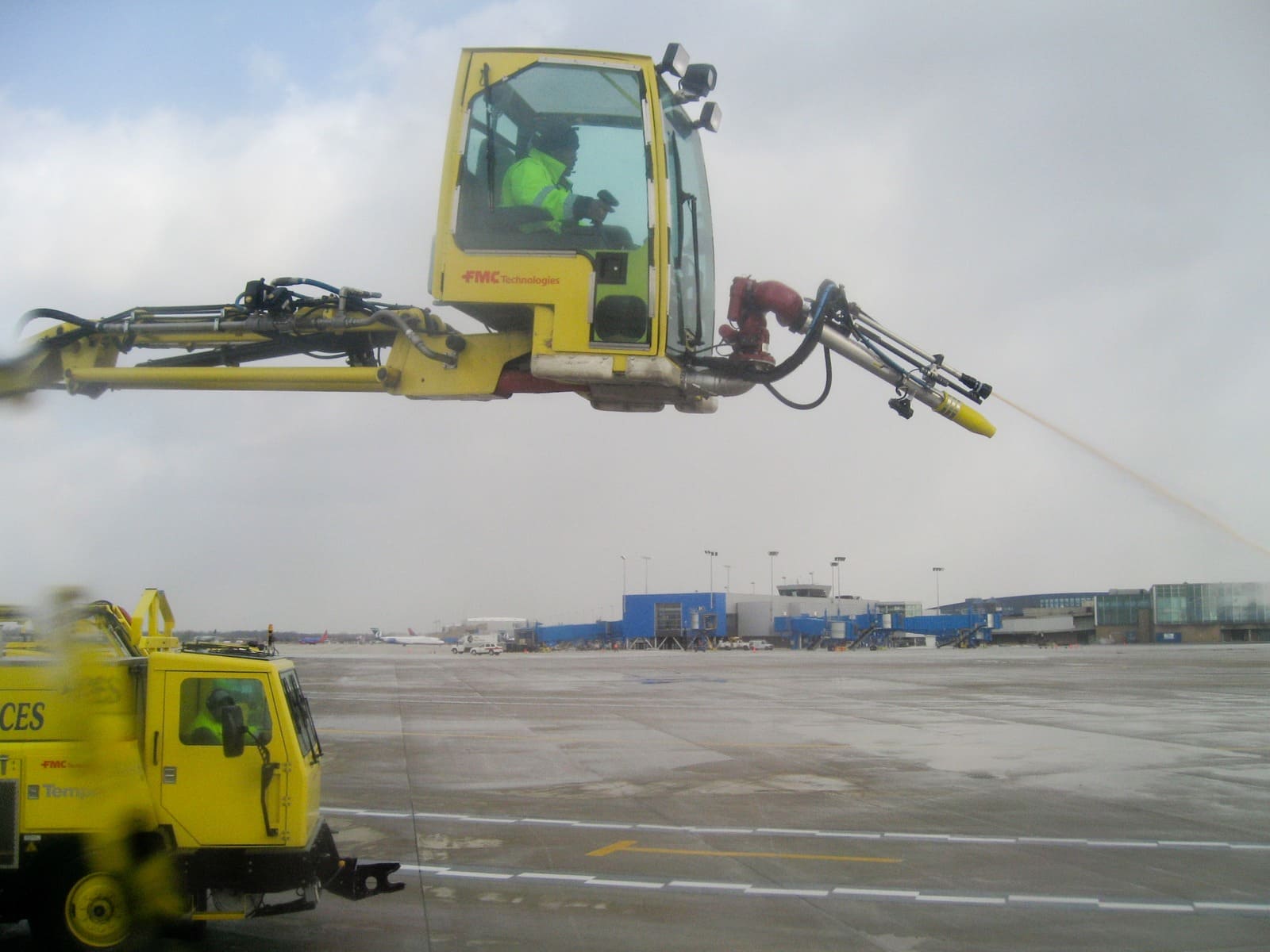
An aircraft deicing contractor should arrange its insurance review around the service it performs, the aircraft it works near and the responsibilities it accepts before the winter season begins. The review needs to follow the fluid, equipment and work order through treatment and handover. A policy described as airport liability does not, by that description alone, explain aircraft damage, an allegation about completed treatment or cleanup at a shared pad.
Start with a precise account of your business. Are you applying fluid supplied by an airline, selling and applying your own product, providing vehicles and personnel to another handler, or operating the entire treatment facility? Those arrangements can involve similar-looking equipment while creating different property and contractual questions. Give BWI the actual division of services rather than a broad label such as winter support.
This guide helps an aircraft deicing business prepare a commercial aviation insurance submission and compare the response. It concerns insurance and business responsibilities, not how to deice an aircraft. Aircraft procedures, fluid selection, training, operational decisions and environmental requirements belong with the responsible qualified people and applicable programs. Request a commercial aviation insurance review from BWI before promising a customer that a particular arrangement is insured.
Define the Service Before Requesting a Limit
List the activities your company actually performs. Distinguish aircraft treatment from fluid storage, vehicle maintenance, pad management, runoff collection and services subcontracted to another business. If the company performs aircraft deicing and anti-icing, describe both accurately without assuming the terms are interchangeable for every agreement or insurance form.
Identify the customers and aircraft served. An independent contractor working under several airline agreements should identify those relationships and the airports involved. A business treating corporate aircraft for an FBO should explain the contracting chain as well. State the largest aircraft values available from reliable customer records and describe the busiest expected operating period.
Explain where the work begins and ends. Your company might accept an aircraft treatment request, position a truck, complete the assigned service and provide a record to another party. Identify who controls each stage and which party makes the subsequent operational decisions. Avoid describing the contractor as controlling the flight merely because its employee provides information used by the flight crew.
Separate current capability from plans. A bid for an additional airport, a proposed new customer and a vehicle not yet delivered should remain identifiable as pending. An underwriter should be able to see what the business does now and what change it wants considered before the next season.
Map the Customer Program and Contractor Handoff
Collect the customer agreement and the documents that define the contractor's role. Identify who supplies training, which program the personnel work under and how the customer accepts the service record. Explain whether employees serve one customer or move among several customer arrangements. Do not ask the insurance reviewer to infer those facts from a company brochure.
FAA Advisory Circular 120-60B is listed as active and describes one means of obtaining approval of a ground deicing and anti-icing program for compliance with section 121.629. Its stated context is important: it is not a universal instruction sheet for every airport business or an insurance coverage form. Use the applicable operating framework and qualified guidance for the work being performed. [1]
For insurance purposes, describe the supported program and actual responsibilities. Keep operational approval, customer qualification and insurance acceptance as separate records. A customer may approve the contractor to perform a service while an insurance requirement remains unresolved. An insurer's response likewise does not certify the contractor's technical procedures.
Identify what happens when instructions change or another treatment is requested. Keep the request, completed service and later request distinguishable. The insurance submission should explain the real handoff rather than suggesting that the first treatment record settles every responsibility associated with the aircraft's departure.
Follow the Fluid Through Purchase Storage and Use
State who purchases the fluid, who owns it at each stage and who operates the storage and dispensing equipment. A contractor may handle material owned by a customer or supplier while owning the truck that carries it. Include the relevant supply and storage agreements so the reviewer can understand both the property interest and the service responsibility.
Describe the records the business actually retains concerning receipt, product identification and the material assigned to a treatment. Have qualified operational personnel determine which records and controls are required. For the insurance inquiry, explain how the company can connect a reported concern with the relevant delivery, equipment and service record without claiming that documentation guarantees an insured result.
Separate allegations involving the product from allegations involving the application service. A customer might question material supplied to the site, the handling of a particular batch or what was performed on one aircraft. Those are factual possibilities for the review, not findings that a supplier or contractor would be liable. Ask which proposed provisions address the business's actual roles.
If the contractor sells fluid as well as applying it, disclose that activity expressly. If another company supplies all material, describe that arrangement accurately too. Neither a supplier's insurance certificate nor the absence of a fluid sales invoice resolves every allegation that could be made against the contractor.
Review Aircraft Damage and Custody Explicitly
Explain how close your equipment works to aircraft and whether the business accepts custody or responsibility under its agreements. Ask which coverage section is intended to address liability for damage to an aircraft being serviced. Do not assume that a general premises description answers a question about the aircraft on which the contractor is working.
Provide the actual aircraft interests and values requested for underwriting. Identify any period when several aircraft are being treated or queued around equipment under your control. Ask how the offered limits apply to damage involving one aircraft and an event affecting several aircraft. A fleet of treatment trucks does not establish a separate aircraft liability limit for every truck.
Discuss the difference between an observed contact event and a later allegation about the treatment. If a boom or vehicle contacts an aircraft, preserve the facts of that event through the applicable reporting process. If a concern is raised after the aircraft leaves, preserve the service record and communications without assuming the physical location of the aircraft decides the coverage question.
Have the reviewer identify any relevant custody, work-performed, product or completed-service provisions and exclusions in the actual proposal. Keep the explanation tied to the contractor's disclosed activity. A limit is useful only when the intended operation and interests can also be identified under the offered terms.
Include Trucks Leases and Equipment Support
Prepare a schedule of owned, leased and borrowed trucks and other equipment. Describe where each is kept, who operates it and whether it travels on public roads. Include attachments and significant equipment interests as requested. An aviation liability discussion should not silently stand in for insurance on the contractor's own vehicles and machinery.
Provide equipment lease terms and any requirement to reimburse an owner for damage, loss of use or replacement. Ask which obligations can be considered under the actual insurance and which need a separate review. Paying a rental fee or deposit does not explain the full responsibility accepted when a substitute truck arrives during a busy period.
Identify who services and repairs the equipment. A separate maintenance provider may perform a task without accepting the contractor's entire operating responsibility. If the contractor also repairs equipment for other businesses, disclose that additional service rather than leaving the submission limited to its own fleet.
Include the offseason. Trucks may be stored, maintained, relocated or leased to another company after aircraft treatment ends. Review those facts before requesting a seasonal reduction or cancellation. The end of a customer's winter contract does not by itself dispose of the contractor's equipment ownership or other continuing interests.
Describe Shared Pads and Environmental Responsibilities
A deicing contractor may work on a pad operated by an airport, airline or another service company. Identify who controls the surface, drainage, collection equipment and waste arrangements. Provide the relevant agreement rather than assuming that ownership of the pad makes one party responsible for every release or expense.
EPA's airport deicing guidance distinguishes airfield pavement deicing requirements from aircraft deicing discharge requirements, and explains that requirements for aircraft deicing at existing airports continue through general or site-specific permits. Have the responsible environmental professionals determine the requirements for the actual facility and activity. Do not apply a general airport summary as a permit decision for your business. [2]
For insurance review, identify the fluid handling, collection and disposal work your company actually undertakes. Ask separately about alleged injury or property damage, investigation, cleanup and contractual environmental obligations. An answer concerning damage to a customer's aircraft should not be treated as an answer about a drainage system or neighboring property.
Keep known conditions visible in the submission. If the company knows about a release, complaint or unresolved environmental issue, provide the requested facts through the appropriate process. Do not describe it as a hypothetical future event. Insurance review and an environmental assessment serve different purposes, and neither should be presented as a substitute for the other.
Explain Seasonal Staffing Without Hiding the Work
List the actual employer and the personnel arrangements used during peak demand. Explain the roles of vehicle operators, elevated-platform operators, coordinators, mechanics and supervisors where relevant. Identify temporary staff or personnel supplied by another company. A uniform or customer badge does not establish who employs or directs a person.
Describe training completed and training still scheduled as different facts. Provide the information requested by the underwriter without promising that one course guarantees acceptance or a premium reduction. Qualified operational personnel and the applicable program determine readiness; the insurance submission should accurately reflect that supported status.
Review worker injury questions separately from liability to aircraft owners or passengers. Identify the states and workforce arrangements involved for the appropriate workers compensation and employment review. A customer aircraft liability limit should not be used as evidence that every crew-related obligation has been addressed.
Assign a person to report material staffing and equipment changes through the accepted process. A last-minute staffing agency arrangement or borrowed truck can change the facts of an otherwise familiar winter contract. Keep the insurance description current while the responsible managers address the operational requirements.
Read Winter Service Contracts Before Promising Evidence
Collect the complete insurance clauses and service obligations before signing. Identify the customer, airport and any other legal entity requesting a status or document. Keep the original wording and amendments available. A request described as standard airline insurance can contain requirements that differ from those in the contractor's current arrangement.
Separate limits, insured status, waiver language and evidence delivery into distinct questions. Ask BWI which documents can support the requested terms and which matters require further review. Do not edit an issued certificate or treat a customer portal's acceptance as an amendment to the policy.
Read performance and reimbursement promises with the appropriate legal adviser. A service credit, delay charge, promise to supply replacement equipment or obligation to reimburse another party may need its own assessment. The fact that a demand concerns aircraft deicing does not establish that an aviation policy funds every contractual payment below the liability limit.
When the requirement cannot be confirmed as written, identify the difference before representing compliance. Record who can negotiate it and which insurance response remains pending. A proposed start date is a scheduling fact; it does not make an unavailable endorsement or unanswered requirement effective.
Compare Proposals Using the Same Winter Operation
Give each reviewer the same account of airports, customers, aircraft, equipment, fluid responsibilities and workforce. Include the same contracts and requested limits. A quotation for applying customer-supplied material is difficult to compare with one prepared for a contractor that also stores and sells fluid unless the difference is explicit.
Ask how the deductible or retention applies to the relevant interests and event. Record whether a figure is fixed or percentage-based, what it applies to and whether several damaged interests change the calculation. Request an explanation using the actual proposal rather than assuming the first figure on a summary is the only retained amount.
Compare the treatment of defense expenses, applicable limits, aggregates and any specific restrictions. Ask which locations and services are included and what would require another review. Keep unanswered questions beside the premium so the business does not choose between apparently similar prices while overlooking materially different scopes.
This guide supplies no standard premium or universal required limit for a deicing contractor. Ask for current terms based on the actual submission. Preserve the accepted offer and issued documents so the insurance record distinguishes the operation requested from what was ultimately offered and confirmed.
Keep Service Records Traceable Across Shifts
Use the records maintained under the applicable customer program to connect an aircraft treatment with the responsible crew, equipment and work request. Explain that record system in the insurance submission. This guide does not prescribe the technical entries or retention period; have the responsible operational and legal advisers establish those requirements for the actual work.
When staff change shifts, preserve what was completed and what remains open. A request for another treatment should remain identifiable as a later request rather than overwriting the first service entry. Where timestamps come from different systems, retain their displayed information and explain any known discrepancy instead of changing original records to make a timeline appear simpler.
Maintain an accessible route to relevant supplier, equipment and customer documents. If a vehicle is leased or a material delivery is disputed, the person preparing a factual report should be able to locate the agreement and original communication. Limit sharing to the parties who need the information, and preserve originals when supplying working copies. Traceability supports review without establishing fault or guaranteeing payment.
Use a Shared Equipment Example to Test the File
Imagine a fictional contractor serving two airline customers at one airport. It leases a backup deicing truck during a busy week, receives fluid supplied under one customer's agreement and uses a shared treatment pad. This example is a planning exercise, not a BWI customer story, approved operating arrangement or predicted claim.
The useful submission identifies the truck's owner and lease obligations, the material ownership, the personnel operating the equipment and each customer's service requirements. It also explains the pad agreement and the contractor's actual environmental duties. The reviewer can then investigate those interests without receiving a vague request to cover winter operations.
Now suppose a customer raises a concern after an aircraft has left and another party reports a fluid release at the pad. Preserve each report and the relevant records, distinguishing known facts from allegations. Do not force them into one explanation or assume that one claim reference settles every insurer or regulatory notification required.
The planning lesson is to keep the service, property and contractual records connected while preserving the separate decisions. The example does not determine who is responsible. It shows which information the contractor should be able to retrieve before an uncertain event creates pressure to supply an immediate answer.
Prepare the Review Before the Next Season
Create one submission file containing the legal entity information, service description, airports, customer agreements, aircraft values requested, equipment schedule and workforce arrangements. Add fluid ownership, storage, supplier and shared-pad responsibilities. Keep established facts and planned changes clearly identified so the reviewer can see the actual timing.
Record the insurance questions that need explicit answers: aircraft damage during service, allegations about completed work, owned and rented equipment, environmental interests, crew obligations and contractual evidence. For each answer, retain the relevant document and response. A completed internal checklist should point to accepted terms rather than replace them.
Request a commercial aviation insurance review from BWI with that file and the date the proposed work would begin. Use BWI's airport liability information for the wider service context and explain that the inquiry concerns aircraft deicing. Availability, pricing and terms require review; the issued arrangement and appropriate written confirmation are what the business should assess before relying on the protection.
Sources
Continue Reading


