

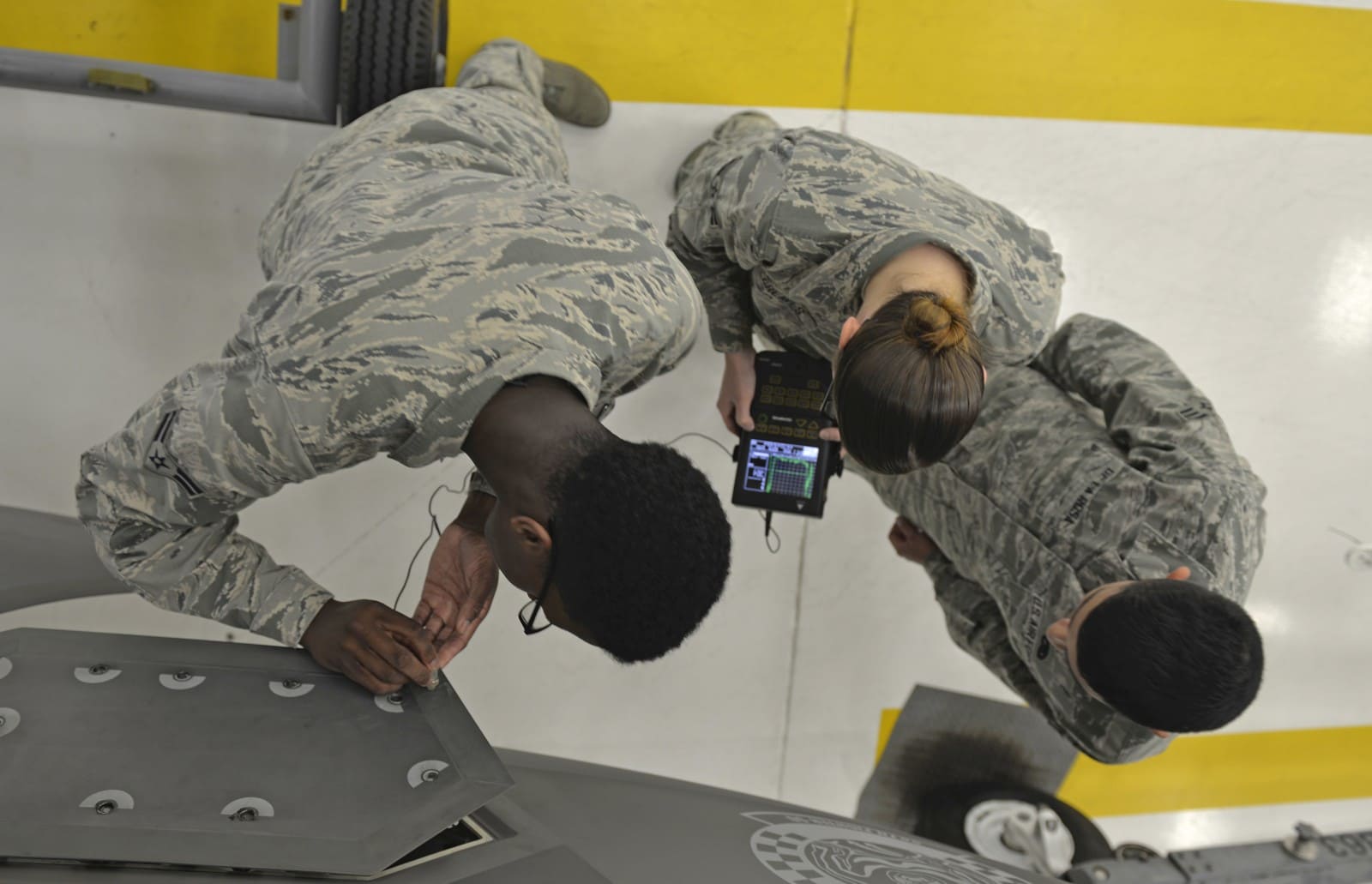
An aircraft nondestructive inspection company should describe both the physical work it performs and the decisions customers make using its findings when requesting insurance. A damaged customer component, an allegation that an indication was missed and a dispute over the wording of a report are different subjects for review. Calling the business an inspection contractor does not establish that a single liability form addresses every one of them.
Start with the inspection methods, aircraft or components, locations and deliverables involved in the actual service. Identify who specifies the task, who interprets the findings and who has responsibility for any maintenance release or return to service. Then ask BWI to review the proposed insurance against those particular roles. BWI's aviation professional liability information provides the broader context for specified inspection and technical services; availability for a particular inspection business requires an individual submission.
This guide is for the company selling inspection services, including work performed at a customer's facility. It is not an inspection procedure or a technical judgment about whether an aircraft is safe. Qualified technical personnel remain responsible for method selection, acceptance criteria, personnel qualifications and the applicable maintenance requirements.
Describe the Inspection Business Beyond Its Acronym
NDI and NDT may be familiar descriptions within the business, but an underwriter still needs a plain account of the work. List the methods actually offered, the materials and articles inspected, and the customer groups served. Distinguish routine contracted inspections from occasional specialist assignments. Include activities performed by subcontractors when your business sells or accepts responsibility for their services.
Explain whether the company inspects detached components, installed components or aircraft structures. State whether it removes or reinstalls parts, prepares surfaces, supplies repair advice, performs repairs or operates customer aircraft. A business can acquire additional responsibilities through a small task added to an inspection order. The application should describe those tasks rather than assume that all work on the same invoice falls within the original inspection description.
Provide revenue information in the categories requested and identify estimates as estimates. If the accounts combine inspection labor, equipment rental, training and consulting, explain the available breakdown. Do not invent percentages to make the form appear complete. A useful submission lets the reviewer understand which services produce revenue and which less frequent activities create different obligations.
Identify Who Controls the Inspection Scope
Keep the customer's instruction, the accepted scope and the resulting report together. For the insurance discussion, explain who identifies the article and area to be inspected, supplies the relevant technical instruction and approves changes to the task. A contract for an identified examination is different from an open promise to find every possible problem in an aircraft.
If the customer supplies incomplete identification or requests an expanded examination on site, describe how your company handles that change. The responsible technical people must determine what work can properly be performed. The insurance submission should accurately explain the business process for accepting additional responsibilities, including circumstances in which work is referred back to the customer or another authorized organization.
Identify the report recipient and intended use. A report prepared for a maintenance provider may later be passed to an owner, purchaser or another shop. Explain the contractual boundaries rather than assuming that every later reader is your customer. Have appropriate counsel assess reliance language and promises about completeness; ask the insurance reviewer separately which declared services and allegations the proposed wording addresses.
Keep Qualifications and Insurance Acceptance Separate
The FAA identifies AC 65-31B as active guidance on training, qualification and certification of nondestructive inspection personnel. Its published description addresses technical competence and organizational qualification programs. That guidance is a technical reference, not evidence that an insurer has accepted your company's activities or that a particular policy will respond to a loss. [1]
Supply the qualifications, authorizations and oversight arrangements that accurately apply to the people and organization performing the work. Avoid broad statements that imply a credential covers every method, material, location or task. If a customer requires a particular qualification, the responsible technical specialist should verify the requirement and whether the assigned person meets it.
State separately whether your company issues findings only or also performs an authorized maintenance or release function. The insurance reviewer needs to understand the role undertaken, while the appropriate technical authority determines what is permitted. Do not use a certificate of insurance, a quotation or the presence of a professional liability limit as authorization to undertake an inspection outside the business's approved capability.
Separate Handling Damage From Alleged Inspection Errors
Explain what customer property the company touches or holds. A technician may move a detached part, prepare an area for examination or work beside other equipment. Ask how the proposed program treats damage to the property being worked on, property in the company's custody and other property at the site. The actual definitions and exclusions matter more than the coverage title used in a sales conversation.
An allegation about the inspection result raises another set of questions. A customer could claim that a report omitted a finding or that the result was communicated incorrectly. Review the definition of professional services and any exclusions affecting inspection, testing or maintenance work. Ask how allegations involving both physical damage and a professional service are considered across the proposed policies. [2]
Keep the cost of reperforming your own inspection separate from alleged damage to another party's property or a financial demand based on reliance on the report. They may appear in one complaint without receiving identical treatment. Provide the reviewer with the requested cost categories and facts rather than describing every expense as a covered inspection claim.
Follow Customer Components Through Custody
Record what arrives, who owns it and what the company has agreed to do with it. Detached aircraft components can be received through a maintenance organization while belonging to someone else. Keep identifiers, receipt condition and the agreed destination with the job. A customer name and an invoice total do not necessarily explain the property interest at risk.
Estimate the maximum accumulation of customer property that may be held at one time. Include work waiting for instructions, completed articles awaiting collection and items temporarily retained for further review. Explain the basis of the values and ask what valuation information the insurer requires. An average inspection fee should not be used as a substitute for the value of the property involved.
If another company handles collection or delivery, identify who arranges the movement and the responsibilities accepted in the contract. Ask about the relevant property and transit terms. A courier's acceptance of a parcel does not establish the inspection company's protection, and a customer property arrangement at the workshop should not be presumed to follow every shipment automatically.
Describe Work at Customer Hangars and Remote Locations
List where mobile teams work and what they take with them. Identify whether a customer supplies access equipment, power, workspace or assistance moving components. Explain who coordinates with the facility and who controls the aircraft while inspection work is under way. A policy schedule showing the main office address does not independently resolve the questions created by work at another location.
Provide the airport or facility requirements that apply to the engagement, including requested insurance evidence. Review complete contractual provisions rather than a screenshot of the required limit. If the customer asks for additional insured status or another endorsement, determine whether it is available for the actual relationship. Do not represent a certificate as an amendment to all the terms of a policy.
Describe vehicle use and employees' movement between jobs separately from the inspection service. Identify owned, rented or employee vehicles used for business, and the equipment they carry. Ask which arrangements address the actual vehicles, tools and work activities. Ground access permission, vehicle insurance and professional liability are related business needs but answer different questions.
Review Equipment and Specialist Methods Accurately
Prepare an equipment schedule that distinguishes owned, leased, hired and borrowed items. Include portable instruments, reference equipment, computers and significant accessories as appropriate to the operation. State where the equipment is used and stored, and explain travel or temporary storage arrangements. Ask what evidence of value and ownership is needed rather than assuming that everything in a technician's case belongs to the company.
Describe the consequences of losing a key instrument and the arrangements your business wants reviewed. Replacement equipment, interruption of scheduled jobs and a customer's delay demand are different interests. Ask which offered terms address the specific costs and which do not. An equipment limit does not automatically promise reimbursement for every consequence of an unavailable instrument.
If the business uses radiographic equipment or other methods with specialized licensing, material, environmental or site-control requirements, identify those activities explicitly. Obtain the applicable technical and regulatory advice from qualified sources. Do not assume that acceptance of another inspection method establishes insurance acceptance of all specialist operations, or that a general liability policy resolves every exposure associated with them.
If equipment is hired from another inspection company, supply the rental agreement as well as its replacement value. Identify who bears responsibility during transport, calibration checks, use and return. Clarify whether replacement rental charges or continuing hire charges are obligations you have accepted. These amounts should be discussed explicitly instead of assuming that a tools schedule resolves every promise in the hire contract.
Explain the Report and Correction Process
Describe the deliverable in terms a reviewer can follow. Identify whether the company supplies observations, images, measurements, interpretation, acceptance decisions or recommendations, and who signs or approves the report. Keep the agreed scope with the issued version. This helps distinguish the inspection actually purchased from a broader service a customer may later say it expected.
Explain how factual corrections and technical revisions are controlled. A corrected identifier, replacement image or changed interpretation can have a different significance. Preserve the original record and show what changed, when and for whom. The insurance application should reflect the process the company actually uses, not a procedure written for the first time to make a submission look more mature.
When a concern arises after delivery, follow applicable policy notice requirements and seek the appropriate technical and legal guidance. Do not silently replace an earlier report or promise that an insurer will pay the customer's expenses. Record established facts, preserve uncertainty and identify any urgent proposed action so the responsible people can review it without losing the evidence of the original work.
Include Outside Inspectors and Shared Responsibilities
Identify subcontractors by legal entity and the exact work supplied. Explain whether they provide personnel under your supervision or accept a defined inspection task through their own organization. The customer may contract only with your company even when a specialist performs part of the work. That commercial relationship should be clear in the submission.
Collect the insurance evidence required by the agreement and have the responsibilities reviewed. Another inspector's policy does not automatically remove your company's exposure or establish your insured status. Ask how the proposed insurance treats subcontracted professional services and any responsibilities retained by your business. Review changes when a new provider replaces the one originally described.
If your company lends personnel to a customer or provides training and oversight, disclose that arrangement separately. Staffing, instruction and an independent inspection report need not be treated as the same service. Identify who directs the individual, who provides equipment, whose procedures apply and who communicates the result. Accurate role descriptions are more useful than a single statement that everyone involved is certified.
Compare Contracts and Policy Timing Before Renewal
Supply representative service agreements and flag unusual guarantees, indemnities, warranties or promises about the results of an inspection. Ask qualified counsel about the legal obligations and the insurance reviewer about the offered protection. An agreement that transfers a customer's broad operational losses to the inspector may extend far beyond the price of the inspection and the services described in the application.
Review the actual coverage trigger and reporting conditions. Where a proposal uses claims-made terms, examine the relevant dates, earlier-work provisions and continuity questions with the broker. Do not assume that a new policy automatically addresses every old inspection or a known complaint. Give accurate information about prior activities and matters that the application asks you to disclose.
Compare defense costs, limits, deductibles or retentions and important exclusions alongside the insured service description. Ask how the wording addresses the kinds of allegations the business wants reviewed, including matters involving a customer component and reliance on a report. Keep the final offered terms and unresolved questions visible; premium alone is not a complete comparison.
Prepare the Submission as a Connected Job History
A practical submission includes the legal entities, methods, customer types, aircraft or components, locations, revenue information, personnel roles and relevant qualifications. Add the custody and equipment values, subcontract arrangements, representative contracts, insurance history and desired effective date. Identify planned services separately from existing work so the reviewer can distinguish a proposal from an established capability.
Use a representative job to check whether those details connect. Follow the accepted instruction through receipt or site arrival, inspection, report delivery and return of property. Look for responsibilities that disappear between application answers. For example, an application describing report preparation may omit the technician's custody of a customer component or the company's agreement to arrange its return shipment.
Have the responsible people verify their parts before the application is signed. Technical staff can confirm methods and roles, accounts personnel can support figures, and management can identify contractual commitments. Record what remains uncertain and ask how to present it. An accurate explanation with a clearly identified question is preferable to an unsupported answer selected merely to finish the form.
A Fictional Mobile Inspection Assignment
Consider a company engaged by a maintenance shop to inspect identified areas of detached aircraft components. The company takes portable equipment to the customer's facility, issues a report and later receives a question about the identity of one item shown in an image. These circumstances are fictional and do not describe a BWI client, a technical conclusion or an insurance payment.
The company preserves the instruction, identifiers, images and issued report, identifies what is known and follows the applicable reporting process. Its insurance discussion separates a possible report allegation from any physical handling damage and from the cost of repeating work. The example shows why method, scope, custody, communication and proposed corrective action belong in the review before an incident makes the distinctions urgent.
Request an Inspection Business Insurance Review
For a new proposal, request a commercial aviation insurance review from BWI with your company's inspection methods, locations, customer property arrangements, deliverables and contracts. Include work away from the premises, outside specialists, equipment movements and any repair, training or approval-related role. Ask which options are available for the actual business and obtain the accepted terms before relying on protection.
For changes to an existing policy, use the service channel confirmed for your account and describe the proposed activity before starting it. Retain the issued documents and update the review as responsibilities change. Insurance should be evaluated against what the company inspects, handles, reports and agrees to do; the label nondestructive inspection alone cannot supply those answers.
Sources
Continue Reading


