
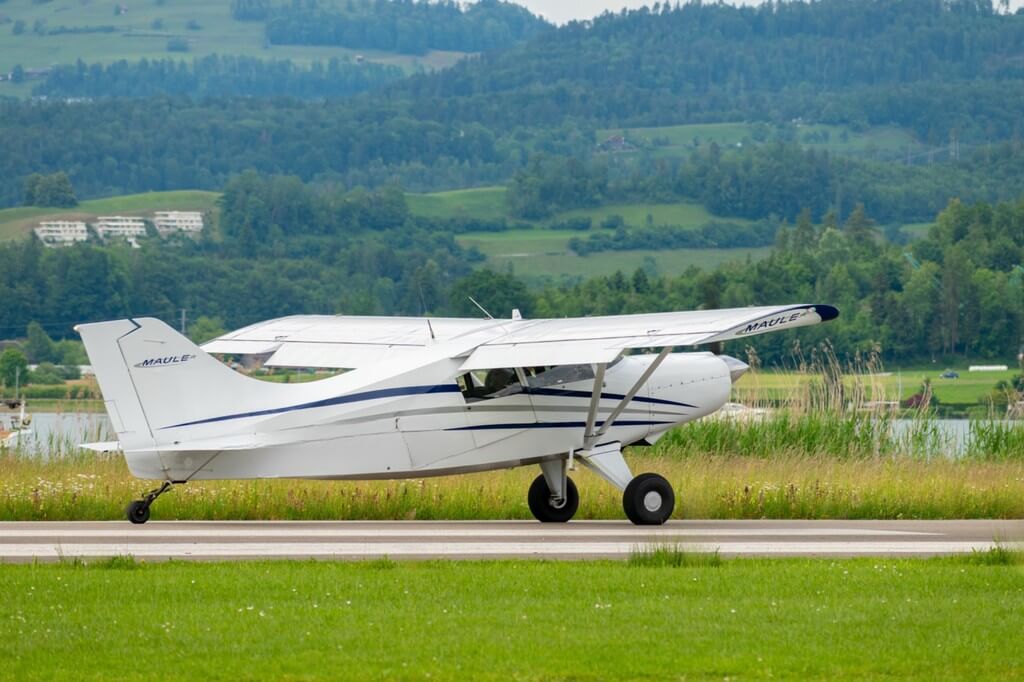
Maule aircraft occupy one of the most unique positions in general aviation.
They are not mass-market transportation airplanes.
They are not simple weekend flyers.
They are utility aircraft built for pilots who value short-field performance, versatility, backcountry capability, and real-world usefulness.
Whether you fly an M-4, M-5, M-6, M-7, M-8, M-9, MT-7, MX-7, or MXT-7, insurance companies evaluate Maule aircraft differently than many other piston singles.
The reason is simple.
Maule aircraft are often used differently.
At BWI Aviation Insurance, we work with aircraft owners across the country and analyze real aviation insurance renewal data to identify market trends by aircraft type. Maule aircraft frequently overlap with several underwriting categories that matter to insurance companies, including backcountry flying, tailwheel operations, Alaska operations, short-field performance, and utility aircraft usage.
That does not mean Maule aircraft are difficult to insure.
It means underwriters want to understand the pilot, the aircraft, and the mission.
Why Maule Aircraft Are Different
Maule aircraft are known for utility.
Owners often choose them because they can operate from places where many other aircraft simply do not belong.
Common Maule missions include:
- Backcountry flying
- Short-field operations
- Mountain flying
- Hunting trips
- Fishing trips
- Alaska operations
- Ranch and property access
- Personal transportation
- Recreational flying
That flexibility is one of the aircraft’s biggest strengths.
It is also one of the reasons insurance companies ask detailed questions during underwriting.
Maule Models Commonly Seen In The Market
Maule aircraft include a wide range of models and variants.
Common models include:
- M-4
- M-4-180C
- M-4-180V
- M-4-210
- M-4-210C
- M-4-210S
- M-4-220C
- M-5-180C
- M-5-200
- M-5-210C
- M-5-210TC
- M-5-220C
- M-5-235C
- M-6-235
- M-7-235
- M-7-235A
- M-7-235B
- M-7-235C
- M-7-260
- M-7-260C
- M-8-235
- M-9-230
- M-9-235
- MT-7-235
- MT-7-260
- MX-7-160
- MX-7-180
- MX-7-180A
- MX-7-180B
- MX-7-180C
- MX-7-235
- MXT-7-160
- MXT-7-180
- MXT-7-180A
Because the fleet includes so many variants, insurance companies do not evaluate every Maule the same way.
Engine, landing gear configuration, aircraft value, pilot experience, and intended use all matter.
The Pilot Matters More Than The Airplane
This is the first rule of aviation insurance.
Insurance companies are not simply evaluating a Maule.
They are evaluating the complete risk.
A pilot with:
- Significant tailwheel time
- Strong make-and-model experience
- Backcountry training
- Clean claims history
- Consistent recent flying
will generally be viewed very differently than a pilot transitioning into a Maule with limited tailwheel experience.
The aircraft may be capable.
The question is whether the pilot is prepared to operate it safely.
Tailwheel Experience Is Critical
Many Maule aircraft are tailwheel aircraft.
That matters.
Insurance companies pay close attention to tailwheel experience because tailwheel operations require additional skill, especially during takeoff, landing, crosswind operations, and operations on unimproved surfaces.
Underwriters commonly review:
- Total tailwheel time
- Recent tailwheel time
- Tailwheel time in make and model
- Training history
- Claims history
A pilot with strong tailwheel experience typically receives better underwriting consideration than a pilot transitioning into tailwheel aircraft for the first time.
Backcountry Operations Receive Additional Review
Maule aircraft are popular among pilots who want access to places beyond paved runways.
Insurance companies understand this.
They often ask whether the aircraft will be used for:
- Backcountry strips
- Gravel bars
- Mountain strips
- Ranch strips
- Remote operations
- Alaska flying
Backcountry flying does not automatically make insurance difficult.
But underwriters want to know whether the pilot has the experience and judgment required for that environment.
Aircraft Value Still Drives Premium
Like every aircraft category, hull value matters.
Maule aircraft values can vary widely based on model, condition, engine, avionics, modifications, and market demand.
A basic older Maule may carry a significantly different insured value than a newer, highly upgraded aircraft equipped for backcountry operations.
As aircraft value increases, insurance company exposure increases.
And as exposure increases, premium usually increases.
Claims History Remains One Of The Biggest Factors
Nothing affects insurability more consistently than claims history.
Insurance companies carefully evaluate:
- Prior claims
- Frequency of losses
- Severity of losses
- Recency of claims
A clean claims history can create better carrier competition.
Recent claims can create more underwriting questions.
That remains true regardless of aircraft type.
Training Can Improve Insurance Outcomes
For Maule owners, training is especially important.
Insurance companies may view the following favorably:
- Tailwheel training
- Maule-specific transition training
- Backcountry instruction
- Mountain flying instruction
- Recurrent training
- Safety seminars
Training reduces uncertainty.
And uncertainty is what underwriters dislike most.
A pilot who can document meaningful training is often easier to place with insurance companies.
Get Your Maule Aircraft Insurance Quote With BWI Today>>
Alaska Maule Insurance
Maule aircraft are especially attractive to Alaska pilots.
Their short-field performance and utility make them useful for remote operations, gravel strips, hunting, fishing, and backcountry access.
Insurance companies evaluate Alaska operations carefully because the environment can include:
- Remote terrain
- Gravel strips
- Mountain weather
- Limited infrastructure
- Float or ski operations depending on aircraft configuration
Experienced Alaska Maule pilots may receive strong underwriting consideration because insurers recognize the value of real operating experience.
What The Best Maule Insurance Risks Have In Common
The strongest Maule insurance applicants often have:
- Significant tailwheel time
- Time in Maule aircraft
- Clean claims histories
- Recent flight activity
- Backcountry or mountain training
- Accurate logbooks
- Clear aircraft usage
These factors help insurance companies understand and price the risk appropriately.
Why Work With BWI
BWI Aviation Insurance helps aircraft owners nationwide secure coverage for specialized aircraft, including Maule aircraft and other utility/backcountry airplanes.
Whether you fly an M-4, M-5, M-6, M-7, M-8, M-9, MX-7, MT-7, or MXT-7, our team understands how insurance companies evaluate tailwheel aircraft, backcountry exposure, Alaska operations, aircraft value, and pilot experience.
We work with leading aviation insurance companies to help owners compare available options based on their specific aircraft and mission profile.
Final Thoughts
Maule aircraft are built for pilots who want capability.
That capability is exactly why owners love them.
It is also why insurance companies take the time to understand the full risk before offering terms.
The good news is that Maule aircraft can be very insurable when paired with the right pilot, proper training, clean claims history, and clearly defined operations.
If you own a Maule or are considering buying one, the best insurance strategy is simple:
Build experience.
Document training.
Be clear about your mission.
Work with an aviation insurance specialist who understands utility and backcountry aircraft.
That combination gives you the best chance of securing strong coverage at a competitive premium.
bwifly.com / 800-666-4359
Continue Reading