
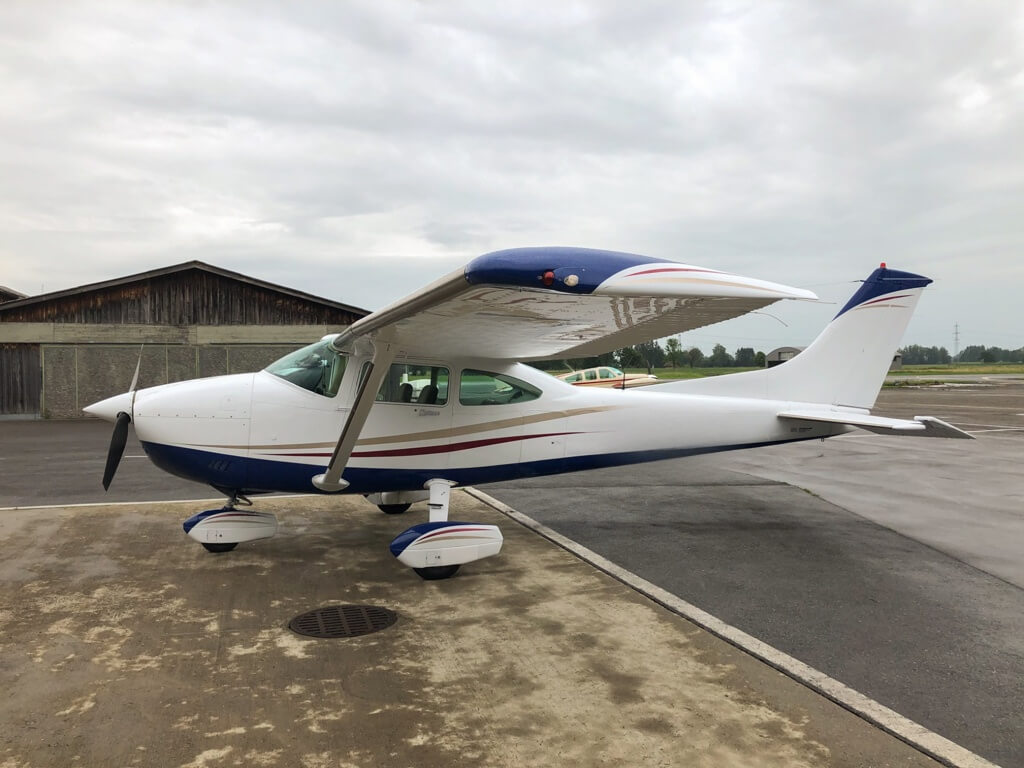
If you’re buying a Cessna 182, renewing an existing policy, or simply trying to understand what drives Skylane insurance rates, this guide is for you.
Few aircraft have earned the reputation of the Cessna 182.
For decades, the Skylane has been one of the most popular aircraft in general aviation because it can do almost everything well.
It’s fast enough for serious cross-country travel.
It’s forgiving enough for lower-time pilots.
It’s capable enough for mountain flying, IFR travel, and family adventures.
And it’s versatile enough to be used for everything from business transportation to backcountry exploration.
Because of that popularity, the Cessna 182 represents one of the largest aircraft categories in aviation insurance.
At BWI Aviation Insurance, we analyzed hundreds of Cessna insurance renewals during the first quarter of 2026 representing more than $2.2 million in annual premium volume.
The Cessna family was the largest aircraft segment in our entire Premium Intelligence Report.
This guide combines what we’ve learned from insuring thousands of Skylanes and analyzing real-world insurance data to help owners make smarter insurance decisions.
Why The Cessna 182 Is One Of The Most Insurable Aircraft In Aviation
Insurance companies generally like Skylanes.
That’s not something that can be said about every aircraft category.
The Cessna 182 offers:
- Predictable handling
- Excellent safety history
- Broad owner demographics
- Extensive training resources
- Strong maintenance support
- Large installed fleet
Insurance companies have decades of claims and underwriting data on the aircraft.
That familiarity creates confidence.
And confidence creates competition.
For aircraft owners, competition generally means better coverage options and more competitive pricing.
The Cessna 182 Models Covered In This Guide
The Skylane family includes a surprisingly wide variety of aircraft.
Common models include:
- 182P
- 182Q
- 182R
- 182RG
- 182S
- 182T
- R182
- T182
- T182T
- TR182
- F182Q
- FR182
- J182T
Although these aircraft share the Skylane name, insurance companies do not necessarily evaluate them the same way.
Aircraft value, complexity, performance, and pilot experience all influence underwriting decisions.
What Does Cessna 182 Insurance Cover?
A typical aircraft insurance policy includes two primary sections.
Liability Coverage
Liability coverage protects you if your aircraft causes injury to another person or damages someone else’s property.
This coverage may help pay for:
- Bodily injury claims
- Property damage claims
- Legal defense expenses
- Settlement costs
Liability coverage is often the most important part of an aircraft insurance policy.
Physical Damage (Hull) Coverage
Hull coverage protects your aircraft itself.
This includes:
- Ground accidents
- Taxi incidents
- Weather-related damage
- Hard landings
- Hangar damage
- Covered in-flight losses
The amount of hull coverage is generally based on the insured value of the aircraft.
What Determines Cessna 182 Insurance Cost?
This is the question every owner asks.
The answer is that insurance companies evaluate dozens of variables simultaneously.
However, several factors consistently carry the most weight.
Pilot Experience
Insurance companies carefully evaluate:
- Total flight time
- Time in make and model
- Recent flight activity
- Instrument rating
- Training history
A highly experienced pilot often receives stronger underwriting consideration than a lower-time pilot.
Claims History
Nothing impacts insurance pricing more consistently than prior losses.
Insurance companies carefully review:
- Claim frequency
- Claim severity
- Recent losses
Pilots with clean records generally enjoy more options and stronger pricing.
Aircraft Value
The insurance company’s exposure is directly tied to the value of the aircraft.
Consider these examples:
An older 182P may be insured for:
- $125,000
- $150,000
- $200,000
A newer 182T may be insured for:
- $500,000
- $600,000
- $700,000+
As aircraft value increases, premiums generally increase as well.
Training
Insurance companies love training.
Pilots who complete:
- Flight reviews
- Recurrent training
- Simulator programs
- Safety seminars
- Transition training
often receive stronger underwriting consideration.
Get Your Cessna 182 Aircraft Insurance Quote With BWI Today>>
Fixed Gear Versus Retractable Gear Skylanes
One of the most common buyer questions involves retractable gear aircraft.
Models include:
- 182RG
- R182
- TR182
Retractable gear aircraft introduce additional complexity and historically generate certain claim types such as:
- Gear-up landings
- Gear collapse incidents
- Improper gear operation
However, qualified pilots generally continue to find strong carrier interest.
The pilot usually matters more than the landing gear.
Turbocharged Skylane Insurance
Turbocharged models include:
- T182
- T182T
- TR182
Many buyers assume turbocharged aircraft are significantly harder to insure.
That is usually not true.
Insurance companies are generally comfortable insuring turbocharged aircraft when the pilot has:
- Appropriate experience
- Strong IFR proficiency
- Relevant training
The issue is rarely the turbocharger.
The issue is whether the pilot is prepared to operate the aircraft safely.
Why Instrument Ratings Matter
Few qualifications improve a Skylane owner’s insurance profile more consistently than an instrument rating.
The Cessna 182 is frequently used for:
- Business travel
- Cross-country transportation
- Family vacations
- IFR operations
Insurance companies know this.
An instrument-rated pilot demonstrates:
- Additional training
- Better weather judgment
- Stronger proficiency
- Commitment to safety
As a result, instrument-rated pilots often receive more favorable underwriting outcomes.
Why Some Cessna Owners Pay More Than Others
Many owners compare premiums and wonder why they differ.
The answer is that insurance companies evaluate risk, not airplanes.
Two identical aircraft can produce very different premiums because of differences in:
- Experience
- Claims history
- Instrument ratings
- Training
- Recent flight activity
- Aircraft value
The airplane may be the same.
The risk profile is not.
How To Lower Your Cessna 182 Insurance Premium
There are several practical ways to improve your insurance profile.
Build more time in type.
Maintain an instrument rating.
Participate in annual recurrent training.
Fly consistently throughout the year.
Maintain accurate logbooks.
Keep a clean claims history.
Review aircraft value annually.
Complete transition training when moving into a new aircraft.
Insurance companies consistently reward pilots who invest in proficiency and professionalism.
What Underwriters Really Look For
When evaluating a Skylane owner, underwriters typically focus on:
- Total flight time
- Time in make and model
- Instrument rating
- Claims history
- Recent flight activity
- Training history
- Aircraft value
- Aircraft usage
These factors collectively determine how attractive a risk appears to the insurance company.
Why The Current Insurance Market Is Favorable
The good news for Skylane owners is that today’s market remains highly competitive.
Insurance companies continue to show strong interest in qualified owner-flown aircraft.
The increased competition among carriers is creating opportunities for many owners to secure favorable coverage and pricing.
While every risk remains unique, current market conditions are significantly better than those experienced during the hard market years.
Which Insurance Companies Insure Cessna 182s?
Several major aviation insurance carriers actively insure Skylanes.
These include companies such as:
- Global Aerospace
- AIG
- Old Republic
- Starr
- USSIC
- IAT
- AIM
- Beacon
Each carrier has different underwriting preferences and appetites.
This is one reason why comparing multiple markets remains important.
Why Thousands Of Skylane Owners Trust BWI
BWI Aviation Insurance has helped thousands of Cessna owners secure coverage for their aircraft.
Whether you fly a 182P, 182Q, 182RG, 182S, 182T, R182, T182, or T182T, our team understands the underwriting factors that influence pricing and carrier appetite.
We work with leading aviation insurance companies and help aircraft owners compare options based on their specific aircraft, experience level, and mission profile.
Final Thoughts
The Cessna 182 remains one of the best aircraft ownership values in general aviation.
Its combination of performance, utility, reliability, and insurability continues to make it one of the most popular aircraft ever built.
The good news is that today’s insurance market remains favorable for qualified Skylane owners.
By understanding how insurance companies evaluate risk—and by focusing on the factors within your control—you can position yourself for better coverage, stronger carrier competition, and more favorable pricing for years to come.
Whether you’re buying your first Skylane or renewing a policy on an aircraft you’ve owned for decades, understanding the insurance process is one of the smartest investments you can make as an aircraft owner.
bwifly.com / 800-666-4359
Continue Reading