
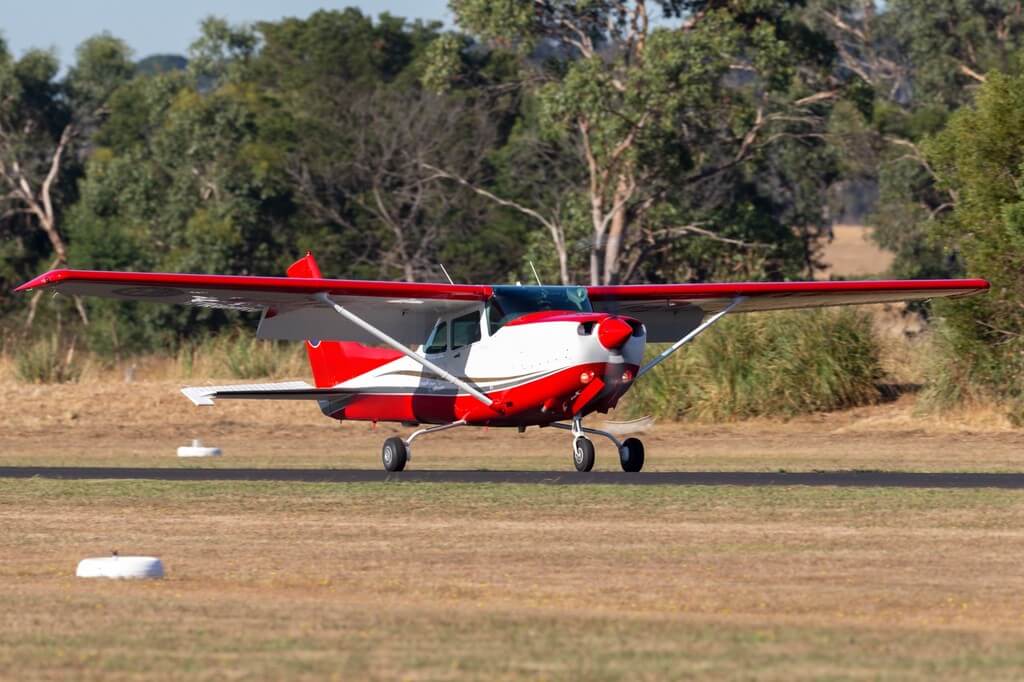
One of the most common questions we receive from Cessna owners is:
“How much more does a retractable gear 182 cost to insure than a fixed gear 182?”
It’s a fair question.
Many aircraft buyers find themselves deciding between a traditional Skylane and a retractable gear variant such as the 182RG, R182, or TR182.
While performance, acquisition cost, maintenance, and mission profile all influence the decision, insurance is often one of the least understood parts of aircraft ownership.
The reality is that retractable gear aircraft do not automatically produce dramatically higher insurance premiums.
In many cases, pilot qualifications, claims history, aircraft value, and experience have a much larger impact than the landing gear itself.
As part of BWI Aviation Insurance’s Q1 2026 Premium Intelligence Report, we analyzed hundreds of Cessna insurance renewals representing more than $2.2 million in annual premium.
The findings reveal that insurance companies continue to view the Cessna 182 family favorably, regardless of landing gear configuration.
However, there are important differences every aircraft owner should understand before purchasing their next airplane.
Understanding The Cessna 182 Family
The Skylane family includes a wide range of aircraft.
Models represented within our database include:
- 182P
- 182Q
- 182R
- 182RG
- 182S
- 182T
- R182
- T182
- T182T
- TR182
- F182Q
- FR182
- J182T
While these aircraft share a common lineage, they are not all viewed identically by insurance companies.
Some are fixed gear aircraft.
Some are retractable gear aircraft.
Some are turbocharged.
Each introduces different underwriting considerations.
Why Insurance Companies Care About Landing Gear
Insurance companies spend a tremendous amount of time studying claims.
One trend has remained remarkably consistent throughout aviation history.
Landing gear claims happen.
A lot.
For retractable gear aircraft, some of the most common claims involve:
- Gear-up landings
- Partial gear extension events
- Gear collapse incidents
- Improper gear operation
- Mechanical gear failures
The vast majority of these events are not catastrophic.
However, they can still result in expensive repairs.
Insurance companies know this.
As a result, retractable gear aircraft often receive slightly different underwriting treatment than fixed gear aircraft.
Fixed Gear Skylane Insurance
The traditional fixed gear Skylane remains one of the most respected aircraft in general aviation.
Popular models include:
- 182P
- 182Q
- 182R
- 182S
- 182T
Insurance companies generally view these aircraft very favorably.
Why?
Because they have:
- Decades of operational history
- Predictable flight characteristics
- Strong safety records
- Lower mechanical complexity
- Broad owner bases
Many pilots transition into a Skylane as their first serious cross-country aircraft.
Insurance companies have extensive experience underwriting these risks.
Get Your Cessna 182 Aircraft Insurance Quote With BWI Today>>
Retractable Gear Skylane Insurance
Retractable gear variants include:
- 182RG
- R182
- TR182
These aircraft offer several advantages.
Owners often appreciate:
- Increased cruise speed
- Improved aerodynamic efficiency
- Enhanced performance
However, the retractable gear system introduces additional complexity.
Insurance companies recognize that gear-related claims remain one of the most common categories of aircraft damage.
This does not mean retractable gear aircraft are difficult to insure.
It simply means underwriters may ask more questions regarding pilot experience and training.
How Much More Does Retractable Gear Insurance Cost?
This is the question most buyers really want answered.
Unfortunately, there is no universal number.
Insurance companies do not use a simple formula such as:
“Retractable gear equals X percent more premium.”
Instead, they evaluate the entire risk profile.
For example:
A pilot with:
- 3,000 hours total time
- 1,000 hours retractable gear experience
- Instrument rating
- Clean claims history
may receive a lower premium on a retractable gear aircraft than a low-time pilot operating a fixed gear Skylane.
The pilot matters more than the landing gear.
Pilot Experience Matters More Than Aircraft Type
One of the biggest misconceptions in aviation insurance is that aircraft selection alone determines premium.
In reality, underwriters focus heavily on pilot qualifications.
They evaluate:
- Total flight time
- Time in make and model
- Retractable gear experience
- Instrument rating
- Claims history
- Recent flight activity
- Annual training
A pilot who has demonstrated proficiency in retractable gear aircraft often receives much stronger underwriting consideration than a pilot operating such an aircraft for the first time.
The Importance Of Transition Training
Insurance companies frequently place significant emphasis on transition training.
This is especially true when a pilot moves from a fixed gear aircraft into a retractable gear model.
Training helps reduce:
- Gear-up landings
- Operational mistakes
- Aircraft-specific errors
Many underwriters reward pilots who complete structured transition training programs.
In some cases, training may even be required before coverage becomes effective.
Aircraft Value Often Has A Bigger Impact Than Landing Gear
Many owners are surprised to learn that hull value often affects premiums more than landing gear configuration.
Consider the following examples:
A basic 182P insured for $125,000.
A modernized 182Q insured for $225,000.
A fully upgraded R182 insured for $350,000.
A late-model T182T insured for $700,000.
The insurance company’s exposure increases dramatically as aircraft values rise.
As a result, premiums often rise with value regardless of whether the aircraft has fixed or retractable gear.
Why Instrument Ratings Matter
The Cessna 182 is one of the most popular IFR platforms in general aviation.
Insurance companies place substantial value on instrument ratings because they demonstrate:
- Additional training
- Increased proficiency
- Better decision-making skills
- Commitment to aviation education
Many underwriters view instrument-rated pilots more favorably than non-instrument-rated pilots.
This can have a meaningful impact on insurance pricing.
Claims History Remains Critical
Nothing influences insurance pricing more consistently than claims history.
Pilots with clean records often benefit from:
- More carrier options
- Better pricing stability
- Greater underwriting flexibility
Pilots with recent losses may experience reduced carrier appetite regardless of aircraft type.
Whether you fly a 182Q or an R182, maintaining a clean claims history remains one of the strongest ways to improve your insurance profile.
Which Aircraft Is Easier To Insure?
For qualified pilots, both fixed gear and retractable gear Skylanes are generally very insurable.
Insurance companies have decades of underwriting experience with both aircraft categories.
The larger challenge is usually pilot qualifications rather than aircraft selection.
An experienced instrument-rated pilot with strong training habits will typically attract favorable carrier interest regardless of gear configuration.
Which Aircraft Should You Buy?
Insurance should absolutely be considered during the buying process.
However, it should not be the primary decision-maker.
Instead, focus on:
- Your mission
- Budget
- Performance requirements
- Maintenance expectations
- Pilot experience
If a retractable gear aircraft better serves your mission, insurance alone is rarely a reason to avoid it.
Likewise, if a fixed gear Skylane provides everything you need, the simplicity and lower maintenance costs may make it the ideal choice.
The best aircraft is the one that best supports your flying objectives.
How Skylane Owners Can Improve Their Insurance Profile
Whether you fly a fixed gear or retractable gear 182, several actions can improve underwriting outcomes.
Maintain an instrument rating.
Participate in annual recurrent training.
Build time in make and model.
Complete transition training.
Maintain accurate logbooks.
Keep a clean claims history.
Fly consistently throughout the year.
Insurance companies consistently reward professionalism and ongoing proficiency.
Why Thousands Of Cessna Owners Trust BWI
BWI Aviation Insurance has helped thousands of Cessna owners insure their aircraft.
Whether you fly a 182P, 182Q, 182RG, R182, T182T, or another Skylane variant, our team understands the underwriting factors that influence pricing and carrier appetite.
We work with leading aviation insurance carriers and help aircraft owners compare options based on their specific aircraft, experience level, and mission profile.
Final Thoughts
The difference between fixed gear and retractable gear insurance is often much smaller than many aircraft buyers expect.
While retractable gear aircraft introduce additional underwriting considerations, insurance companies ultimately focus on the complete risk profile.
Pilot experience, instrument proficiency, claims history, training, and aircraft value frequently matter more than the landing gear itself.
For qualified pilots, both fixed gear and retractable gear Skylanes remain highly insurable aircraft.
The good news is that today’s market remains competitive, giving many Cessna owners opportunities to secure favorable coverage and pricing regardless of which Skylane they choose.
The best decision is usually not the aircraft with the cheapest insurance.
It’s the aircraft that best supports your mission while allowing you to operate safely, confidently, and efficiently for years to come.
bwifly.com / 800-666-4359
Continue Reading