
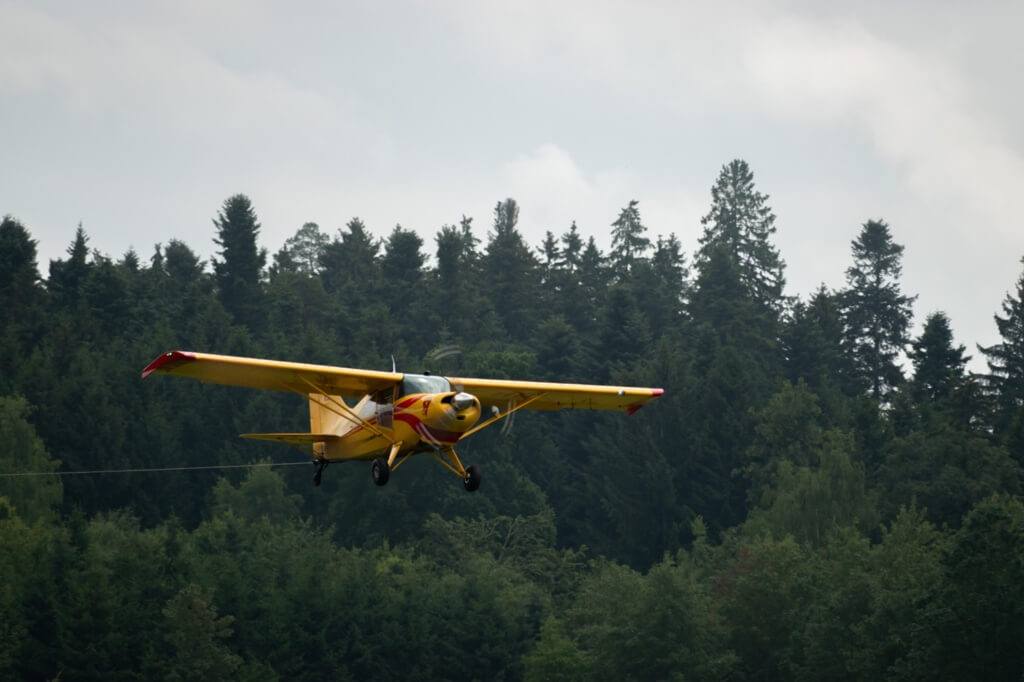
Maule aircraft occupy a unique place in aviation.
They’re not airline trainers.
They’re not luxury transportation aircraft.
They’re not weekend sightseeing airplanes.
A Maule is a utility machine.
Owners buy them because they want capability.
They want an aircraft that can operate from places where many airplanes never go.
That capability is exactly why insurance companies spend extra time evaluating Maule risks.
At BWI Aviation Insurance, we’ve helped insure aircraft owners throughout the United States, including many owners operating specialized utility aircraft such as Maule models.
Whether you fly an M-4, M-5, M-6, M-7, M-8, M-9, MX-7, MT-7, or MXT-7, insurance companies generally approach Maule underwriting differently than they approach a typical Cessna 172 or Piper Archer.
The reason is simple.
The airplane is often being used differently.
And when the mission changes, underwriting changes.
Understanding what insurance companies actually look for can help you become a stronger insurance risk and potentially improve your long-term insurance outcomes.
The Pilot Matters More Than The Airplane
The biggest misconception in aviation insurance is that companies are primarily evaluating the aircraft.
They’re not.
The pilot is almost always the first thing underwriters review.
Consider two examples.
Pilot A owns a Maule M-7.
He has:
- 2,500 hours total time
- 800 hours tailwheel time
- 500 hours in Maule aircraft
- Annual recurrent training
- Clean claims history
Pilot B owns the exact same aircraft.
He has:
- 250 hours total time
- 15 hours tailwheel time
- 5 hours in a Maule
- No recent training
The airplane didn’t change.
The risk did.
That difference often impacts pricing more than the aircraft itself.
Tailwheel Experience Is One Of The First Things Underwriters Review
For many Maule owners, tailwheel experience is one of the most important underwriting factors.
Insurance companies know that tailwheel operations require additional skill and proficiency.
They frequently review:
- Total tailwheel time
- Recent tailwheel time
- Tailwheel time in make and model
- Training history
Pilots with significant tailwheel experience often receive much stronger underwriting consideration.
Why?
Because insurers have decades of claims data showing that aircraft-specific and tailwheel-specific experience matters.
Time In Make And Model Matters
A pilot with:
- 5,000 total hours
is not automatically a better risk than a pilot with:
- 2,000 total hours
- 500 Maule hours
Insurance companies understand that aircraft-specific proficiency matters.
Maule aircraft have unique handling characteristics.
Pilots who spend meaningful time in type generally create more underwriting confidence.
This is especially true for:
- M-5 series
- M-6 series
- M-7 series
- M-8 series
- M-9 series
which are often operated in more demanding environments.
Backcountry Experience Receives Significant Attention
Few aircraft are more closely associated with backcountry flying than Maule aircraft.
Insurance companies know this.
As a result, they often ask:
- Will the aircraft be used off-airport?
- Will it operate from gravel strips?
- Will it be used in mountain environments?
- Will it be used for hunting trips?
- Will it operate in remote locations?
The answers matter.
Backcountry flying does not automatically create an insurance problem.
However, insurers want to understand whether the pilot has the training and experience necessary to operate safely in those environments.
Alaska Operations Matter
Maule aircraft have developed a strong following throughout Alaska.
Their combination of:
- Useful load
- Short-field performance
- Simplicity
- Utility
makes them attractive to Alaska pilots.
Insurance companies evaluate Alaska risks carefully because they often involve:
- Remote strips
- Gravel runways
- Mountain terrain
- Variable weather
- Limited infrastructure
Pilots with significant Alaska experience often receive stronger underwriting consideration because insurers recognize the skill required to operate safely in those conditions.
Mountain Flying Experience Helps
Many Maule owners regularly operate in mountainous terrain.
Insurance companies frequently ask about:
- Mountain flying experience
- Backcountry training
- Recent mountain operations
- Geographic operating area
Mountain flying introduces operational challenges that do not exist in flatter environments.
Underwriters want to understand whether the pilot has experience managing those challenges.
Aircraft Value Still Matters
Many owners assume insurance companies focus exclusively on pilot qualifications.
That’s not true.
Hull value remains one of the largest pricing factors.
Today’s Maule market includes aircraft ranging from relatively basic older models to highly upgraded backcountry machines.
Factors influencing value include:
- Engine upgrades
- Avionics packages
- STOL modifications
- Interior upgrades
- Paint condition
- Float installations
As aircraft value increases, insurance company exposure increases.
And as exposure increases, premiums generally increase as well.
Claims History Remains One Of The Biggest Factors
Nothing gets an underwriter’s attention faster than claims history.
Insurance companies carefully review:
- Previous claims
- Loss frequency
- Loss severity
- Recency of claims
Pilots with clean records often enjoy:
- Better pricing
- More carrier options
- Greater underwriting flexibility
Claims do not automatically make insurance difficult.
However, they almost always create additional underwriting questions.
Recent Flight Activity Matters
One of the most overlooked factors in aviation insurance is recency.
Insurance companies prefer active pilots.
A pilot who flew:
- 150 hours last year
is often viewed differently than a pilot who flew:
- 10 hours last year
Even if total flight time is similar.
Flying proficiency is perishable.
Insurance companies know that active pilots generally maintain stronger skills than inactive pilots.
Training Creates Confidence
Few things improve underwriting outcomes more consistently than training.
Insurance companies often view the following favorably:
- Tailwheel instruction
- Maule transition training
- Backcountry instruction
- Mountain flying courses
- Annual recurrent training
- Safety seminars
Training demonstrates professionalism.
It also reduces uncertainty.
And uncertainty is what underwriters dislike most.
Aircraft Usage Matters
Insurance companies want to understand exactly how the aircraft will be used.
Common Maule missions include:
- Recreational flying
- Hunting trips
- Fishing trips
- Ranch operations
- Property access
- Backcountry transportation
- Alaska operations
Different missions create different risk profiles.
Understanding those missions helps insurers evaluate exposure more accurately.
Get Your Maule Aircraft Insurance Quote With BWI Today>>
What The Best Maule Risks Have In Common
After reviewing thousands of utility aircraft policies over the years, certain patterns consistently emerge.
The strongest Maule insurance risks often have:
- Significant tailwheel time
- Meaningful Maule experience
- Clean claims histories
- Recent flight activity
- Backcountry training
- Mountain flying experience
- Accurate logbooks
These factors consistently create stronger underwriting outcomes.
Why Today’s Market Is Favorable
The good news is that insurance companies continue competing for qualified owner-flown aircraft.
Experienced Maule owners remain attractive risks.
For pilots who combine strong experience with good training habits and clean claims histories, today’s market often provides more opportunities than were available during the hard-market years.
Why Maule Owners Trust BWI
BWI Aviation Insurance helps aircraft owners secure coverage for specialized aircraft across the country.
Whether you fly an M-4, M-5, M-6, M-7, M-8, M-9, MT-7, MX-7, or MXT-7, our team understands the underwriting factors that influence pricing and carrier appetite.
We work with leading aviation insurance carriers and help aircraft owners compare options based on their aircraft, experience level, and mission profile.
Final Thoughts
Insurance companies do not insure Maule aircraft the same way they insure a typical trainer or transportation aircraft.
They understand that Maule owners often operate in environments that demand more from both the airplane and the pilot.
Because of that, underwriters focus heavily on:
- Tailwheel experience
- Time in make and model
- Backcountry experience
- Mountain flying
- Alaska operations
- Training
- Claims history
The good news is that many of those factors are within your control.
By understanding how insurance companies evaluate risk, you can strengthen your insurance profile, improve your insurability, and position yourself for better coverage and more competitive pricing for years to come.
bwifly.com / 800-666-4359
Continue Reading