
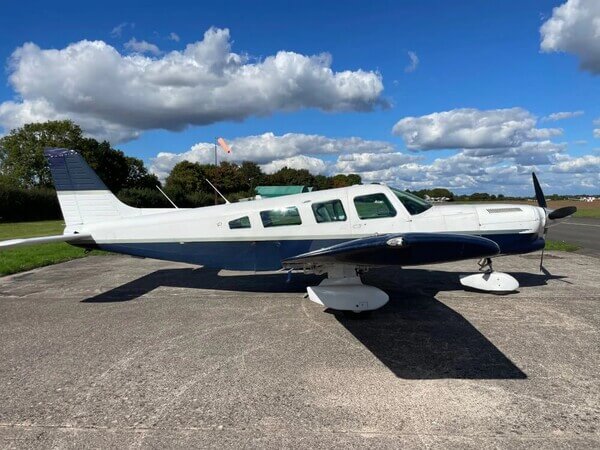
If you’re buying a Piper PA-32, renewing your current policy, or simply trying to understand what drives Saratoga, Lance, and Cherokee Six insurance rates, this guide will help you understand how aviation insurance companies evaluate risk and what you can do to secure the best possible coverage.
Few aircraft families have earned the reputation of the Piper PA-32.
For decades, the Cherokee Six, Lance, and Saratoga have been trusted by pilots who need more capability than a typical four-seat aircraft can provide.
Whether transporting family, business associates, cargo, or traveling long distances under IFR, the PA-32 remains one of the most respected personal transportation aircraft ever built.
Because of their utility, cabin size, payload capacity, and cross-country capability, PA-32 aircraft represent an important segment of the aviation insurance market.
At BWI Aviation Insurance, we help thousands of aircraft owners compare coverage options every year and work with the leading aviation insurance carriers actively competing for PA-32 business.
This guide combines what we’ve learned from insuring thousands of aircraft owners and helping pilots navigate today’s aviation insurance marketplace.
Get Your Piper PA-32 Insurance Quote With BWI Today>>
Why The Piper PA-32 Is One Of The Most Popular Personal Transportation Aircraft In Aviation
Insurance companies generally like PA-32 aircraft.
The platform offers several characteristics underwriters value:
- Proven operating history
- Stable flight characteristics
- Strong owner community
- Excellent parts availability
- Extensive maintenance support
- Large installed fleet
- Broad pilot familiarity
Insurance companies have decades of claims and underwriting experience with the PA-32 family.
That familiarity creates confidence.
And confidence creates competition.
For aircraft owners, competition generally means:
- Better coverage options
- More carrier choices
- Competitive pricing
- Easier renewals
The Piper PA-32 Models Covered In This Guide
The PA-32 family includes several popular aircraft variants.
Common models include:
- Cherokee Six 260
- Cherokee Six 300
- PA-32-300
- PA-32-260
- Lance
- Lance II
- Turbo Lance II
- Saratoga
- Saratoga SP
- Turbo Saratoga
- Saratoga II HP
- Saratoga II TC
Although these aircraft share the PA-32 designation, insurance companies do not evaluate them identically.
Aircraft value, retractable gear, turbocharging, pilot experience, and intended use all influence underwriting decisions.
What Does Piper PA-32 Insurance Cover?
A typical aircraft insurance policy contains two primary sections.
Liability Coverage
Liability coverage protects you if your aircraft causes bodily injury or property damage to another party.
This coverage may help pay for:
- Bodily injury claims
- Property damage claims
- Legal defense costs
- Settlement expenses
- Passenger liability claims
Liability protection is often the most important component of an aviation insurance policy.
Hull Coverage
Hull coverage protects the aircraft itself.
This can include:
- Ground accidents
- Taxi incidents
- Hangar damage
- Wind damage
- Storm damage
- Hard landings
- Covered in-flight losses
The amount of hull coverage is generally based on the insured value of the aircraft.
What Determines Piper PA-32 Insurance Cost?
Insurance companies evaluate dozens of variables simultaneously.
However, several factors consistently carry the most weight.
Pilot Experience
Underwriters review:
- Total flight time
- Time in make and model
- Retractable gear experience
- Instrument rating
- Recent flight activity
- Training history
Claims History
Insurance companies evaluate:
- Prior claims
- Claim frequency
- Claim severity
- Recent losses
Pilots with clean claims histories often receive stronger underwriting consideration.
Aircraft Value
The insurance company’s exposure is directly tied to aircraft value.
A Cherokee Six insured for $150,000 presents a much different exposure than a Saratoga insured for $700,000.
Training
Insurance companies consistently reward pilots who complete:
- Flight reviews
- Recurrent training
- FAAST programs
- Safety seminars
- Simulator training
- Transition training
Training reduces uncertainty and improves underwriting confidence.
Get Your Aircraft Insurance Quote With BWI>>
Fixed Gear Versus Retractable Gear PA-32 Insurance
One of the most significant underwriting differences within the PA-32 family involves landing gear configuration.
Fixed-gear aircraft such as:
- Cherokee Six 260
- Cherokee Six 300
are generally viewed differently than:
- Lance
- Turbo Lance
- Saratoga
- Turbo Saratoga
Retractable landing gear introduces additional complexity and additional claim exposure.
Insurance companies often place additional emphasis on:
- Retractable gear experience
- Time in make and model
- Aircraft-specific training
- Recent flight activity
That does not mean retractable PA-32 aircraft are difficult to insure.
It simply means underwriters may pay closer attention to pilot qualifications.
Why Instrument Ratings Matter
The PA-32 family is commonly used as a serious transportation aircraft.
Owners frequently use these aircraft for:
- Business travel
- Family transportation
- Long cross-country flights
- IFR operations
- Mountain flying
Insurance companies know this.
As a result, they place substantial value on instrument ratings.
An instrument-rated pilot often receives more favorable underwriting consideration than a non-instrument-rated pilot.
The rating demonstrates:
- Additional training
- Better weather judgment
- Greater proficiency
- Commitment to aviation safety
For many PA-32 owners, obtaining an instrument rating remains one of the most effective ways to improve both safety and insurability.
Turbocharged PA-32 Insurance
Turbocharged aircraft such as:
- Turbo Lance II
- Turbo Saratoga
- Saratoga II TC
offer significant performance advantages.
Higher operating altitudes, improved climb performance, and enhanced cross-country capability make them attractive to many owners.
From an insurance standpoint, turbocharged aircraft often receive additional scrutiny regarding:
- High-altitude operations
- IFR experience
- Cross-country flying
- Turbocharged aircraft experience
However, qualified pilots continue to enjoy strong carrier interest in today’s market.
Why Some PA-32 Owners Pay More Than Others
Many owners compare premiums and wonder why they differ.
The answer is that insurance companies evaluate risk, not airplanes.
Two identical Saratogas can generate very different premiums because of differences in:
- Pilot experience
- Claims history
- Instrument ratings
- Training
- Recent flight activity
- Aircraft value
The airplane may be the same.
The risk profile is not.
How To Lower Your Piper PA-32 Insurance Premium
There are several practical ways to improve your insurance profile.
- Build more time in type
- Maintain an instrument rating
- Participate in annual recurrent training
- Fly consistently throughout the year
- Maintain accurate logbooks
- Complete transition training
- Review hull value annually
- Keep a clean claims history
Insurance companies consistently reward pilots who invest in proficiency and professionalism.
What Underwriters Really Look For
When evaluating a PA-32 owner, underwriters typically focus on:
- Total flight time
- Time in make and model
- Instrument rating
- Claims history
- Recent flight activity
- Training history
- Aircraft value
- Aircraft usage
These factors collectively determine how attractive a risk appears to the insurance company.
Which Insurance Companies Insure Piper PA-32 Aircraft?
Several major aviation insurance carriers actively insure PA-32 aircraft.
These include:
- Global Aerospace
- AIG
- Old Republic
- Starr
- USSIC
- IAT
- AIM
- Beacon
Each carrier has different underwriting preferences and appetites.
This is one reason comparing multiple markets remains important.
Why The Current Insurance Market Is Favorable
The good news for PA-32 owners is that today’s market remains highly competitive.
Insurance companies continue to show strong interest in qualified owner-flown aircraft.
The increased competition among carriers is creating opportunities for many owners to secure favorable coverage and pricing.
While every risk remains unique, current market conditions remain significantly better than those experienced during the hard market years.
Why Thousands Of Piper Owners Trust BWI
BWI Aviation Insurance has helped thousands of Piper owners secure coverage for their aircraft.
Whether you fly a Cherokee Six, Lance, Turbo Lance, Saratoga, or Turbo Saratoga, our team understands the underwriting factors that influence pricing and carrier appetite.
We work with leading aviation insurance companies and help aircraft owners compare options based on their specific aircraft, experience level, and mission profile.
Final Thoughts
The Piper PA-32 remains one of the most capable and practical aircraft ownership values in general aviation.
Its combination of payload, cabin comfort, range, reliability, and versatility continues to make it one of the most popular personal transportation aircraft ever built.
The good news is that today’s insurance market remains favorable for qualified PA-32 owners.
By understanding how insurance companies evaluate risk—and by focusing on the factors within your control—you can position yourself for better coverage, stronger carrier competition, and more favorable pricing for years to come.
Whether you’re buying your first Cherokee Six or renewing a policy on a Saratoga you’ve owned for decades, understanding the insurance process is one of the smartest investments you can make as an aircraft owner.
bwifly.com / 800-666-4359
Continue Reading