
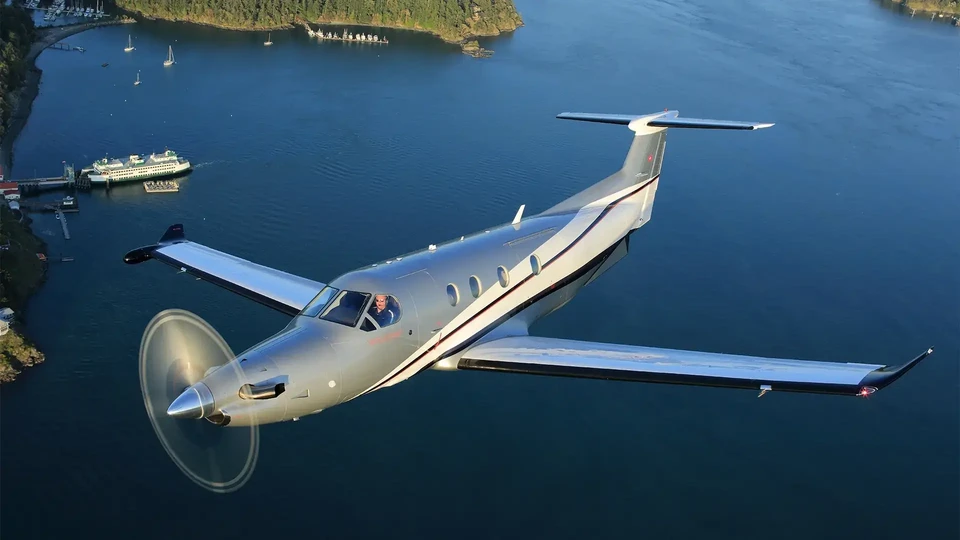
The Pilatus PC-12 is one of the most respected turbine aircraft in the world.
It is also one of the most heavily scrutinized aircraft from an underwriting perspective.
Many owners are surprised to learn that insurance companies often spend far more time evaluating the pilot than evaluating the aircraft itself.
Why can one PC-12 owner receive multiple competitive insurance quotes while another struggles to obtain favorable terms?
The answer is simple.
Insurance companies are not just evaluating the airplane.
They are evaluating the entire risk.
At BWI Aviation Insurance, we work with aircraft owners across the country and help operators compare coverage through leading aviation insurance carriers.
After reviewing thousands of aviation insurance submissions over the years, one thing becomes very clear:
For turbine aircraft, pilot qualifications often matter more than the aircraft itself.
Understanding how underwriters evaluate risk can help position you for stronger coverage options, increased carrier competition, and potentially lower insurance costs.
Get Your Aircraft Insurance Quote With BWI Today>>
The First Thing Underwriters Evaluate Is The Pilot
Many aircraft owners assume insurance companies spend most of their time evaluating the aircraft.
In reality, underwriters often spend significantly more time evaluating the pilot.
Consider these two examples.
Pilot A owns a PC-12 NGX.
He has:
- 5,000 hours total time
- 2,500 hours turbine
- 800 hours PC-12
- Instrument proficiency
- Annual simulator training
- No claims
- 150 hours flown last year
Pilot B owns the same aircraft.
He has:
- 1,000 hours total time
- 50 hours turbine
- 10 hours PC-12
- Limited recent training
- Limited recent flight activity
Those pilots represent very different risks.
The aircraft didn’t change.
The pilot did.
That difference often has a greater impact on insurance pricing than the aircraft itself.
Turbine Experience Is One Of The Most Important Factors
Few underwriting factors carry more weight than turbine experience.
Insurance companies know turbine aircraft operate differently than piston aircraft.
Pilots must understand:
- High-altitude operations
- Pressurization systems
- Turbine engine management
- Advanced avionics
- Complex aircraft systems
- Performance planning
As a result, underwriters carefully review:
- Total turbine time
- Pilot-in-command turbine time
- Recent turbine activity
- Turbine training history
A pilot with substantial turbine experience often receives significantly stronger underwriting consideration.
Time In A PC-12 Matters
After reviewing turbine experience, underwriters often focus on time in make and model.
For PC-12 owners, this can be a major factor.
Insurance companies know aircraft-specific experience matters.
A pilot with hundreds of hours in a PC-12 generally presents a different risk than someone transitioning into the aircraft for the first time.
Even highly experienced turbine pilots often receive additional underwriting review when moving into a new aircraft type.
Instrument Proficiency Carries Significant Weight
The PC-12 is fundamentally a transportation aircraft.
Owners routinely use these aircraft for:
- Business travel
- Corporate transportation
- Family travel
- Long cross-country flights
- Weather-sensitive missions
Insurance companies know this.
As a result, they place substantial value on instrument proficiency.
An operator who regularly flies IFR and maintains instrument currency often receives stronger underwriting consideration than a pilot with limited instrument activity.
Simulator Training Matters More Than Many Owners Realize
One of the biggest differences between turbine underwriting and piston underwriting is the emphasis on simulator training.
Insurance companies consistently favor operators who participate in:
- FlightSafety International programs
- Simcom training
- Factory-approved training
- Recurrent simulator programs
- Emergency procedure training
Why?
Because simulator training allows pilots to practice scenarios that cannot safely be replicated in the aircraft.
Training creates confidence.
Confidence creates competition among insurance carriers.
Annual Recurrent Training Is Expected
Most insurance companies expect PC-12 operators to complete annual recurrent training.
Underwriters often review:
- Training provider
- Completion dates
- Recurrent curriculum
- Simulator participation
- Aircraft-specific training
Pilots who invest in annual training generally receive stronger underwriting outcomes.
Single-Pilot Operations Receive Additional Scrutiny
One of the most important underwriting considerations for many PC-12 owners is operational structure.
Insurance companies evaluate:
- Single-pilot operations
- Two-pilot operations
- Professional crew operations
- Owner-flown operations
Some underwriters view two-pilot operations more favorably because of the additional operational oversight.
However, highly qualified owner-flown operators continue to secure excellent coverage.
The key factor remains pilot qualification and training.
Get Your Pilatus PC-12 Insurance Quote With BWI>>
Claims History Is Still King
Nothing influences underwriting decisions more consistently than claims history.
Insurance companies carefully review:
- Previous claims
- Loss frequency
- Loss severity
- Recency of losses
Operators with clean records often benefit from:
- Better pricing
- More carrier options
- Greater underwriting flexibility
A claim does not automatically make insurance difficult.
However, it frequently generates additional questions and underwriting scrutiny.
Insurance companies view prior losses as one of the strongest predictors of future outcomes.
Aircraft Value Has Become Increasingly Important
One of the biggest trends affecting PC-12 owners today is rising aircraft values.
Consider the range of values currently seen within the market.
A legacy PC-12 may be insured for:
- $2 million
- $3 million
A newer NG aircraft may be insured for:
- $4 million
- $5 million
A PC-12 NGX may be insured for:
- $6 million
- $7 million+
The insurance company’s exposure changes dramatically as aircraft value increases.
As a result, premiums often increase even when the pilot remains exactly the same.
Aircraft Usage Matters
Insurance companies also evaluate how the aircraft is used.
Common underwriting questions include:
- Personal use?
- Business use?
- Corporate transportation?
- International operations?
- Family travel?
- Long-range transportation missions?
Different missions create different risk profiles.
Understanding how the aircraft is operated helps underwriters evaluate exposure more accurately.
What The Best PC-12 Risks Have In Common
After reviewing thousands of turbine aircraft insurance applications, certain patterns consistently emerge.
The strongest insurance risks often have:
- Significant turbine experience
- Significant PC-12 experience
- Strong instrument proficiency
- Annual simulator training
- Clean claims histories
- Consistent recent flight activity
- Professional operating habits
These characteristics create confidence among insurance companies.
And confidence often leads to better insurance outcomes.
Why The Pilatus PC-12 Remains Attractive To Insurance Companies
Insurance companies generally like experienced PC-12 operators.
The aircraft offers:
- Exceptional reliability
- Strong safety record
- Professional training infrastructure
- Extensive factory support
- Large global operator base
Combined with qualified pilots, those characteristics create attractive insurance risks.
This is one reason the PC-12 remains one of the most successful turbine aircraft ever built.
Why Aircraft Owners Trust BWI
BWI Aviation Insurance helps aircraft owners compare coverage options from leading aviation insurance carriers.
Our team understands the underwriting factors that influence pricing and carrier appetite for turbine aircraft.
We help aircraft owners evaluate options based on their specific aircraft, experience level, and operational profile.
Final Thoughts
Many PC-12 owners assume insurance pricing is based primarily on the aircraft.
The reality is very different.
Underwriters spend much of their time evaluating the operator.
Turbine experience, PC-12 experience, simulator training, instrument proficiency, recent flight activity, claims history, aircraft value, and operational discipline all play major roles.
The good news is that many of those factors are within your control.
Understanding how insurance companies evaluate risk can help you become a stronger insurance prospect, improve your long-term insurability, and potentially secure better coverage and pricing for years to come.
And in today’s competitive turbine insurance market, that knowledge can be extremely valuable.
bwifly.com / 800-666-4359
Continue Reading