
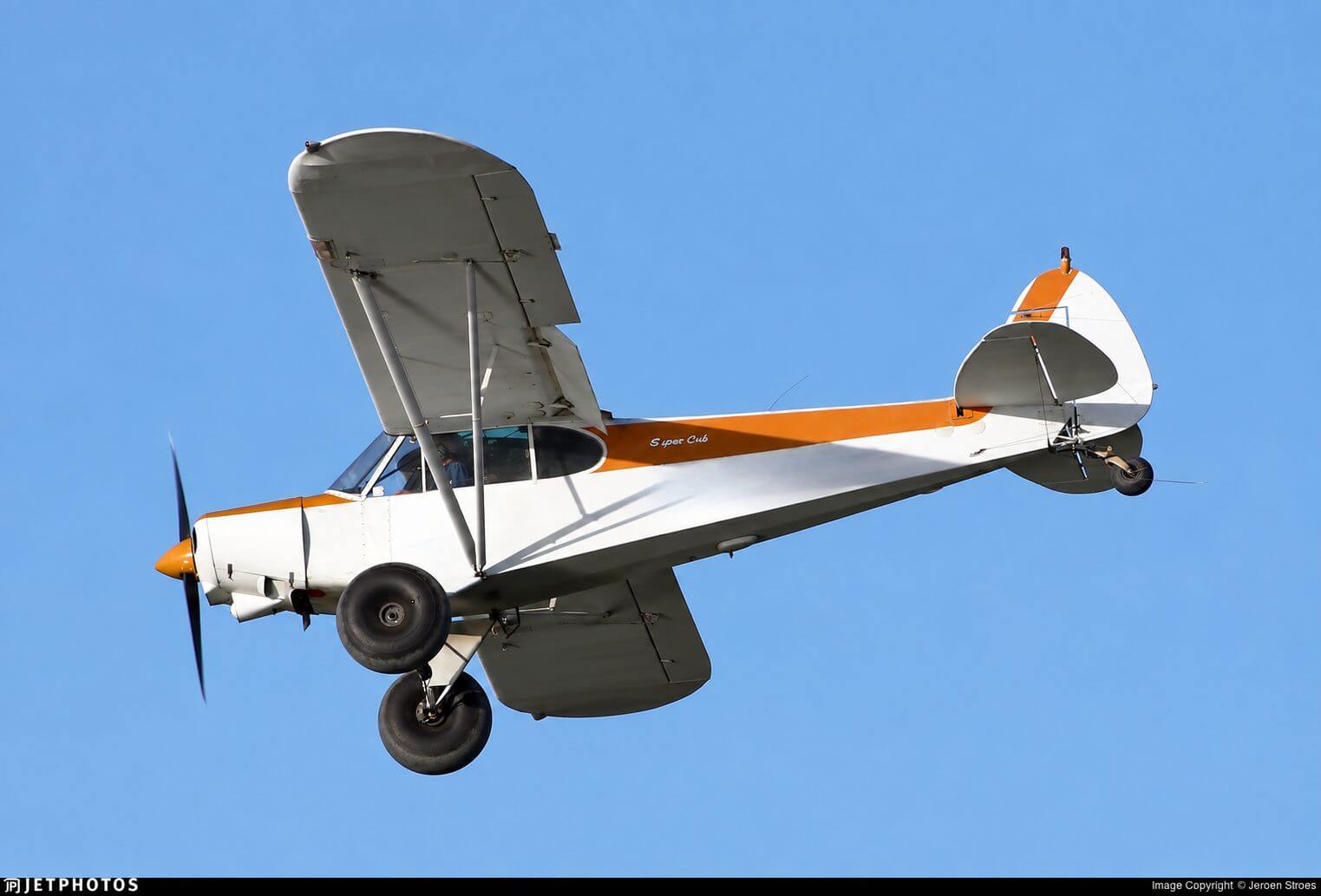
Many pilots assume aircraft insurance works the same way regardless of what they fly.
A Super Cub quickly proves otherwise.
The Piper PA-18 occupies a unique place within aviation. Insurance companies do not evaluate a Super Cub the same way they evaluate a Cessna 172, Piper Archer, or Bonanza.
Why?
Because the aircraft is commonly associated with some of the most demanding flying environments in aviation.
From Alaska gravel bars to Idaho mountain strips and remote ranch operations, the Super Cub is often used in ways that create unique underwriting considerations.
Understanding how insurance companies view the aircraft can help owners secure better coverage, avoid surprises at renewal, and improve their long-term insurability.
Get Your Aircraft Insurance Quote With BWI Today>>
Insurance Companies Are Evaluating More Than The Airplane
Many aircraft owners assume insurance companies primarily evaluate the aircraft.
In reality, underwriters spend much of their time evaluating:
- The pilot
- The operating environment
- The mission profile
- The training history
- The claims history
The aircraft itself is only one piece of the equation.
Two identical Super Cubs can generate dramatically different premiums because the pilots and operations are different.
Tailwheel Aircraft Receive Different Underwriting Treatment
One of the biggest reasons Super Cub insurance differs from standard aircraft insurance is the tailwheel configuration.
Insurance companies understand that tailwheel aircraft require:
- Different landing techniques
- Different ground handling skills
- Different crosswind management
- Different pilot judgment
Historically, tailwheel aircraft have generated certain types of claims more frequently than tricycle-gear aircraft.
These include:
- Ground loops
- Runway excursions
- Prop strikes
- Landing accidents
Because of this, underwriters place significant value on tailwheel experience.
Tailwheel Time Matters
Consider two pilots.
Pilot A:
- 1,500 hours total time
- 800 hours tailwheel
- 300 hours Super Cub
Pilot B:
- 5,000 hours total time
- 15 hours tailwheel
- 5 hours Super Cub
Many insurance companies will view Pilot A more favorably.
Why?
Because tailwheel proficiency is aircraft-specific.
Insurance companies know that experience in a Super Cub matters.
Backcountry Flying Changes Everything
Many Super Cubs are not operated from traditional paved airports.
Instead, owners frequently fly from:
- Grass strips
- Ranch strips
- Mountain strips
- Gravel bars
- Sandbars
- Remote backcountry locations
Insurance companies understand these operations involve additional risk.
As a result, underwriters often ask questions such as:
- Where is the aircraft based?
- What surfaces do you land on?
- How often do you operate off-airport?
- Do you fly in mountainous terrain?
- Do you operate in Alaska?
The answers can significantly influence underwriting decisions.
Alaska Operations Receive Additional Attention
Few aircraft are as closely associated with Alaska as the Super Cub.
Insurance companies understand that Alaska flying often involves:
- Remote operations
- Weather variability
- Limited infrastructure
- Off-airport landings
- Float operations
- Ski operations
Qualified Alaska operators can still secure excellent coverage.
However, underwriting requirements often differ from similar aircraft operating in the lower 48 states.
Float Operations Are Evaluated Separately
Many Super Cubs operate on floats.
Insurance companies frequently evaluate float flying separately from land operations.
Underwriters often review:
- Float time
- Amphibious float time
- Recent float experience
- Training history
A pilot with extensive float experience generally receives stronger underwriting consideration than someone transitioning to floats for the first time.
Get Your Piper PA-18 Aircraft Insurance Quote With BWI>>
Ski Operations Matter Too
Super Cubs are among the most common ski-equipped aircraft in North America.
Insurance companies may evaluate:
- Ski experience
- Winter operations
- Mountain experience
- Seasonal usage
As with floats, ski operations often involve unique underwriting considerations.
Modified Super Cubs Create Additional Considerations
Many PA-18 aircraft have received substantial modifications.
Common examples include:
- Bushwheels
- STOL kits
- Extended baggage
- Engine conversions
- Larger tires
- Custom landing gear
- Avionics upgrades
These modifications often improve capability.
They also influence:
- Aircraft value
- Operational profile
- Insurance exposure
Insurance companies frequently evaluate heavily modified aircraft differently than stock aircraft.
Claims History Remains Critical
Nothing consistently impacts insurance pricing more than claims history.
Insurance companies carefully review:
- Prior claims
- Claim severity
- Claim frequency
- Recent losses
Pilots with clean records often benefit from:
- Better pricing
- More carrier options
- Increased underwriting flexibility
This remains true regardless of aircraft type.
Training Creates Confidence
Few things improve a Super Cub insurance profile more consistently than training.
Insurance companies strongly favor pilots who participate in:
- Tailwheel training
- Backcountry training
- Mountain flying courses
- Flight reviews
- Recurrent training
- Safety seminars
Training reduces uncertainty.
And underwriters dislike uncertainty.
What The Best Super Cub Risks Have In Common
After reviewing thousands of tailwheel policies, certain patterns consistently emerge.
The strongest insurance risks often have:
- Significant tailwheel time
- Significant Super Cub experience
- Clean claims histories
- Annual recurrent training
- Recent flight activity
- Accurate logbooks
- Strong operational discipline
These characteristics create confidence among insurance companies.
And confidence often leads to better insurance outcomes.
Why Super Cub Owners Trust BWI
BWI Aviation Insurance has helped thousands of aircraft owners secure coverage for their aircraft.
Whether you fly a stock PA-18, a float-equipped aircraft, a ski-equipped aircraft, or a heavily modified backcountry machine, our team understands the underwriting factors that influence pricing and carrier appetite.
We work with leading aviation insurance carriers and help aircraft owners compare options based on their specific aircraft, experience level, and mission profile.
Final Thoughts
The Piper PA-18 Super Cub is unlike almost any other aircraft in general aviation.
Its unique mission profile, tailwheel configuration, backcountry capability, and operational flexibility create insurance considerations that simply don’t exist for most aircraft.
The good news is that many of the factors insurance companies care about most are within your control.
Tailwheel experience.
Training.
Recent flight activity.
Operational discipline.
Understanding how underwriters evaluate risk can help you become a stronger insurance prospect, improve your long-term insurability, and potentially secure better coverage and pricing for years to come.
bwifly.com / 800-666-4359
Continue Reading