
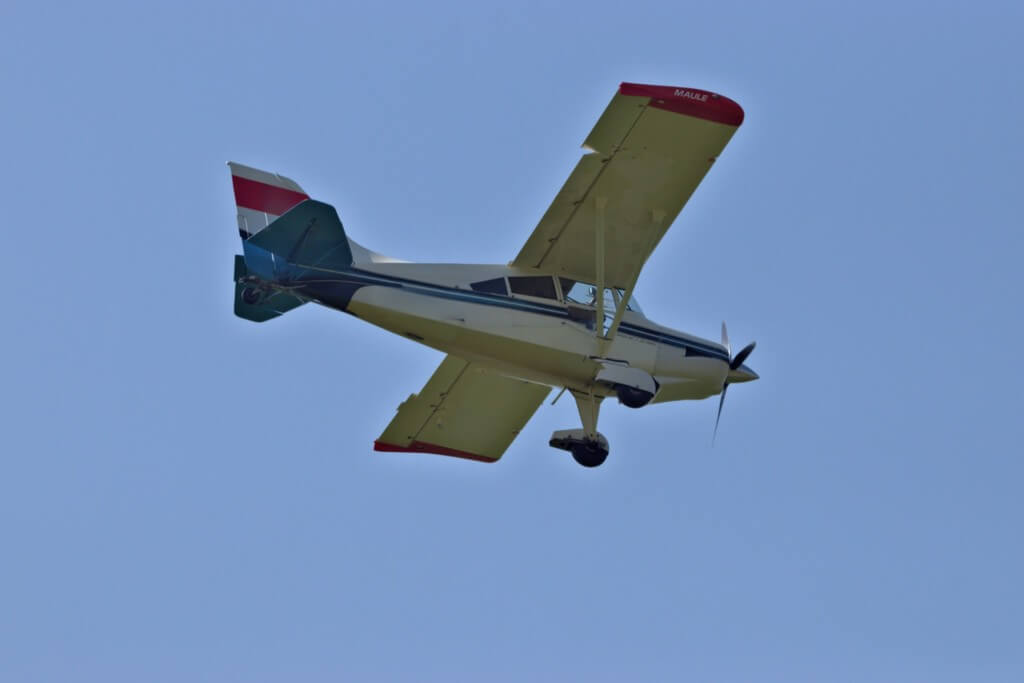
One of the most common questions we hear from Maule owners is:
“My friend owns a Maule and pays far less for insurance than I do. Why?”
It’s a fair question.
After all, two owners may fly similar aircraft, have similar hull values, and even operate from the same airport.
Yet one owner receives multiple competitive quotes while another pays substantially more.
The reason is simple.
Insurance companies do not insure airplanes.
They insure risk.
And every pilot, aircraft, and mission profile represents a different level of risk.
At BWI Aviation Insurance, we’ve helped insure specialized aircraft owners across the country, including pilots flying everything from classic M-4 aircraft to highly modified M-7 and MX-7 backcountry machines.
One thing becomes obvious very quickly.
The airplane is only part of the equation.
Understanding how insurance companies evaluate Maule risks can help explain why some owners pay more than others—and what you can do to improve your own insurance profile.
The Airplane Usually Isn’t The Biggest Difference
Most aircraft owners assume insurance companies begin by evaluating the airplane.
While the aircraft certainly matters, underwriters usually begin with the pilot.
Insurance companies want to understand:
- Who is flying the aircraft?
- How much experience do they have?
- How often do they fly?
- What type of flying do they do?
- Have they had claims?
- What training have they completed?
Two identical Maule aircraft can produce dramatically different premiums simply because the pilots are different.
Tailwheel Experience Is One Of The Biggest Factors
Unlike many aircraft categories, tailwheel experience carries significant weight in Maule underwriting.
Insurance companies know that tailwheel aircraft require:
- Different landing techniques
- Different ground handling skills
- Greater directional control
- More experience in crosswinds
As a result, underwriters often pay close attention to:
- Total tailwheel time
- Recent tailwheel time
- Tailwheel time in make and model
A pilot with:
- 1,000 tailwheel hours
will often receive much stronger underwriting consideration than a pilot with:
- 25 tailwheel hours
even if their total flight time is similar.
Time In A Maule Matters
Insurance companies understand that Maule aircraft are unique.
A pilot with substantial experience in:
- M-4 aircraft
- M-5 aircraft
- M-6 aircraft
- M-7 aircraft
- MX-7 aircraft
- MT-7 aircraft
often receives different underwriting treatment than a pilot transitioning into the platform.
Aircraft-specific experience demonstrates familiarity with:
- Handling characteristics
- Loading characteristics
- Short-field operations
- Emergency procedures
Time in type creates confidence.
And confidence creates competition among insurance carriers.
Backcountry Flying Changes The Conversation
One of the reasons pilots buy Maule aircraft is capability.
Many owners use their aircraft for:
- Backcountry flying
- Gravel bars
- Mountain strips
- Hunting trips
- Fishing trips
- Remote property access
Insurance companies know this.
They often ask:
- Will the aircraft operate off-airport?
- Will it use gravel strips?
- Will it operate in remote areas?
- Does the pilot have backcountry experience?
Backcountry flying does not automatically increase premiums.
What matters is whether the pilot has the training and experience to operate safely in that environment.
Alaska Operations Often Receive Additional Review
Maule aircraft are extremely popular throughout Alaska.
Their combination of utility and short-field performance makes them attractive for a wide variety of missions.
Insurance companies understand that Alaska operations may involve:
- Gravel runways
- Mountain terrain
- Remote strips
- Weather extremes
- Limited infrastructure
As a result, Alaska-based aircraft often receive additional underwriting review.
However, experienced Alaska pilots frequently receive strong underwriting consideration because insurers recognize the skill required to operate safely in those environments.
Aircraft Value Matters More Than Many Owners Realize
Another major factor is hull value.
Many owners focus exclusively on the pilot.
Insurance companies also focus on their financial exposure.
Consider the difference:
A basic older Maule insured for:
- $90,000
A well-maintained aircraft insured for:
- $175,000
A heavily upgraded backcountry aircraft insured for:
- $300,000+
The insurance company’s exposure increases significantly as aircraft value increases.
That increased exposure often translates into higher premiums.
Modifications Can Influence Premiums
Many Maule owners modify their aircraft.
Common upgrades include:
- STOL kits
- Larger tires
- Engine upgrades
- Modern avionics
- Glass panels
- Float installations
- Extended baggage systems
While these modifications often improve capability and value, they can also affect underwriting.
Insurance companies generally want to understand:
- What modifications exist
- Whether they are approved
- How they affect aircraft value
- How they affect operations
Get Your Maule Aircraft Insurance Quote With BWI Today>>
Claims History Is One Of The Biggest Pricing Factors
Nothing impacts insurance pricing more consistently than claims history.
Insurance companies carefully review:
- Prior claims
- Claim frequency
- Claim severity
- Recent losses
Pilots with clean records often enjoy:
- Better pricing
- More carrier options
- Greater underwriting flexibility
Claims do not automatically make insurance difficult.
However, they frequently generate additional questions.
Recent Flight Activity Matters
Insurance companies prefer active pilots.
A pilot who flew:
- 150 hours last year
is often viewed differently than a pilot who flew:
- 10 hours last year
Flying proficiency is perishable.
Insurance companies know that active pilots generally maintain stronger skills than inactive pilots.
Recency often plays a larger role than many owners realize.
Training Makes A Huge Difference
Few things improve an insurance profile more consistently than training.
Insurance companies often reward:
- Tailwheel instruction
- Backcountry training
- Mountain flying courses
- Flight reviews
- Recurrent training
- Safety seminars
Pilots who actively invest in proficiency often receive stronger underwriting outcomes.
Training creates confidence.
And confidence often leads to more carrier competition.
Mission Profile Matters
Two Maule owners may fly the same aircraft and have similar experience.
But if one uses the aircraft for:
- Local recreational flying
and the other uses it for:
- Regular remote backcountry operations
insurance companies may evaluate the risks differently.
Mission profile matters.
The more demanding the operation, the more attention underwriters typically pay.
What The Lowest-Priced Maule Risks Have In Common
After reviewing thousands of utility aircraft policies over the years, the strongest insurance risks often share several characteristics.
They typically have:
- Significant tailwheel experience
- Time in make and model
- Recent flight activity
- Annual recurrent training
- Clean claims histories
- Backcountry training
- Accurate logbooks
These factors consistently create stronger underwriting outcomes.
Why Today’s Market Is Better Than It Was A Few Years Ago
The good news is that qualified owner-flown aircraft continue to attract strong interest from aviation insurance companies.
For experienced Maule owners, today’s market often provides more opportunities than were available during the hard-market years.
Insurance companies continue to compete for well-qualified pilots with strong operating histories.
Why Maule Owners Trust BWI
BWI Aviation Insurance helps aircraft owners secure coverage for specialized aircraft throughout the country.
Whether you fly an M-4, M-5, M-6, M-7, M-8, M-9, MX-7, MT-7, or MXT-7, our team understands the underwriting factors that influence pricing and carrier appetite.
We work with leading aviation insurance companies and help owners compare options based on their aircraft, experience level, and mission profile.
Final Thoughts
If you’ve ever wondered why another Maule owner pays less for insurance, the answer is rarely the airplane.
The answer is usually the overall risk profile.
Insurance companies evaluate:
- Tailwheel experience
- Time in make and model
- Claims history
- Backcountry experience
- Training
- Aircraft value
- Recent flight activity
before determining pricing.
The good news is that many of those factors are within your control.
By understanding how insurance companies evaluate risk, you can strengthen your insurance profile, improve your insurability, and position yourself for better coverage and more competitive pricing for years to come.
bwifly.com / 800-666-4359
Continue Reading