

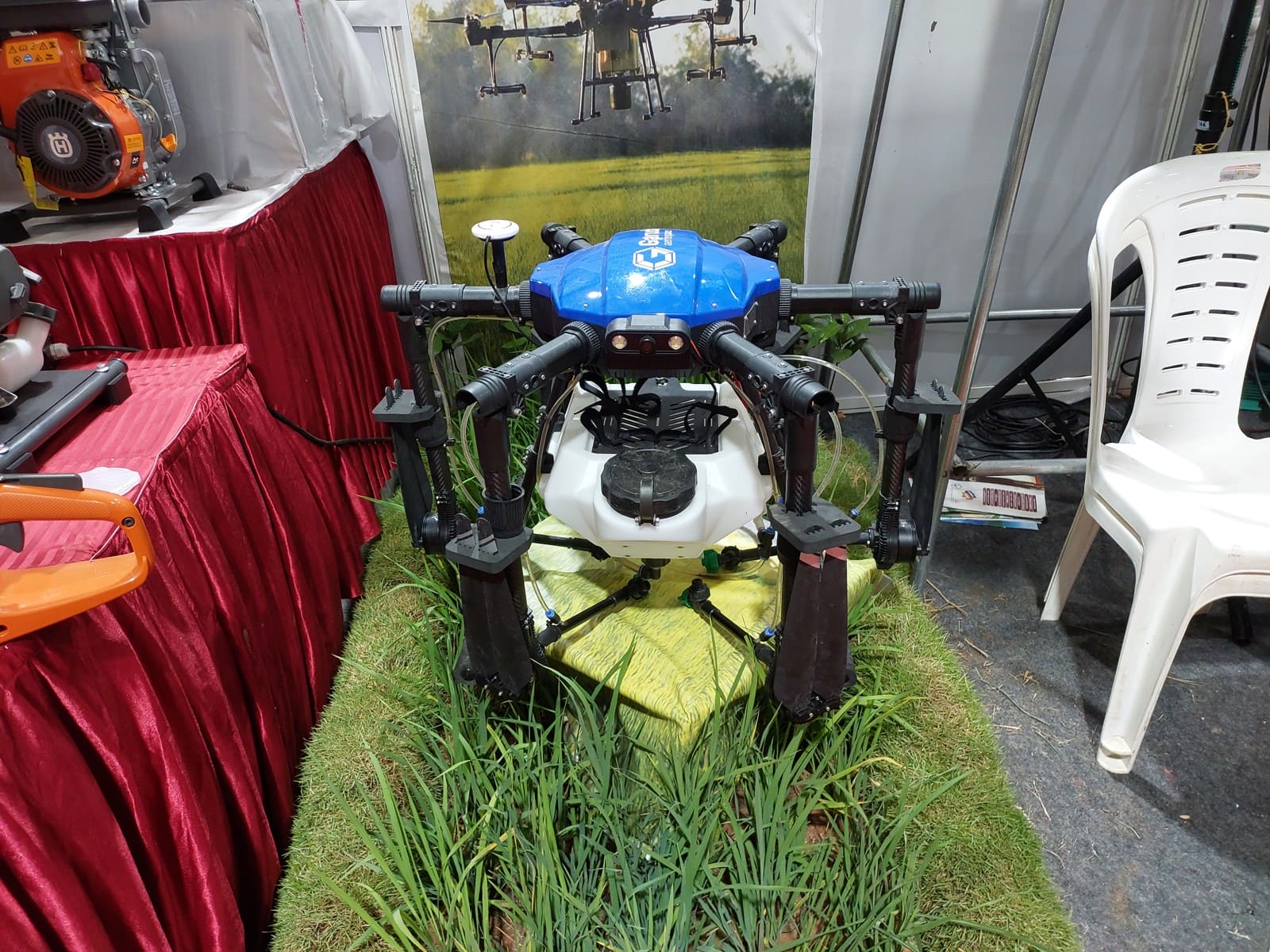
A spray drone job across a state border can look almost identical to work at home: the same aircraft, the same crew and another grower's fields. The insurance preparation can still change. A new customer, operating location, temporary storage arrangement or pesticide category may introduce questions that the original application never answered.
Before accepting an interstate assignment, compare the proposed work with the operation described in your insurance documents. Identify the legal business performing the job, the aircraft and equipment traveling with it, the people operating them and the locations involved. Then obtain answers about territory, application activities, chemical liability, transport and contract requirements before the crew leaves.
This guide offers a practical way to organize that conversation. It does not determine whether a particular flight is authorized or whether a loss is covered. Those decisions require the applicable approvals, current rules and actual insurance wording. For the broader starting point, visit BWI's drone insurance guide.
Start with a change summary
The most useful first message to your insurance contact is a short description of what will change. “We need a certificate for a farm in another state” gives very little information. A better submission explains the destination, dates, customer, work, aircraft, pilots, products and temporary base. Attach the proposed contract rather than summarizing its insurance clause from memory.
Include work that may happen between spraying assignments. A crew might demonstrate the aircraft, scout fields, train a customer's employee or transport another business's drone. Those activities should be identified separately so they are not silently absorbed into a description of ordinary spraying. A different activity can require a different insurance question even when the same aircraft performs it.
Distinguish confirmed plans from possible expansion. You can describe a firm two-week assignment and separately identify other states being considered later in the season. That helps the insurance reviewer address the immediate job without treating speculation as an accurate current itinerary. Keep a dated copy of the description and the response with your trip records.
Separate flight authority, pesticide authority and insurance
The FAA's agricultural UAS guidance explains that Part 137 applies to covered dispensing activities and that the operating framework depends in part on aircraft weight, including the material carried. Its current guidance addresses exemptions, aircraft registration and agricultural operating certification. Use that guidance and your own approvals to verify the proposed operation; do not treat possession of a remote pilot certificate alone as a complete authorization package. [1]
Pesticide qualifications are a separate review. EPA describes certification through state and other approved certifying authorities, including specialized application categories. Ask the destination authority what applies to your actual products, commercial activity and application method. A credential from home should be checked against the destination's requirements rather than assumed to settle them. [2]
Insurance is another distinct decision. A regulator's approval does not identify the insured parties, coverage limits or exclusions in your contract of insurance. Likewise, a certificate of insurance does not decide whether the crew may perform a particular agricultural operation. Put these three reviews into separate rows of your preparation checklist so progress in one cannot conceal an unanswered question in another.
Treat reciprocity as a process to verify
Reciprocity can be useful, but its scope needs careful reading. Texas's published reciprocity information, for example, describes eligible license types, category differences and an application process. It also directs Texas licensees seeking another state's credential to contact the destination authority about additional requirements. That is a useful example of why “the states have reciprocity” is only the beginning of the inquiry. [3]
For your own destination, ask which individual must be credentialed, which business must be licensed and whether aerial application requires a specific category. Ask what evidence must be received before work begins and which agency can confirm completion. Save the response alongside the issued credential; a submitted application and an issued authorization are different stages.
Avoid turning a state example into a nationwide rule. Requirements can depend on the jurisdiction, activity and product, and a future trip may need a fresh check. If the proposed work involves tribal land or another distinct jurisdiction, identify that specifically when seeking qualified guidance. Your operating map should show where the work actually occurs, not only the mailing address on the invoice.
Describe the business that will perform the work
A grower may contract with your limited liability company while the invoice uses a trading name and the aircraft registration shows an owner personally. Do not expect the destination customer or insurance reviewer to resolve those relationships from a logo. Provide the full legal names and explain the role of each party involved in the work.
Ask how the proposed insurance identifies the named insured, equipment owner and any other requested interests. If a partner's aircraft is joining your trip, describe who owns it, who will operate it and whose customer is receiving the service. A description such as “our second drone” can be misleading if the aircraft belongs to a separate company.
A new destination sometimes leads to a new contracting arrangement. For example, a local applicator might handle the grower relationship while your business supplies the aircraft and crew. Have the parties' responsibilities reviewed before describing either company as fully insured for the arrangement. The insurance question should follow the actual work and contract, including who directs operations and who makes representations to the customer.
Read the territory wording alongside the insured activity
Ask where the proposed policy applies and how that territory is defined. Do not reduce the inquiry to whether the destination state is within the United States. The relevant documents may need to be reviewed for the operation, insured property, legal proceedings and other provisions that affect a particular request. Ask for the applicable wording rather than relying on a shorthand label.
Also compare the insured activity with the new job. A policy description prepared for crop scouting is a poor substitute for a review of chemical application. If the business already sprays at home, explain whether the destination job introduces a different product, customer type or service. Ask whether the change requires underwriting review, an endorsement or another action before it starts.
Record a clear answer with an effective date. If documents are being revised, verify that the final issued version reflects the agreed change. A discussion about a possible amendment should stay marked as pending until the appropriate confirmation arrives. Keep the original inquiry so later readers can see which facts the response addressed.
Put chemical application questions in writing
Describe the products and services accurately enough for the insurance reviewer to identify the intended exposure. “Agricultural work” can include very different activities. Separate application from crop monitoring, advice, product sales and any service performed by another party. If the grower selects and supplies the product, record that arrangement without assuming it eliminates your business's potential responsibility.
Ask specifically how the proposal addresses allegations involving drift, overspray, misapplication and damage to the crop being treated. Ask what definitions, exclusions, sublimits or deductibles apply to the requested protection. Also ask how a claim involving bodily injury or property damage would be evaluated when chemical application is alleged. These are questions for the actual documents, not universal promises about a product called drone insurance.
Keep crop performance promises separate. A customer may expect a yield improvement, a particular treatment result or reimbursement for a missed application window. Ask qualified advisers to review those promises before signing. The fact that a business has liability insurance should not be treated as evidence that every contractual service guarantee or economic loss is insured.
Map the entire trip including storage
Create a simple itinerary that begins when equipment leaves the regular base and ends when it returns. Include the vehicle journey, overnight stops, temporary storage and each operating location. A map of only the fields leaves out the hours when the equipment may be in a truck, at a motel or at another business's building.
For each stop, list who has custody and what property is present. Ask how the proposed insurance addresses equipment in transit, unattended equipment, temporary premises and property held by someone else. If a customer offers a shed, establish what permission you have and whether any agreement assigns responsibility for damage. Do not assume a friendly offer to store equipment includes insurance for it.
Consider the return journey as carefully as the outbound trip. A damaged drone may be transported to a repair facility while undamaged batteries and chargers return home. Record those changed locations and custody arrangements. When asking about insurance, describe the actual movement rather than treating all trip equipment as though it stays together for the entire assignment.
Build one equipment list that follows the crew
List aircraft, serial numbers, ownership and the values you are asking the insurer to review. Identify installed items and detachable equipment separately. Add spare batteries, controllers, chargers, generators, spray components and other significant ground equipment. Use receipts or another supportable basis for values instead of copying an old total that no longer reflects what the crew carries.
Ask which items need to appear individually on a schedule and how the proposal treats items not attached to the aircraft. Then reconcile the issued documents with your list. A correct aircraft model does not prove that every accessory or spare has been addressed. Where equipment belongs to a lender, lessor or another contractor, disclose that interest and provide the relevant agreement.
Keep this list operationally useful. A crew leader should be able to identify what left the base, what was substituted and what returned. Record additions before relying on them for customer work. If you borrow a replacement drone while traveling, request a review of its ownership, use and effective arrangements rather than assuming your original equipment entry automatically follows the substitute.
Review trucks trailers and road activity separately
The drone insurance conversation should identify the truck and trailer arrangements without assuming the aircraft policy resolves them. Provide the vehicle owner, drivers, trailer owner and business use to the appropriate insurance contact. Ask about the vehicles themselves, liability while driving and the separate treatment of equipment carried inside or on them.
Loading and unloading deserve an explicit question. Describe who performs the work, whose premises are involved and whether hired equipment is used. If a customer supplies a vehicle or a crew member uses a personal truck, explain that change before travel. The right review starts with ownership and activity, not merely a photograph of a branded trailer.
Include rented vehicles and roadside substitutions in the contingency plan. If the original truck fails, the replacement arrangement may change custody, drivers or how equipment is secured. Have a contact and information checklist ready so the insurance question can be raised promptly. This preparation avoids making a hurried assumption based only on an existing certificate for the spray operation.
Give each pilot and subcontractor a defined role
An interstate job can expand the crew. Identify pilots, ground staff, employees and independent businesses separately. Provide the experience and credential information requested for the actual aircraft and work. Ask how pilot requirements and other operating conditions in the proposed policy apply to the people who will participate.
If you hire a local subcontractor, document whether that business supplies a pilot, an aircraft or a complete spraying service. Obtain the agreement and insurance evidence appropriate to that relationship, and have unresolved wording reviewed. A certificate from the subcontractor is a starting point for checking evidence; it does not answer every question about whose aircraft or work is insured.
Avoid treating a last-minute helper as an administrative detail. A replacement pilot, additional aircraft or new subcontractor can change the facts previously reviewed. Send the change through the same preparation process and retain the response. Crew schedules should identify which people and equipment have completed review and which remain conditional.
Compare the customer contract with the proposal
Read the insurance requirements before accepting the job. Identify requested limits, additional insured status, waiver requests, deadlines and any required forms. Send the full clause to the insurance contact. A customer-provided checklist may omit definitions elsewhere in the contract that affect what the business is promising.
Ask whether each requested item is available and what documents would establish it. Where an endorsement is required, compare the issued endorsement with the request. Do not rewrite a certificate description to suggest a broader agreement than the insurer has made. If a requirement cannot be met as written, resolve it with the customer before presenting the insurance package as complete.
Separate the customer's certificate deadline from the operational start date. The customer may want evidence weeks before the fields are ready. Build enough time for review and any permitted document changes, while keeping the proposed work dates accurate. When the schedule changes, check whether any time-specific evidence or arrangements need to be updated.
Use a destination worksheet
Create one destination worksheet for each distinct assignment. Keep it short enough for the crew leader to use and detailed enough to show the outstanding decisions. The following fields make a practical starting point:
- Destination and dates: actual operating locations, temporary base and expected travel window.
- Parties: contracting customer, operating legal entity, aircraft owner and subcontractors.
- Work: spraying activity, products, other services and any customer performance promises.
- Authority: applicable FAA documents and destination licensing confirmations, with expiration dates.
- Insurance: reviewed territory, activity, equipment, chemical questions and unresolved requirements.
- Contracts: final insurance clause, requested endorsements and customer evidence deadline.
- Logistics: trucks, trailers, storage, custody changes and contingency contacts.
- Release decision: who reviewed each item, what remains pending and which documents are final.
Use descriptive status words such as requested, under review and confirmed. Avoid a single green checkmark for the entire trip until each relevant question has an answer. Link the worksheet to the actual documents so another manager can verify the status without searching an email history.
A practical example of adding a neighboring state customer
Consider a hypothetical operator that sprays for local growers and receives an invitation from a co-op across the border. The aircraft and pilot will remain the same. The crew plans to stay for ten days, use the co-op's shed and serve growers introduced by the co-op. This is a planning example, not a BWI customer account or a prediction of coverage.
The operator first clarifies who will sign the service contracts. It lists the destination locations and asks the relevant authority about the business and individual credentials needed. It then sends BWI the proposed work description, products, equipment inventory, storage arrangement and co-op contract. The operator asks how the existing proposal addresses the changes and which items still require insurer review.
Suppose the co-op then requests that another pilot join and that a borrowed aircraft be used for part of the schedule. The operator updates the worksheet rather than treating the earlier discussion as approval of the expanded job. It obtains the necessary answers and final documents before relying on the new arrangement. The useful habit is controlling changes, even when the destination itself has already been reviewed.
Prepare for an incident away from home
Keep reporting instructions accessible to the crew in a format that works without a reliable field connection. Identify the policy information, insurance contact and where records should be sent. Ask in advance about notice obligations and whom to contact when an allegation arrives after the crew has returned home.
Arrange a way to preserve job records, contracts, application information, photographs and relevant equipment records. Record observations accurately and distinguish them from a later technical opinion. Follow applicable emergency and regulatory duties, and obtain appropriate professional help. Insurance preparation should not become an improvised repair procedure, chemical response plan or decision about legal liability.
If equipment must stay at a destination repair shop, document the location, owner and custody arrangement. Ask the insurance contact about the proposed next steps before assuming repair, replacement or travel costs will be reimbursed. Keep the incident file separate from a customer-service conversation about rescheduling so commitments about the next job do not obscure reporting duties for the first one.
Questions to resolve before the crew leaves
Ask whether the insurer has reviewed the actual destination work and the operating entity. Ask whether the final documents address the intended aircraft, pilots, equipment and chemical activities. Confirm the territory wording and ask about transport, temporary storage and replacement equipment. Identify any unresolved contract requirement rather than relying on a general statement that the business is insured.
On the authority side, confirm the applicable credentials and operating documents with the responsible agencies and qualified advisers. On the commercial side, check who has accepted the customer contract and who may approve changes. Keep the answer to each question with the worksheet, including effective dates and any conditions that the crew needs to understand.
A useful departure review ends with a list of final documents and a short change procedure. It should be clear whom to call if dates shift, equipment changes or another customer asks for work. Interstate growth becomes easier to manage when those changes are reported deliberately rather than discovered after an incident.
Talk through the interstate operation with BWI
Start with BWI's drone insurance guide, then request a drone insurance quote using the current UAS application. Describe your spray operation and intended states, and provide the contracts and equipment information relevant to the trip. BWI currently requires a Part 107 certificate for drone quote requests; contact BWI if eligibility or the operation needs clarification. [4]
Ask BWI to help identify the insurance questions that need review for your proposed work. The resulting options depend on the operation, insurer review and issued terms. An application, discussion or certificate request is not by itself confirmation that coverage has taken effect. Keep your final policy documents and the destination worksheet together so the crew's plans match the facts that were reviewed.
Sources
Continue Reading


