

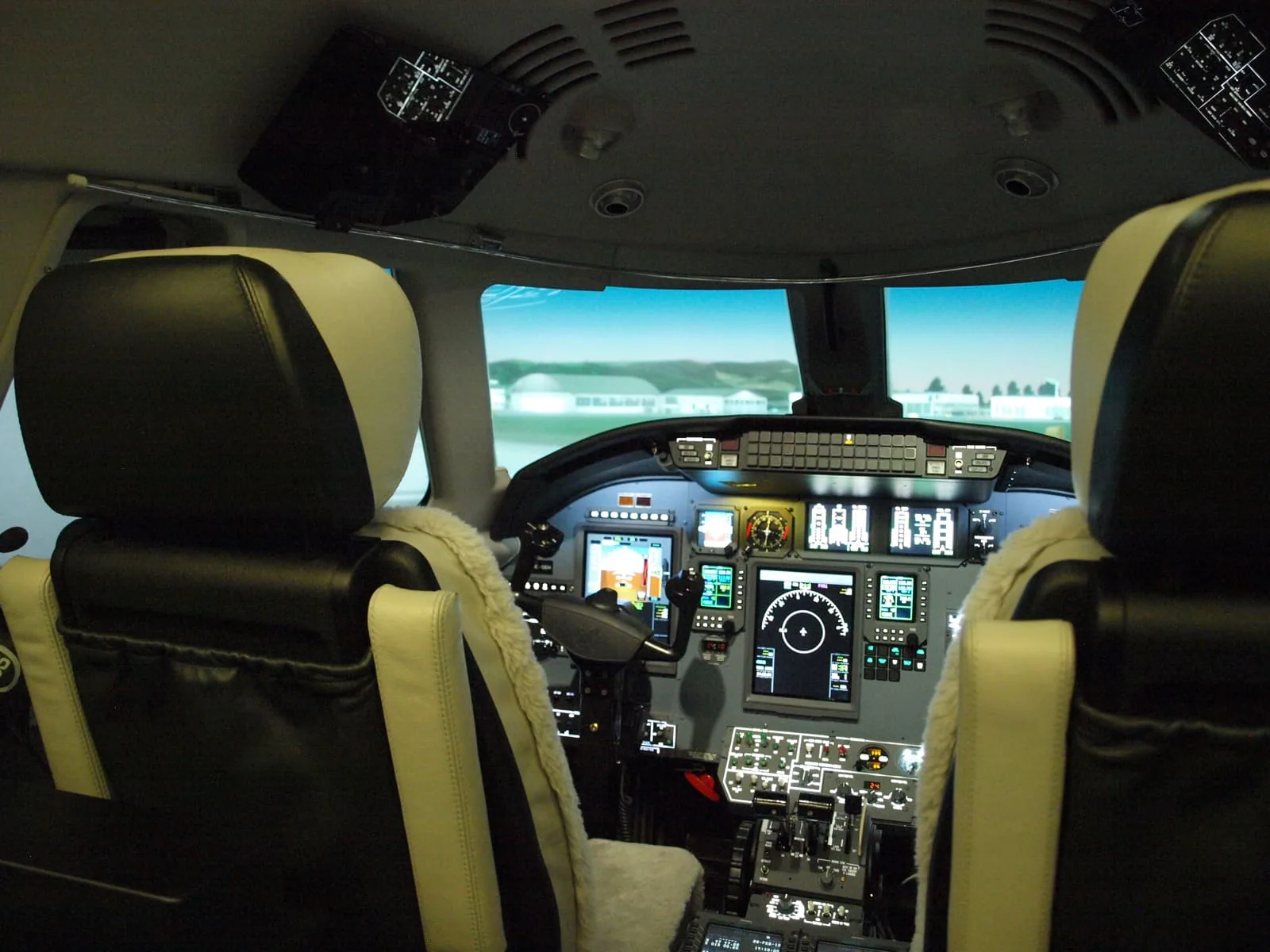
A flight simulator business needs an insurance review that describes the training service, the equipment and the premises separately. A device can be valuable business property without being an insured airplane, and an instructor can face allegations about instruction even when no aircraft leaves the ground. Before opening a simulator center or adding a device to an existing operation, give BWI the actual business model and ask which exposures need review under the available insurance terms.
Start with what customers buy. Instructor led pilot training, unsupervised practice, an entertainment session and a contracted airline training program involve different commitments. A familiar cockpit appearance does not establish a device’s regulatory status, the credit a customer may receive or the insurance protection available to its owner. Describe the service accurately and keep those decisions with the organizations responsible for them.
This guide concerns the business that owns, leases or operates simulation equipment. It supplements broader flight school and commercial aviation information. It does not determine training credit, qualify a device or promise that simulator time satisfies an aircraft insurer’s requirements. Those questions require separate confirmation using the particular device, course, pilot and proposed policy.
Start with BWI commercial aviation insurance, then bring the equipment inventory and simulator training business model to an individual review.
Define the operation before requesting a policy
Tell BWI the legal name of the business and whether it operates only simulators or also provides aircraft rental, flight instruction or other services. Describe each location and explain whether customers enter your premises, attend another school’s facility or connect remotely. A simulator installed in a rented office presents a different arrangement from a portable device delivered to customer events or a unit integrated into a larger flight academy.
Identify who sells the session, collects tuition, provides the instructor and issues any completion record. These can be different entities. A device owner renting a time slot to an independent instructor has a different description from a center selling a complete course under its own name. Supply the actual agreements and customer terms. Do not assume an instructor’s separate insurance protects the lessor, equipment owner or company marketing the course.
Include realistic operating information such as expected sessions, staffing, opening hours and planned expansion. Separate established operations from proposed activities. If an application asks for revenue or customer categories, use supported records or clearly identified projections. The submission should describe the business being presented for review rather than a broader ambition that has not yet been funded, staffed or approved.
Identify the device and its actual status
Prepare an equipment inventory with the manufacturer, model, serial number, ownership and installed location. Describe the cockpit, visual system, computers, controls and any associated motion equipment. State which components form the purchased package and which were supplied separately. An invoice reading flight simulator may conceal several different property interests, software arrangements and replacement dependencies that matter to the insurance discussion.
Give responsible training professionals the actual device documents. The FAA’s National Simulator Program addresses flight simulation training device qualification and separately links to basic and advanced aviation training device resources. A marketing word such as simulator does not establish which category applies. Have the qualified source confirm the status and proposed course use; this insurance guide does not award training credit or apply one approval pathway to every cockpit-shaped device.
Insurance acceptance is a separate subject. A regulatory document does not itself schedule the device as insured property, establish an instructor’s protection or satisfy a lender’s insurance requirements. Similarly, an insurance certificate does not qualify equipment or authorize a course. Retain the appropriate evidence for each subject so staff do not answer a training question by sending a property document, or the reverse.
Build a property submission around the complete system
Describe the replacement system, not just the cockpit shell. Identify visual displays, controls, computers, instructor stations and installation interests supported by purchase or lease records. If the proposed value includes delivery or specialist installation, show the basis and ask whether those costs fit the offered valuation. A used purchase price, current replacement estimate and lender’s contractual amount can differ. Keep each figure identifiable rather than treating the largest as an agreed settlement.
Identify financed or leased components and the interests that must appear in the insurance documentation. A lessor may own the device while your business owns the room improvements and separate computers. Send the relevant insurance clauses for review. A building landlord’s requirement is not necessarily the same as a simulator lender’s requirement, even when both ask for a certificate before allowing installation.
Identify borrowed controls, demonstration units and customer accessories separately from owned equipment. State the relevant owner, custody period, location and agreement. An instructor’s personal accessory should not be silently included in a center-owned system total. If components go elsewhere for repair, provide the actual transport and custody facts. The inventory should explain the requested interest at that stage instead of relying only on the serial number of the installed device.
Compare the questions in a simulator business review
The following comparison helps organize the submission. It separates property damage, injury allegations, instructional responsibilities and interruption of business. These are different questions even when one event affects several at once. A customer stumbling near a device, a failed display and an allegation about training quality should not all be described as aircraft hull losses merely because the equipment resembles a cockpit.
For each subject, identify the party with the relevant responsibility and the documents supporting that description. Ask which policies and endorsements would address the proposed activity under their actual terms. The comparison is a discussion aid, not a statement that one policy combines every protection or that every form of simulator operation is available through the same market.
| Simulator business subject | Information to review |
|---|---|
| Equipment | Device inventory, ownership, value and installed location |
| Premises | Customer access, occupancy and host responsibilities |
| Instruction | Actual service, instructor contracts and training records |
| Interruption | Cause of loss, restoration dependencies and business records |
| Software | Licensing, vendors and customer information duties |
| Changes | Delivery, relocation, upgrades and revised operations |
Review customer access and premises responsibilities
Describe how customers enter and use the facility, including whether staff assist with access to the cockpit or motion platform. Identify the areas your business controls and any shared reception, classroom or parking arrangements. Have qualified premises and equipment professionals address physical access and operating procedures. Insurance review should use the resulting facts without being presented as an inspection certificate or approval of the installation.
If the simulator is located inside another school’s building, explain which entity manages appointments, receives customers and maintains the space. The host’s insurance does not automatically establish your business’s insured status. Provide the occupancy or service agreement and any requested additional insured wording. An informal understanding that both businesses will help each other is not a substitute for clear responsibilities and an accepted insurance arrangement.
Keep nontraining activities visible. Public demonstrations, youth visits, corporate events and entertainment bookings may change the customer relationship or use of the premises. Tell the reviewer before adding them. A device accepted for scheduled pilot instruction should not be assumed accepted for every event format, especially where another organizer controls admission, equipment handling or the promises made to participants.
Separate instructional allegations from equipment damage
Ask how the proposed program addresses allegations about instruction, advice or training records. A claim that a course was unsuitable or inaccurately described can raise a different issue from damage to a computer. Explain what instructors actually provide, what your company promises and what remains the customer’s responsibility. Supply course agreements where they allocate obligations beyond simply furnishing a place to practice.
For independent instructors, explain the commercial relationship as customers experience it. Who takes the booking, advertises the course, receives the payment, keeps the instructional record and answers a complaint? A contract called room rental may not describe the full service if the center sells the instruction under its own name. Have the appropriate advisers review those facts and the proposed insured relationships rather than assuming a shared address produces shared protection.
Do not promise that an instructional policy pays every refund or commercial dispute. A dissatisfied customer, an allegation of professional negligence and an unpaid invoice may require different responses. Keep the real communication and ask the appropriate adviser about the obligation. Accurate service descriptions help prevent a training disagreement from being forced into a coverage category that the documents do not support.
Examine breakdown and interruption assumptions
Ask how physical damage, electrical failure, software problems and ordinary wear are treated under the proposed terms. A property limit does not establish coverage for every failure that stops a training session. Manufacturer warranties, service contracts and insurance can have different triggers and remedies. Keep the relevant agreements together without presenting a maintenance promise as an insurer’s commitment to replace a device.
Explain the restoration dependencies supported by the business’s records: a particular display, licensed configuration, technician or replacement component. Ask how any offered business income or extra expense wording addresses a specified physical loss and the resulting delay. Do not present a supplier estimate as guaranteed availability. A device that cannot be used, a canceled booking and an event satisfying a policy’s interruption provisions remain different facts requiring their own review.
Maintain a realistic continuity plan independent of the insurance discussion. A partner facility might provide temporary sessions, but availability, cost and customer acceptance still require agreement. Do not promise reimbursement before checking the issued terms and obtaining the appropriate claim response. Keep quotations and supported expenses so a later review can distinguish an ordinary operating cost from an expense connected with a particular insured event.
Include software and customer information responsibilities
Separate the physical simulator equipment from the business services connected to it. A failed display, disputed instructional record and interrupted reservation service are different concerns. Identify which service the center actually provides and what duties remain with vendors. Have qualified technical and contractual advisers assess information and access arrangements. A physical equipment limit should not be described as protection for every service obligation.
Review software licensing and access arrangements before describing a replacement plan. A used device may come with hardware while certain software rights require separate action. Qualified contractual and technical advisers should establish those rights. An insurance payment, if applicable, does not itself transfer a license, restore regulatory status or authorize a substitute configuration for the training your business sells.
Keep vendor duties specific. Remote maintenance access, backups and updates may be handled by different providers, while your business retains responsibilities to customers. Tell the reviewer about the actual services and agreements. Avoid promising that a vendor relationship removes your exposure when your contract still requires your company to deliver the completed training service or protect customer information.
Address installation moves and equipment changes
Describe the custody timeline before customer use: vendor possession, carrier transit, contractor installation, center acceptance and any period awaiting a training-status decision. Identify who owns the equipment and bears each contractual obligation. A lease may start before public sessions begin. Give the reviewer those actual dates rather than assuming the first tuition payment is the beginning of every property exposure or that an installed-location limit answers the entire delivery project.
When moving an existing system, describe the removal, storage and reinstallation arrangements. Identify whether a contractor assumes responsibility for the equipment or merely supplies labor. Ask how the issued policy applies to the proposed move and whether any location or value change needs acceptance. A familiar serial number does not make every new address, contractor and period of storage part of the previous arrangement.
Review upgrades in the same way. Added motion equipment, new visual displays or another instructor station can change property values and the service offered. Keep purchase and installation records current. Have the appropriate training authority address any effect on device status, then communicate the supported changes for insurance review rather than assuming that a completed invoice settles every policy and training question.
Prepare useful records for renewal and a reported loss
At renewal, reconcile the inventory against the equipment actually in service. Remove ambiguity about disposed components, replacements, leased property and locations used during the year. Provide updated activity information where requested. A center that now hosts independent instructors or operates portable equipment should not continue to present itself as the same fixed location owner operated practice room described on its first application.
If damage or an allegation occurs, follow the applicable policy notice instructions and preserve the relevant records through an appropriate process. Identify the device, location, circumstances and parties involved. Keep customer communications, service reports and the actual agreements. Do not alter a training description or create a revised ownership record to make a reported event resemble the original application.
Coordinate proposed repair, replacement and customer arrangements with the responsible claim contact and qualified providers. An acknowledgment that a report was received is not approval of every invoice or settlement. Keep the actual response and distinguish technical recommendations from insurance decisions. That gives the business a clear record while the separate property, instructional or contractual issues are evaluated.
Match customer agreements to the service being insured
Compare advertising and booking terms with the service the center actually sells. Access to a device, instructor-led training and a guaranteed examination outcome are different undertakings. BWI’s recurrent-training guide concerns an aircraft operator checking its own policy condition; it does not authorize the center to promise acceptance by every customer’s insurer. Ask the relevant training and legal advisers to review those claims before they become part of the commercial agreement.
Keep refunds, rescheduling and replacement sessions in the commercial agreement. Insurance should not be described to customers as a guarantee that every disputed booking will be paid. If another school sells the package, establish whose terms apply and who answers the complaint. Retain the final agreement so the insurance reviewer can see the actual undertaking rather than a general description of simulator rental.
A fictional simulator center expansion
Imagine a business operating one purchased simulator in a rented suite. It plans to lease a second device and let independent instructors book sessions. Before expanding, the owner prepares separate equipment values, supplies the lease requirements and explains who contracts with each student. BWI receives a supported description of the revised operation rather than an application that lists only the original owned unit.
The owner also identifies a software dependency and asks how property damage and interruption would be reviewed. The business arranges its own continuity plan while obtaining the actual insurance terms. This fictional example illustrates submission preparation, not a BWI placement, a qualified device or a promised claim result. Availability and protection depend on the business, documents and policy actually accepted.
Questions simulator business owners ask
Does aircraft hull insurance automatically cover a flight simulator
Do not assume a simulator is included merely because it resembles an aircraft cockpit. Give the reviewer its identity, ownership, value, location and use. Ask which property description and policy terms address the equipment. An airplane schedule and a simulator equipment inventory serve different purposes and should accurately identify the interests being reviewed.
Does an FAA device document establish insurance coverage
It addresses a regulatory subject rather than the insurance agreement. Have responsible training professionals confirm the device’s status and permitted use, and separately obtain the actual insurance acceptance. Neither an equipment approval document nor an insurance certificate should be used as a substitute for the other decision.
Are independent instructors automatically included
Their presence at your center does not itself establish insured status or professional protection under your policy. Explain the contracts, services and customer relationships. Ask how each party’s responsibilities are addressed and retain the relevant accepted wording and evidence rather than assuming that a shared address creates a shared policy.
Will insurance replace all revenue from canceled sessions
That depends on the issued terms and circumstances. Ask about the cause of interruption, any applicable business income or extra expense provisions and the information needed for a review. Ordinary cancellations, maintenance downtime and a covered physical loss can raise different questions. Build a practical continuity reserve without relying on an unconfirmed reimbursement assumption.
Request a simulator business insurance review from BWI
Request a commercial aviation insurance review and quote from BWI with your business description, device inventory, locations, values and relevant contracts. Explain the training offered, instructors involved, regulatory status where applicable and plans for installation or expansion. Ask which equipment, premises, professional and other business exposures require separate attention under the available terms.
Keep the resulting insurance documents with the accepted submission and the separate training and technical records. Confirm changes before presenting evidence to landlords, lessors or customers. A clear review helps align the program with the simulator business you actually operate while leaving training qualification, installation and contractual decisions with their responsible professionals.
Continue Reading


