

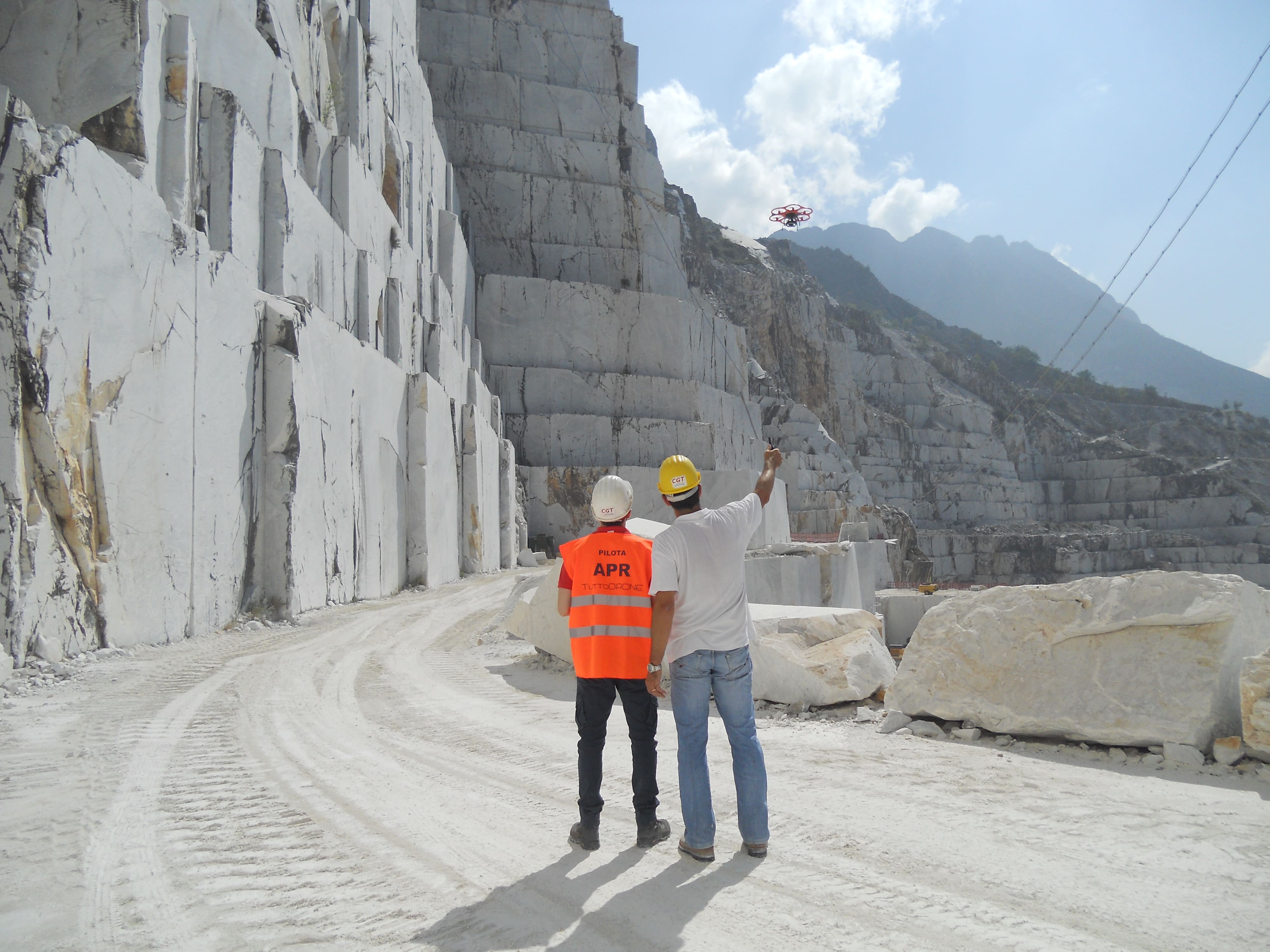
Drone insurance for a quarry or stockpile survey should start with the aircraft operation, equipment and parties. Tell BWI which company hires you, where the work occurs, which drones and sensors are used and who owns or controls them. An image set, volume estimate and professional survey create different business responsibilities. Keep BWI’s aviation liability and equipment inquiry separate from protection for report accuracy or financial reliance.
This guide focuses on outdoor quarry and stockpile projects: legal customers, material owners, site arrangements, aircraft, payloads and custody before and after each visit. Measurement and reporting promises remain useful contract context, but BWI does not offer cyber insurance or technology errors and omissions insurance. This article is not an invitation to place those products or protection for inventory-report errors. Qualified mine, aviation, technical and legal professionals must establish the actual project framework. It provides no mine access, blasting, vehicle coordination, surveying or flight instructions. Underground work and explosives operations require separate descriptions.
Start with BWI drone insurance and include the actual quarry scope, stockpile deliverable and client requirements in the inquiry.
Define the inventory service before choosing insurance language
Ask the customer what the finished product is expected to do. The business may supply photographs, an image-based model, a stockpile volume calculation or an interpreted inventory report. Explain which parts your company performs and which are completed by the customer or another professional. A quotation described as drone mapping may hide obligations that are much broader than collecting usable images of a specified outdoor area.
Identify who relies on the output and for what purpose. Internal planning, a commercial quantity dispute and financial accounts can involve different commitments. Have qualified technical and legal advisers assess those obligations. If the requested output changes the flight locations, visits, payload or contracting parties, give BWI the resulting operating facts. An earlier aircraft certificate does not establish acceptance of the new reporting promise.
Identify the quarry owner operator and legal customer
List the legal client, site operator, property owner, prime contractor and drone business as relevant. A quarry manager arranging access may work for a different company from the entity requesting insurance evidence. Obtain the names through the proper project channels. The public name on a site entrance or stockpile label should not be assumed to identify every party with contractual responsibilities or a property interest in the project.
If your business is subcontracted through a surveying or engineering firm, explain its role. State who signs the final deliverable, who accepts the data and who communicates with the material owner. A prime contractor’s certificate request does not independently determine the insured status of other parties. Supply relevant agreements so BWI can examine the relationships actually involved instead of relying on an abbreviated purchase order description.
Describe the outdoor site and proposed work scope
Give the locations, dates, intended duration and general site activity in the detail requested for review. Explain whether the assignment covers one stockpile, recurring inventory surveys or several outdoor operating areas. Identify proposed additions separately. An insurer should be able to distinguish a defined quarry project from an open-ended request to cover any work the drone company might later undertake for the same customer.
The site operator and qualified professionals should establish access, operating coordination and applicable training requirements for the particular site. Do not treat a customer’s invitation or publicly visible stockpiles as permission to enter the property or conduct a flight. Insurance acceptance does not authorize mine access, certify site controls or replace the established operating plan. Identify outstanding site requirements honestly when describing the proposed assignment.
Prepare a quarry survey insurance review record
The comparison below organizes the service, parties, property and deliverable for the insurance inquiry. It is a preparation record, not a mine safety checklist or a surveying method. Add the actual entities, aircraft and proposed output. A clear account helps the insurance team understand how the flight relates to the inventory figures and which business accepts responsibility for the processed result.
| Quarry project subject | Information to establish |
|---|---|
| Service | Imagery model volume figures or interpreted inventory report |
| Parties | Quarry operator property owner client and prime contractor |
| Operating facts | Outdoor locations dates activity and site arrangements |
| Equipment | Drone payload values ownership and custody |
| Deliverable | Processing analyst roles and financial reliance |
| Agreement | Insurance provisions measurement duties and changes |
Inventory aircraft payloads and rented survey equipment
Provide the drones, identifying details, proposed values and relevant payload information requested by the insurer. Explain which equipment the company owns and which belongs to the customer, a rental business or another contractor. A single total may conceal an expensive sensor or supporting device with different custody obligations. The inventory should reflect the property actually intended for the assignment rather than an older equipment list copied from another application.
Ask how the actual terms define insured property, including attached equipment, separately held items and relevant deductibles. Do not assume every device used in a survey is automatically part of drone hull coverage. Qualified technical professionals must independently establish suitability for the work. An insurer receiving a sensor description does not approve its accuracy, calibration or capability to produce a particular measurement or inventory conclusion.
Describe pilots ground participants and their employers
Identify the proposed pilots and other project participants in the detail requested. Explain who flies, manages data, processes measurements and communicates findings. Qualified professionals should establish the applicable operating privileges, qualifications and site responsibilities. For insurance, ask how the policy addresses operators and any conditions. A client-approved personnel list does not independently establish compliance with every term in the drone insurance arrangement.
State the actual employment or contracting relationships. A person described as a subcontractor, employee or client representative can have different responsibilities that need appropriate review. Ask relevant insurance advisers about workplace and other business interests rather than assuming drone liability replaces every employer or premises policy. If personnel change before a site visit, return material differences for review and keep the response with the current project record.
Separate drone damage from allegations involving site property
Damage to the drone or its defined equipment is a different question from damage involving a vehicle, conveyor, structure or another party’s property. Review the physical damage and liability provisions separately using the actual offered or issued terms. A broad statement that the business has comprehensive insurance does not explain every insured interest, limitation or exclusion relevant to an outdoor industrial assignment.
Identify the insured parties, values, limits and material conditions that relate to the disclosed project. Another company having property insurance does not independently resolve your company’s contractual responsibilities. Give the agreement and actual activity description to the advisers. The review should make separate aircraft, customer property and liability interests understandable before the business promises that an incident will produce a particular payment or repair outcome.
Keep stockpile quantity promises separate from drone policy benefits
A customer might allege that an incorrect quantity caused a financial loss even if the drone never struck anything. Record who calculates the figures, what the report says and the reliance the contract contemplates. Ordinary flight liability should not be presented as universal protection for the accuracy of a survey or inventory result. BWI’s inquiry here addresses drone aviation liability and equipment; it does not invite placement of protection for a stockpile quantity error, incorrect valuation or other technical-report allegation.
If another firm processes images or signs the report, describe its agreement and role. Passing work to a subcontractor does not automatically eliminate your obligations. Have qualified technical and legal advisers examine what your business accepts. Keep collection and report-author responsibilities clear before an imagery contract becomes a promise about final quantities. An aviation certificate should not imply that the reporting firm’s conclusions have been insured.
Keep volume weight and value commitments distinct
A volume, a weight and a financial value answer different questions. Ask qualified technical advisers to define the actual output and its limitations. Identify whether your company supplies only a volume or also undertakes conversion and inventory valuation. If the customer supplies other inputs, record that responsibility. This guide prescribes no formula, density assumption, surveying standard or credential; it describes the promises an insurance reviewer needs to see.
The same stockpile may belong to a materials supplier while another company operates the quarry. Record who owns the material and who is entitled to use the report. A site manager’s approval of access is not acceptance of a quantity used to settle a supplier’s invoice. Include any promised comparison or reconciliation service in the submitted agreement rather than assuming the original collection fee describes every later commercial use.
Obtain the full client insurance requirements before bidding
Request the full insurance provisions and referenced schedules before bidding. Identify legal names, limits, dates, evidence recipients and requested policy changes. A procurement summary can omit material terms. Give BWI the actual wording before pricing the assignment around an assumed arrangement or promising to meet every condition.
If additional insured status or another change is requested, ask how it can be considered for the real relationship and documented if accepted. A certificate does not independently create an endorsement, remove an exclusion or expand coverage. Use evidence supported by the actual response. Keep unresolved requirements visible instead of changing certificate language merely to satisfy a preferred format that has not been confirmed by the insurer.
Examine contract promises about delays and commercial quantities
Have qualified counsel explain indemnity, defense, financial loss, interruption and disputes about delivered figures. A contract may require payments an aviation or equipment policy does not reimburse. Identify the aviation provisions separately for BWI’s review of the operation. Submitting the entire contract does not make every technical promise an offered insured interest. A broad aviation limit does not independently satisfy a requirement for inventory-report accuracy.
A complaint about a delayed report, a quantity reconciliation or a missed service deadline can raise different questions from damage caused directly by an aircraft accident. This guide does not promise protection for every business dispute or inventory adjustment. Identify the accepted obligation clearly and obtain the relevant response before relying on insurance to fund a refund, repeat visit or other cost that the business may retain under the agreement.
Account for pickup transport storage and return
For rented or borrowed property, describe custody before and after the actual survey. A one-day site visit may involve a longer rental interval and time in a vehicle, workshop or storage facility. Supply the relevant agreement and ask how actual terms address those stages. The flight schedule alone may not capture the period during which the drone company is responsible for another party’s equipment.
Explain where aircraft and data equipment are held between recurring visits and who controls them. A drone policy should not be assumed to insure a road vehicle or every business asset carried inside it. Ask the relevant advisers to review equipment, vehicle and premises interests using the actual arrangements. Another organization’s certificate or a rental invoice does not independently amend your policy or resolve every contractual property obligation.
Describe processing software data access and report delivery
Identify who receives the images, processes each stockpile and releases the final figures. Keep the commissioned measurement separate from a client’s later accounting treatment. A data-processing platform does not become the report’s author simply because its name appears in a file export. Record which business accepts responsibility for reviewing the result and which individual is authorized to transmit a corrected report.
Give the appropriate technical and legal reviewers the relevant agreement and handoff description, without unnecessary confidential site data. If the client supplies material descriptions, density figures or unit prices, identify those inputs and their owner. Do not imply that the drone operator verified client-supplied facts unless it actually accepted that service. For BWI, identify changes to aircraft, payload, personnel, locations or custody that arise from the new arrangement. Access to processing software and authorship of a report should not be mistaken for an insured equipment interest.
Treat repeat surveys as a current program rather than a fixed job
For recurring work, maintain a dated site-and-deliverable list. Adding a stockpile is different from adding a comparison with earlier reports or taking over another analyst’s work. Record who supplied historical figures, who will explain discrepancies and which contract governs the new report. Do not describe an earlier proposal as completed activity if the customer never commissioned it.
Keep revised scopes with operating records and the applicable drone-policy response. Ask BWI about changed aircraft, pilots, sites, equipment or custody before presenting an earlier certificate for the expansion. Technical promises still need legal and professional review. At renewal, supply the actual recurring locations and operating arrangements, including canceled visits and additions, rather than copying the first collection assignment.
Compare aviation liability and equipment proposals using consistent facts
Compare BWI aviation liability and equipment proposals using the same sites, aircraft, payload values, personnel, ownership and custody facts. Identify limits, deductibles, exclusions, conditions and open questions beside price. A proposal for the drone operation is not an offer to insure measured quantities or interpreted inventory values. Keep the quotation, binding confirmation, policy and endorsements with the dated operating description; identify technical contract promises outside that comparison.
Consider a fictional change from imagery to inventory reporting
Consider fictional North Quarry Operations hiring Ridge Images LLC for October photographs of Piles A and B. Stone Supply Ltd owns the material, while North’s analyst supplies the inventory figures. These invented names illustrate distinct interests, not BWI customers or an accepted project. Ridge records the site operator, material owner, legal customer and analyst separately rather than listing only the quarry’s trading name.
North then asks Ridge to issue volumes, compare October with September and include a financial inventory total. Ridge identifies who authored September’s report, which material and units each entry describes, and who supplies conversion or price inputs. Qualified technical professionals decide how any comparison should be performed, while counsel reviews the new promise and intended recipients. Stone’s proposed use in a quantity dispute is recorded as a contractual fact. Ridge does not assume that its drone aviation policy insures the comparison or its commercial consequences.
The final proposal also adds a rented sensor and a second outdoor site. Ridge submits those equipment, custody and location changes to BWI for the drone aviation liability and equipment review. It preserves the original imagery scope separately from the revised reporting contract and the actual operating-policy response. An earlier certificate does not confirm acceptance of every addition. The reporting duties remain subject to the business’s technical and legal decisions. This fictional example predicts no measurement accuracy, insurance response, permitted flight or commercial settlement.
Keep records usable if a discrepancy or allegation arises
Retain the relevant scope, data handoff, report versions, aircraft information and insurance correspondence through the appropriate business process. If a complaint, incident or potentially reportable concern arises, follow the issued policy’s requirements and seek guidance from the proper insurer. Preserve factual information without assigning fault, promising reimbursement or assuming that a technical discrepancy automatically proves liability or determines coverage.
Separate clarification requests, report allegations and claims involving injury or physical damage. Follow the issued policy’s instructions for potentially reportable events and ask the insurer about uncertainty. Preserving a complaint does not decide coverage. Have the appropriate technical and legal advisers examine report disputes. Keep the company’s promises, delivered versions and revisions usable after staff, software or site management changes.
Frequently asked questions
Does commercial drone insurance automatically include quarry survey work
Describe the actual outdoor site, aircraft, pilots, equipment and custody and ask how the proposed drone aviation liability and equipment terms address them. A general commercial label does not independently establish acceptance of every industrial operation. A measurement obligation in the client contract is not automatically a benefit of that aviation policy.
Will drone liability cover an incorrect stockpile quantity
Do not assume a financial allegation about a report is treated like injury or damage caused by a drone accident. Have qualified technical and legal advisers assess who calculated the result, the agreed responsibility and the customer’s reliance. BWI’s drone aviation liability and equipment inquiry is not an offer to insure a technical report or inventory valuation error.
Does the mine operator’s permission settle the insurance requirements
No. Site permission, operating responsibilities and insurance terms have separate purposes. Establish the project requirements through the appropriate professionals, then use the confirmed facts in the insurance inquiry. A customer invitation does not amend a policy or prove compliance with the contract’s evidence requirements.
Can a subcontracted analyst’s policy replace our own insurance review
Another firm’s insurance does not automatically resolve your obligations to the client. Describe the subcontract and final report responsibility accurately. For BWI, identify the actual operator, aircraft, equipment ownership and custody interests requiring aviation review. Keep the analyst’s contract and technical responsibilities separate from your drone insurance certificate rather than treating that certificate as a universal answer.
How should we request an accurate quarry survey insurance quote
Send BWI the legal parties, outdoor sites, dates, aircraft and payload values, pilots, ownership and custody arrangements, plus the client’s complete aviation insurance provisions. Explain the deliverable as business context. Compare proposals for the actual aviation liability and equipment interests and review their conditions alongside price; do not describe that inquiry as an offer for report accuracy or inventory-value protection.
Bring the quarry survey proposal to BWI
Prepare the scope, contracting chain, aircraft inventory, personnel roles and equipment agreements. Identify the site operator, material owner and legal customer separately, together with recurring visits and rented-equipment custody. Include the deliverable as business context. Resolve site, technical and legal matters through the responsible professionals before accepting commitments the drone business cannot support.
Request a drone insurance review and quote from BWI for aviation liability and equipment in the proposed outdoor operation. Compare the response with the aircraft, payload, parties, locations and custody, and retain the issued documents. Return operating changes for review before relying on an earlier certificate. Reporting accuracy, inventory value and financial reliance remain separate contractual responsibilities; this inquiry does not offer placement for those technical-report obligations.
Continue Reading


