

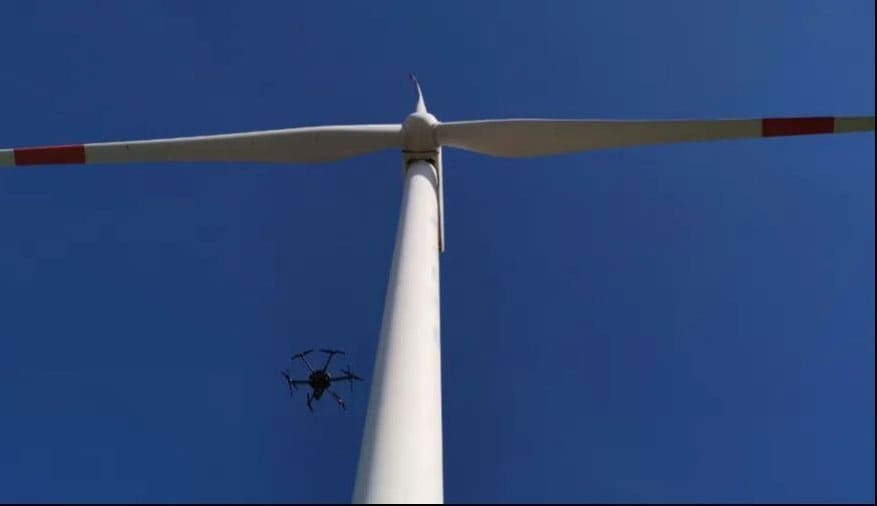
Drone insurance for a wind turbine blade inspection should describe the real aircraft operation and equipment interests. Give BWI the turbine locations, aircraft, payloads, pilots, ownership and aviation insurance requirements. Also describe the contracted activity truthfully, including who collects images and who interprets them. This guide’s insurance inquiry concerns aviation liability and drone equipment; it does not offer protection for condition grades, maintenance advice or the accuracy of a blade assessment.
This guide helps drone businesses prepare an insurance inquiry for onshore wind turbine inspection projects. It addresses client agreements, equipment ownership, inspection deliverables and the distinction between drone damage and other financial demands. It does not prescribe flight paths, turbine shutdowns, distances, blade assessment methods or site access procedures. Qualified aviation, wind energy and technical professionals must establish the operating plan. The insurance review needs those accurate facts and any unresolved questions.
For the broader discussion, see BWI drone insurance. Include the wind turbine inspection scope and client contract in the inquiry.
Define the blade inspection deliverable before quoting the job
Read the statement of work and describe what the finished service contains. A client might request raw images, a labeled image set, a processed model, measurements or an opinion about a blade’s condition. Explain who identifies potential defects and who decides what action follows. A short description such as infrastructure inspection may not tell the insurer whether your business accepts professional responsibilities beyond collecting information during the flight.
Check proposals and sample reports against the agreement. If marketing material promises detection, diagnosis or certification, qualified technical and legal professionals should clarify what the company actually undertakes and can deliver. Correct inconsistent descriptions before signing. Keep a dated copy of the accepted report specification, author and review responsibilities; an aircraft quotation is not a decision about the professional standard or funding for a diagnostic promise.
Identify the asset owner operator and contracting chain
List the legal customer, wind farm operator, asset owner, prime contractor and drone business where relevant. An operations manager arranging a visit may work for a different entity from the company signing the contract or requesting evidence. Obtain the actual names through the project channels. A wind farm name or turbine manufacturer does not identify every party whose interests or contractual responsibilities may need consideration.
If your business supplies imagery to another inspection company, explain that relationship. State who flies, who owns the aircraft and who holds the sensor. Give BWI the relevant aviation insurance requirements and factual operating scope. Separately document who signs the technical report, accepts the finished analysis and answers the asset owner’s maintenance questions. Those contracts need legal and technical review even when the flight and equipment interests are clearly described.
Describe the proposed site and operating arrangements accurately
Provide the general locations, planned dates, project duration and relevant site conditions in the detail requested for underwriting. Explain whether the assignment concerns one turbine, a group of assets or recurring visits across several locations. Identify any proposed variation that remains under discussion. A reviewer should be able to distinguish a defined project from a business’s long-term ambition to inspect wind assets wherever customers request service.
Qualified site and aviation professionals should establish access, operating coordination and technical requirements. Do not treat a customer’s invitation or a map of the property as a complete explanation of permission to perform the proposed work. For insurance, describe the resulting arrangement and identify unresolved matters. An insurer response is not approval of a flight method, shutdown decision or blade inspection procedure, and it does not replace the responsible professionals’ decisions.
Prepare a wind inspection insurance submission record
The comparison below organizes the service, people, property and agreements for review. It is an insurance preparation aid, not a turbine work permit or an inspection checklist. Add the actual entities, aircraft, equipment and deliverable. A concise record helps BWI understand how flight activity connects to the report, who owns the property involved and which organization can explain the client’s insurance requirements.
Assign someone to keep the record current as the project changes. An added site, replacement drone, different sensor or expanded condition assessment should be visible as a revision. Keep dated versions with actual responses instead of treating an unanswered inquiry as acceptance. That makes it possible for the project manager to explain which proposal was reviewed and prevents a generic certificate from becoming the only evidence of a changing inspection arrangement.
| Wind inspection subject | Information for the insurance review |
|---|---|
| Service | Actual flight assignment and turbine locations |
| Parties | Asset owner operator client prime contractor and drone business |
| Aircraft and people | Drone identities pilots and subcontractor relationships |
| Equipment | Payload values ownership and custody dates |
| Contract | Aviation insurance limits names and evidence requirements |
| Changes | Added turbines replacement aircraft pilots or rented sensors |
Inventory the drones sensors and supporting property
Supply aircraft identities, values and relevant equipment details as requested. Distinguish the drone from separately owned cameras, sensors, computers and other supporting property. If equipment is rented or supplied by the client, explain who owns it and the period of your company’s custody. A single total value may conceal an item with different contractual obligations or a separate insurance interest that needs attention.
Review how the actual offered terms define the insured property, including relevant limitations and deductibles. Do not assume everything used on a wind farm is part of drone hull coverage. The insurer needs the real inventory and arrangement, while qualified technical personnel establish the equipment’s suitability. An insurance description should not be presented as approval of a sensor, installation or method for detecting a particular blade condition.
Separate drone damage from damage to a turbine
Damage to your drone is a different property question from damage involving a blade, tower or another client’s asset. Ask the relevant insurance advisers to examine the aircraft’s own physical damage terms and the applicable liability provisions separately. Explain the proposed work and relationships without relying on a broad statement that the business has full coverage. The policy’s actual definitions, conditions and exclusions matter to the review.
Identify the relevant insured parties and limits for the disclosed operation. A high liability number does not independently establish that every asset, allegation or contractual duty is included. If the client has its own property insurance, do not assume that resolves your company’s responsibilities. Give the relevant agreement to the reviewers so separate aircraft, client property and contractual interests remain understandable before anyone promises a particular outcome after an incident.
Review claims about missed blade defects as a separate subject
A customer could allege that an inspection failed to identify a condition even when the drone never damaged anything. Preserve the report specification, supplied labels, original images and interpretation instructions for qualified technical and legal review. That review concerns the standard of the service and the contract’s remedies. BWI’s aviation liability and equipment inquiry in this guide does not arrange protection for diagnostic accuracy, a missed defect or a customer’s reliance on maintenance advice.
If another company interprets the images, identify its technical role in the contract and obtain its acceptance of the handoff requirements. Decide who can issue a revision and who responds to a request for a condition opinion. A subcontractor certificate does not settle those decisions. Keep the aircraft inquiry focused on flight activity, pilots, insured parties and equipment rather than treating either company’s certificate as approval of the other company’s conclusions.
Ask for the complete client insurance provisions
Obtain the full requirements before the bid or service agreement is finalized. Include schedules, referenced attachments, requested limits, legal names, dates and evidence recipients. A procurement summary can leave out provisions that affect the proposed placement. Give BWI the actual language early enough to explain which requests can be addressed and which need further discussion, rather than assuming another inspection contractor’s requirements will be identical.
If the client requests additional insured status or another policy change, ask how it would be considered and documented for your particular relationship. A certificate does not independently add an endorsement, remove an exclusion or expand coverage. Use evidence supported by the insurer’s actual response. Keep unresolved provisions visible instead of modifying a certificate merely to match wording that the underlying policy has not been confirmed to provide.
Examine outage and lost generation obligations carefully
A wind farm contract may include an inspection window and consequences if a report arrives late. Ask qualified legal advisers to explain obligations involving lost generation, delay, repeat visits, payment withholding and contractual damages. Compare the promise with staffing, technical capacity and the business’s resources before accepting it. This is a contract and commercial decision; the aircraft liability limit is not a budget for every loss the owner attributes to an outage.
Separate the customer’s planned inspection allocation from an allegation that your business extended an interruption or delivered incorrect advice. Keep the relevant dates and communications for the responsible technical and legal professionals without deciding causation or a remedy yourself. If a separate aircraft incident occurs, follow that policy’s requirements using the actual facts. Turbine operating decisions and professional reporting disputes do not become one insurance question merely because they concern the same visit.
Describe pilots subcontractors and personnel roles
Provide the pilots and project participants in the detail requested for the submission. Explain who flies, who handles equipment and who performs technical analysis. Qualified professionals must separately establish the necessary privileges, qualifications and operating responsibilities. For insurance, ask how the actual terms address operators and relevant conditions. A client’s acceptance of a personnel list does not independently establish compliance with every provision of your policy.
If personnel are employees, contractors or supplied by another firm, state the real arrangement. Ask appropriate advisers to determine workplace and other business insurance responsibilities. Drone liability should not be assumed to replace every employer or premises policy. If the team changes before a site visit, return material differences for review rather than treating a replacement person as accepted solely because that person has worked for another inspection business.
Account for equipment custody before and after the flight
Explain pickup, transport, storage, field use and return when significant property belongs to another party. A two-day assignment may involve a much longer rental period or time in your workshop. Ask how the actual terms address those stages and the contract’s responsibilities. The flight schedule alone may not describe the property interest that exists while equipment is in your company’s possession away from the job site.
Identify where aircraft and equipment remain between visits. A vehicle, temporary building or contractor facility can involve a different arrangement from the normal business premises. Do not assume a drone policy insures the road vehicle or every asset carried in it. Supply the relevant facts to the appropriate advisers so equipment, vehicle and premises interests can be considered without forcing them all into a single aircraft coverage description.
Keep data delivery and confidentiality promises visible
Identify the turbine and report references the customer uses, the person responsible for assigning them and who releases the completed package. An asset number, blade label and inspection date are administrative identifiers here, not instructions for conducting an inspection. Have the client’s qualified technical team establish the naming convention. Keep supplied labels attributable to their source rather than implying the aircraft operator independently verified every asset record.
If the owner sends the report to its maintenance contractor, establish what the agreement permits and who answers technical questions. Preserve the issued version and identify corrected labels, later interpretations and their authors. Do not silently replace an image-only deliverable with a condition opinion. Use the authorized client channel for confidential reports and legal review of reliance; a general aircraft quote inquiry should not become a distribution list for sensitive operating records.
Treat recurring inspections as a changing program
At renewal, reconcile the actual turbines, sites, equipment and deliverables with the program described previously. Distinguish completed image collection from ongoing analysis or commitments to revisit. If a proposed second wind farm never became a contract, explain that fact when asked. If the customer adds historical comparison or transfers another contractor’s reporting work, identify that new responsibility rather than copying the earlier inspection description.
Keep dated scope changes with the agreement. Send BWI changes in aircraft, pilots, sites, sensor values, ownership or custody relevant to the aircraft inquiry. Maintain the separate technical record when condition grading, historical comparison or report deadlines change. A renewed certificate does not decide whether the business should accept those promises, and an unchanged drone does not make an expanded contract technically or commercially identical.
Compare proposals on the same inspection facts
Compare aviation liability and equipment proposals using the same turbine locations, aircraft, values, pilots and custody periods. Identify whether each response is preliminary, conditional or issued. Read limits, deductibles, insured parties and relevant exclusions alongside premium. A proposal considering an owned sensor and one considering a rented sensor may describe different property interests. Keep diagnostic standards and report remedies in the separate contract review rather than ranking aircraft quotations as protection for condition grades.
Consider a fictional expansion from images to condition grading
Imagine fictional Valley Wind Operations hiring Ridge Images LLC for an October image set covering turbines T01 and T02. Valley supplies the asset labels and appoints an outside engineer to interpret the images. These invented names and identifiers illustrate roles, not BWI customers or an approved inspection. Ridge’s submission identifies the image-only output and Valley’s agreed recipients; it does not claim responsibility for the engineer’s eventual technical judgment.
During negotiation, Valley asks Ridge to issue condition grades and maintenance priorities, adds T03 and rents a sensor. Ridge obtains technical and legal review of the new reporting promise and deadline provisions, including alleged lost generation. It sends BWI the added site, sensor ownership, custody dates and requested aviation insurance changes. Those separate records prevent the aircraft response from being represented as approval or financial support for Ridge’s new maintenance opinions.
After delivery, Valley asks why a T02 image appears under T01 in a maintenance package. Ridge preserves the original handoff, supplied identifiers and later versions, and seeks the appropriate review of the actual request or allegation. It does not decide fault, promise payment or silently reissue a changed technical opinion. The initial certificate remains evidence about the earlier arrangement, not automatic acceptance of every reporting obligation or claim.
Frequently asked questions
Does commercial drone insurance automatically include wind turbine inspections
Describe the actual aircraft, payload, pilots, locations, ownership and custody periods when asking BWI about aviation liability and equipment. Supply the aviation insurance requirements and accurate operating scope. A general commercial label does not settle every physical assignment. Technical standards, maintenance advice and professional reporting remedies require separate qualified technical and legal review; they are outside the insurance inquiry described in this guide.
Are missed defects covered by drone flight liability
A missed-defect complaint concerns the technical service and contract, and requires appropriate engineering and legal review of the original scope and report. BWI’s inquiry described here concerns aircraft liability and equipment. It does not offer protection for diagnostic accuracy or a customer’s reliance on maintenance advice, even when the report was produced using drone imagery.
Does the turbine owner’s property policy protect our company
Another party having insurance does not independently resolve your interests or contractual obligations. Identify the parties, property and agreement for review. Ask how the actual policies address the relationship rather than treating the existence of the owner’s insurance as an answer for every contractor.
Can rented inspection equipment be added to a project submission
Provide the equipment description, ownership, values, rental agreement and custody period requested for review. Ask what can be addressed under available terms and how any accepted change is documented. A rental invoice or customer permission does not itself amend a drone policy.
What determines the cost of a wind inspection insurance proposal
Request terms using the actual aircraft, pilots, equipment, locations and contracted service. There is no dependable universal price for every blade inspection arrangement. Compare proposals using consistent facts and examine the conditions, limits and retained responsibilities as well as the premium.
Is an inspection certificate an operating approval
No. Insurance evidence does not approve site access, turbine condition, a shutdown decision or a flight method. Establish those matters through the responsible site and aviation professionals, then use the confirmed facts in the insurance submission. Keep the purposes of those decisions clear in the project file.
Request a wind turbine inspection insurance review from BWI
Bring BWI the legal parties, turbine sites, aircraft inventory, equipment ownership, custody periods and pilot information. Include the aviation insurance requirements and describe the contracted activity accurately. Keep condition grading, professional credentials, technical standards and the client’s use of conclusions with the technical and legal teams. This division makes the aircraft inquiry specific without suggesting that a quotation accepts every promise in the inspection agreement.
Request an aviation liability and drone equipment insurance review and quote from BWI for the actual wind turbine assignment. Compare the response with the aircraft, equipment, people, locations and custody periods proposed, then return material operating changes for review. Resolve report warranties and maintenance advice through qualified technical and legal review before accepting them; the BWI inquiry described here does not offer insurance for those professional conclusions.
Continue Reading

